
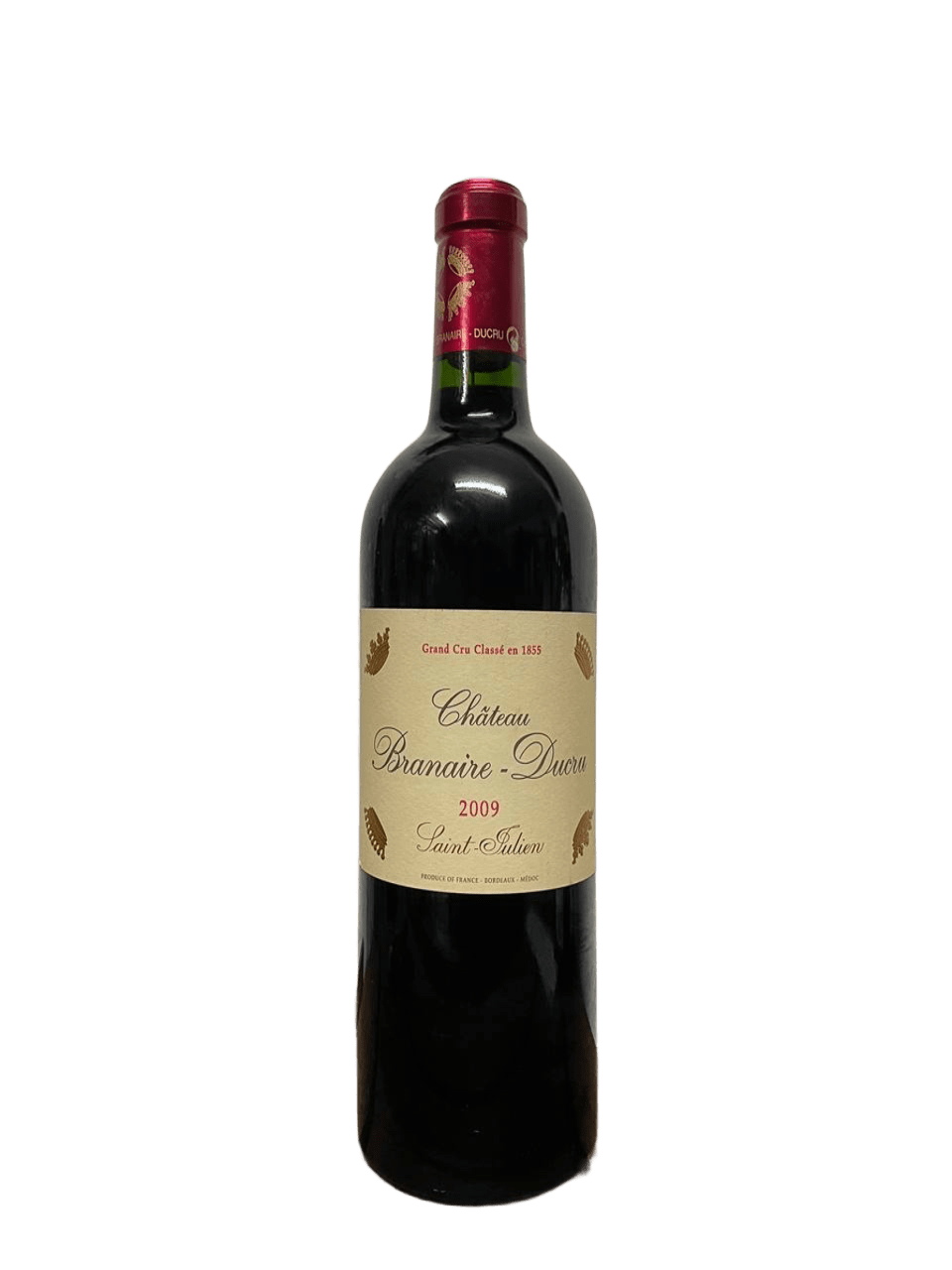
95
0,75
2009
Chateau Branaire-Ducru
Wines, producers, regions...
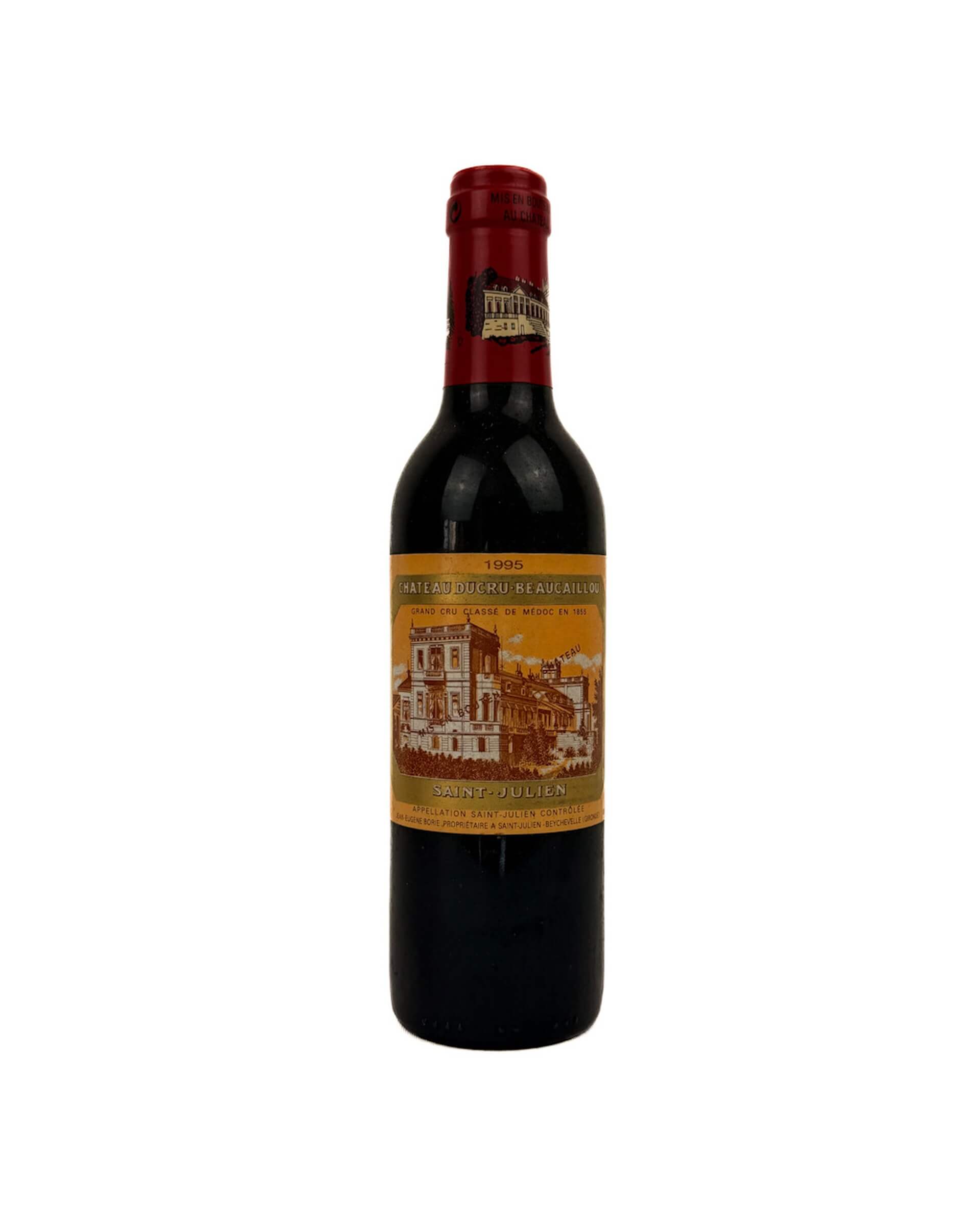
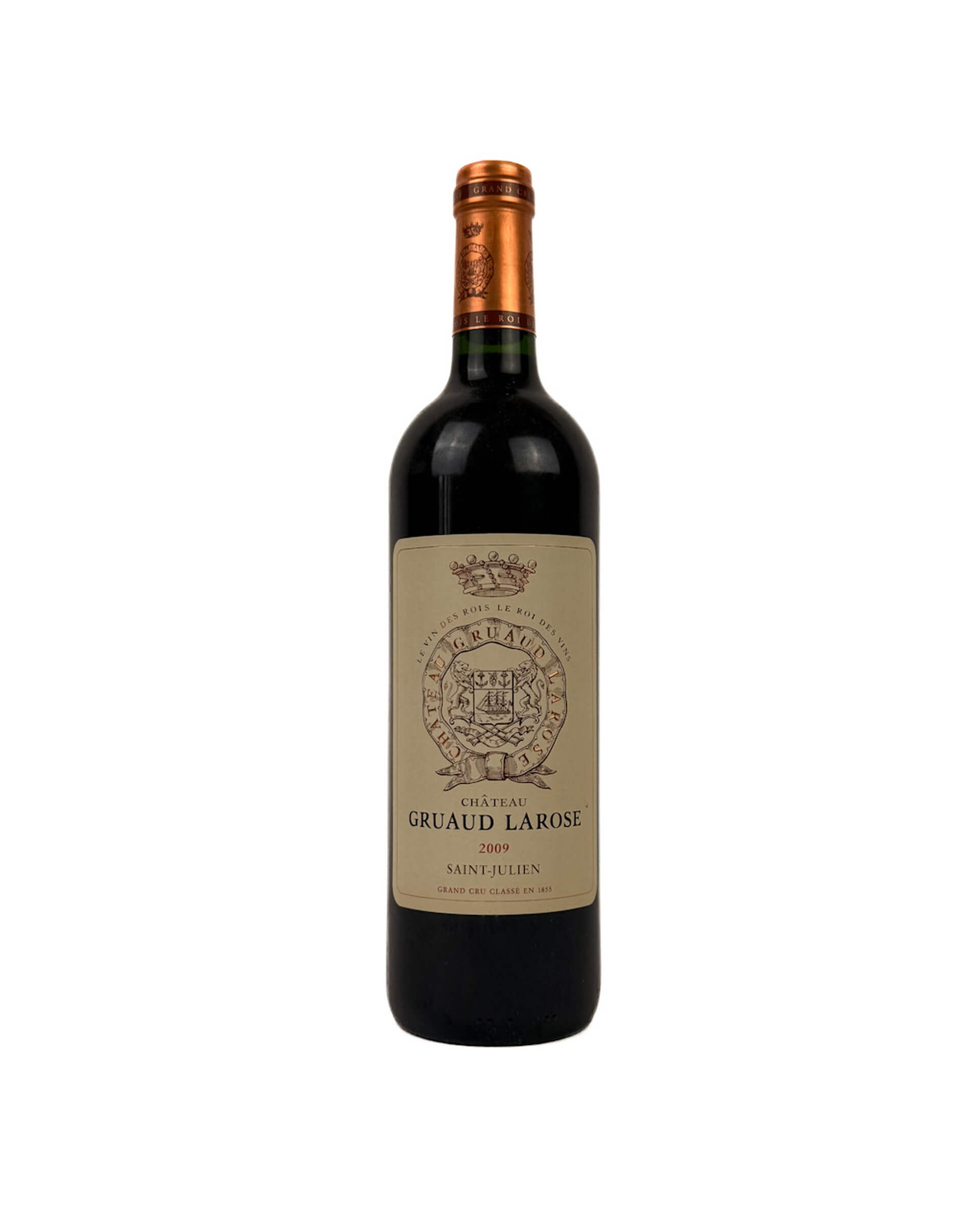
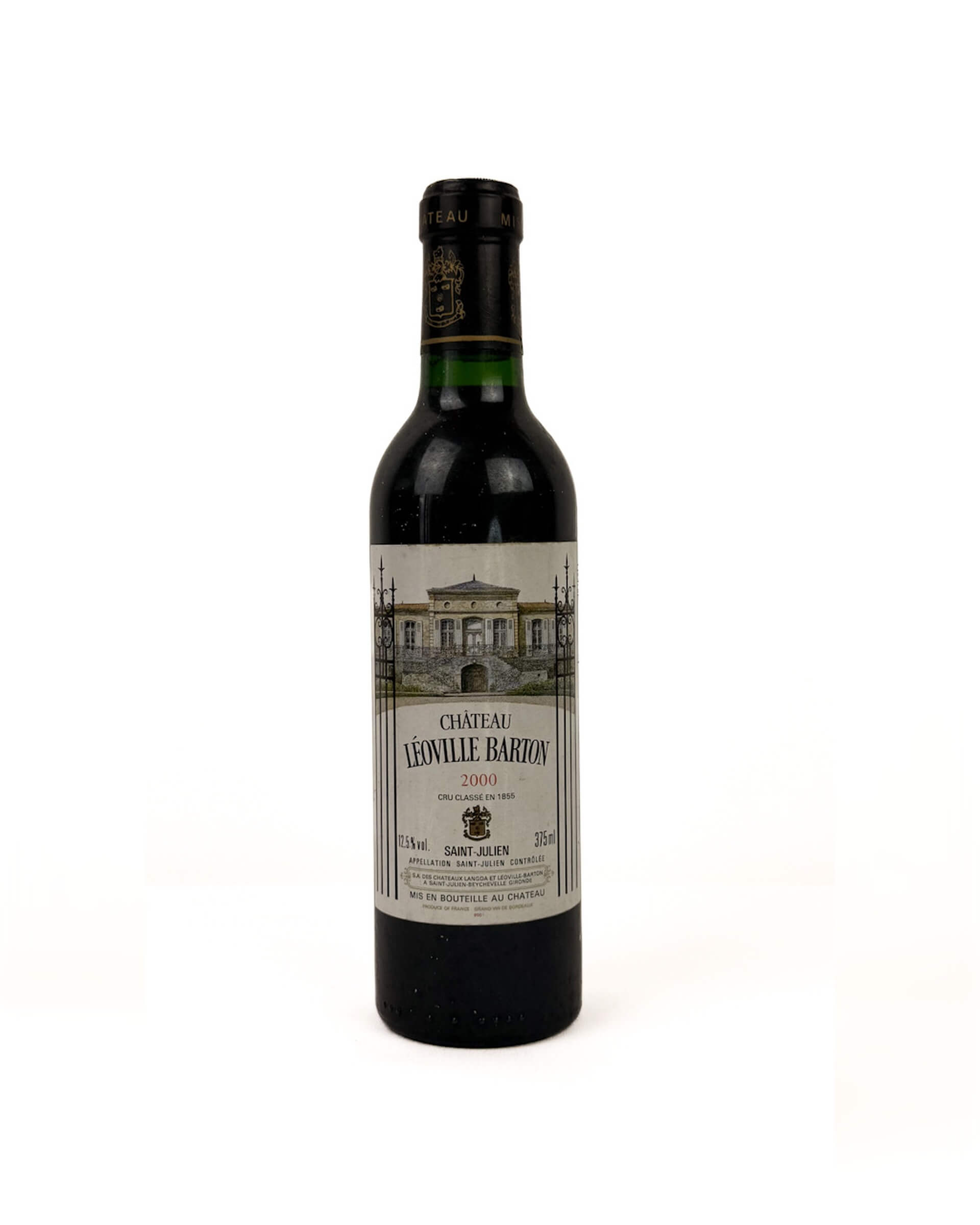
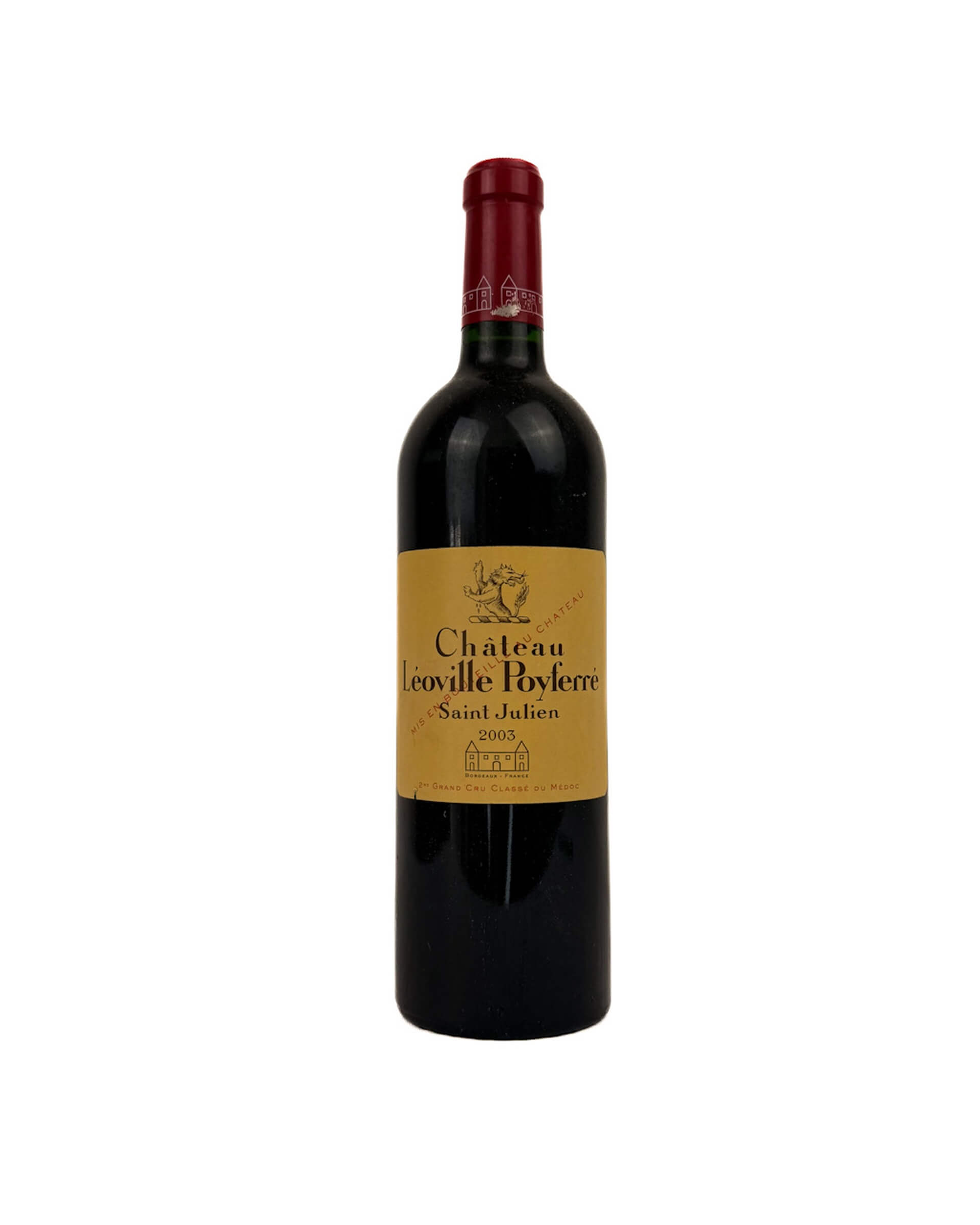
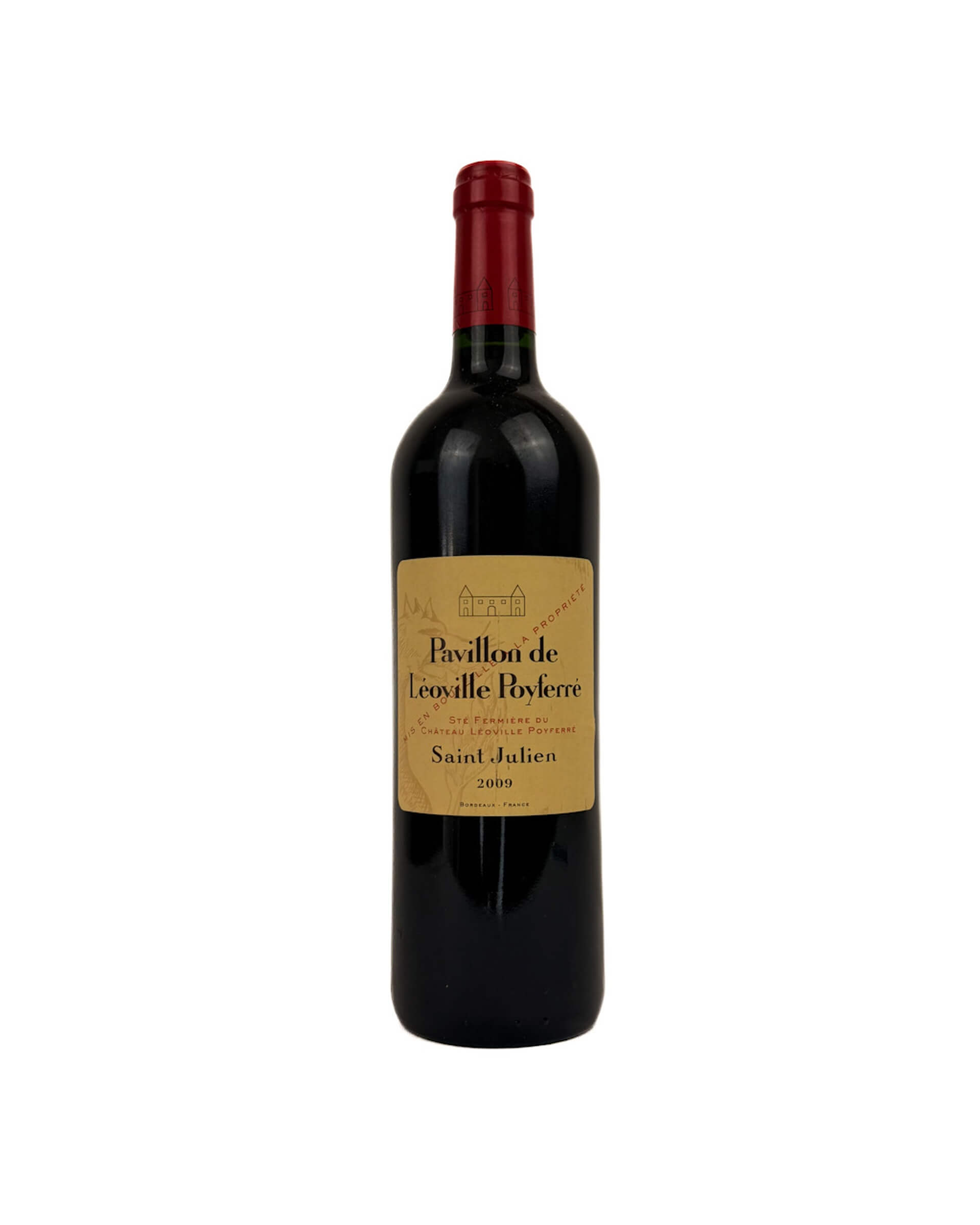
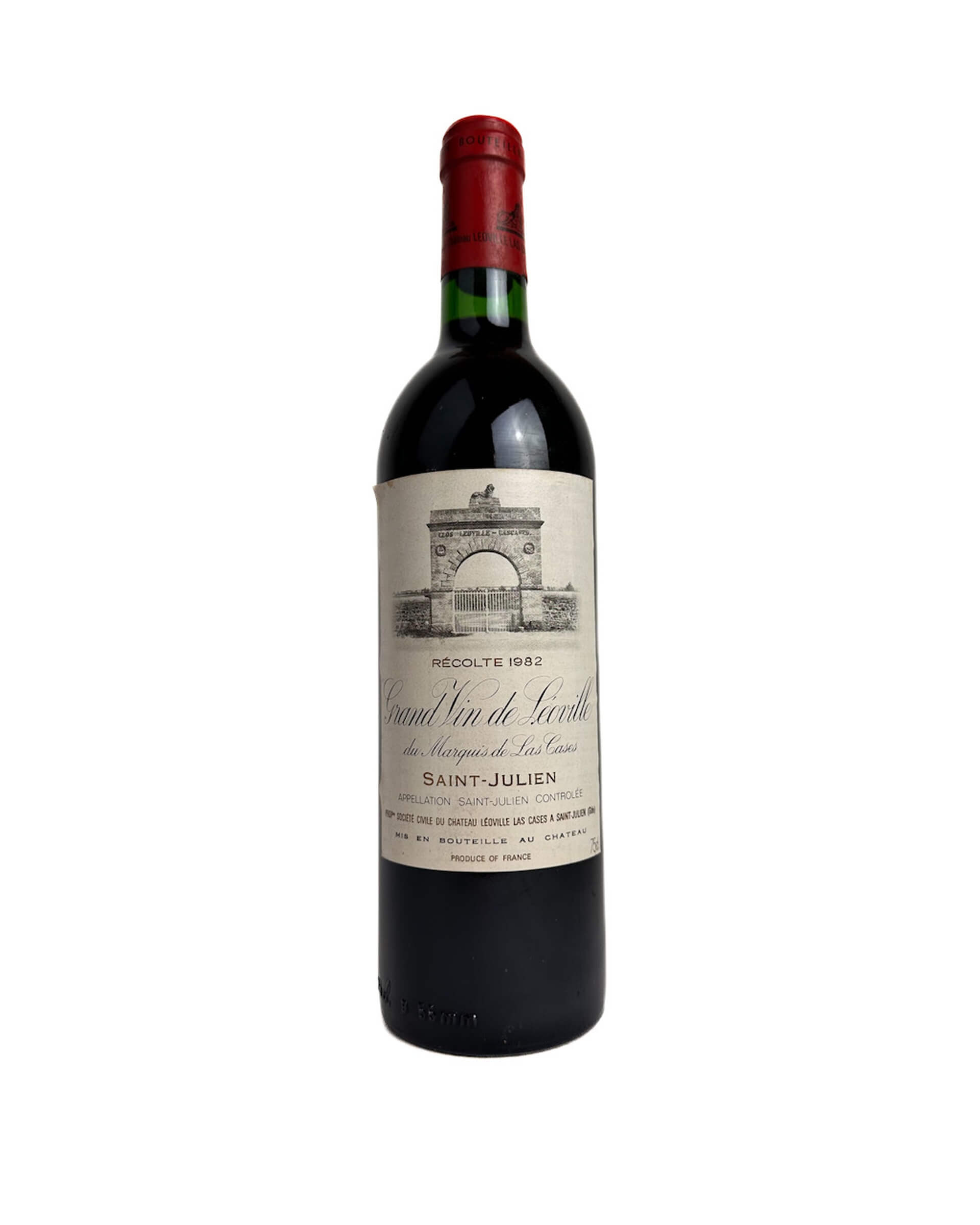
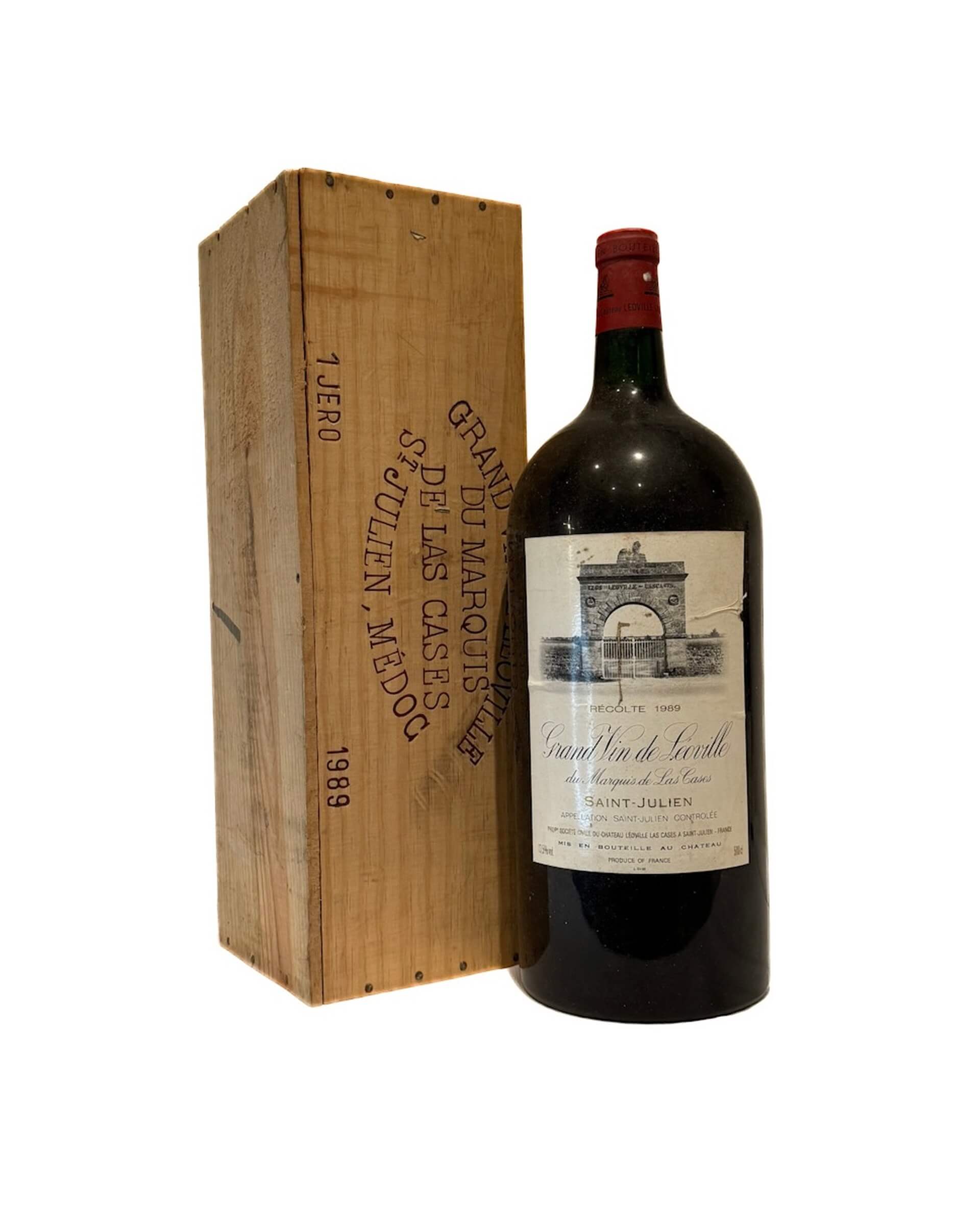
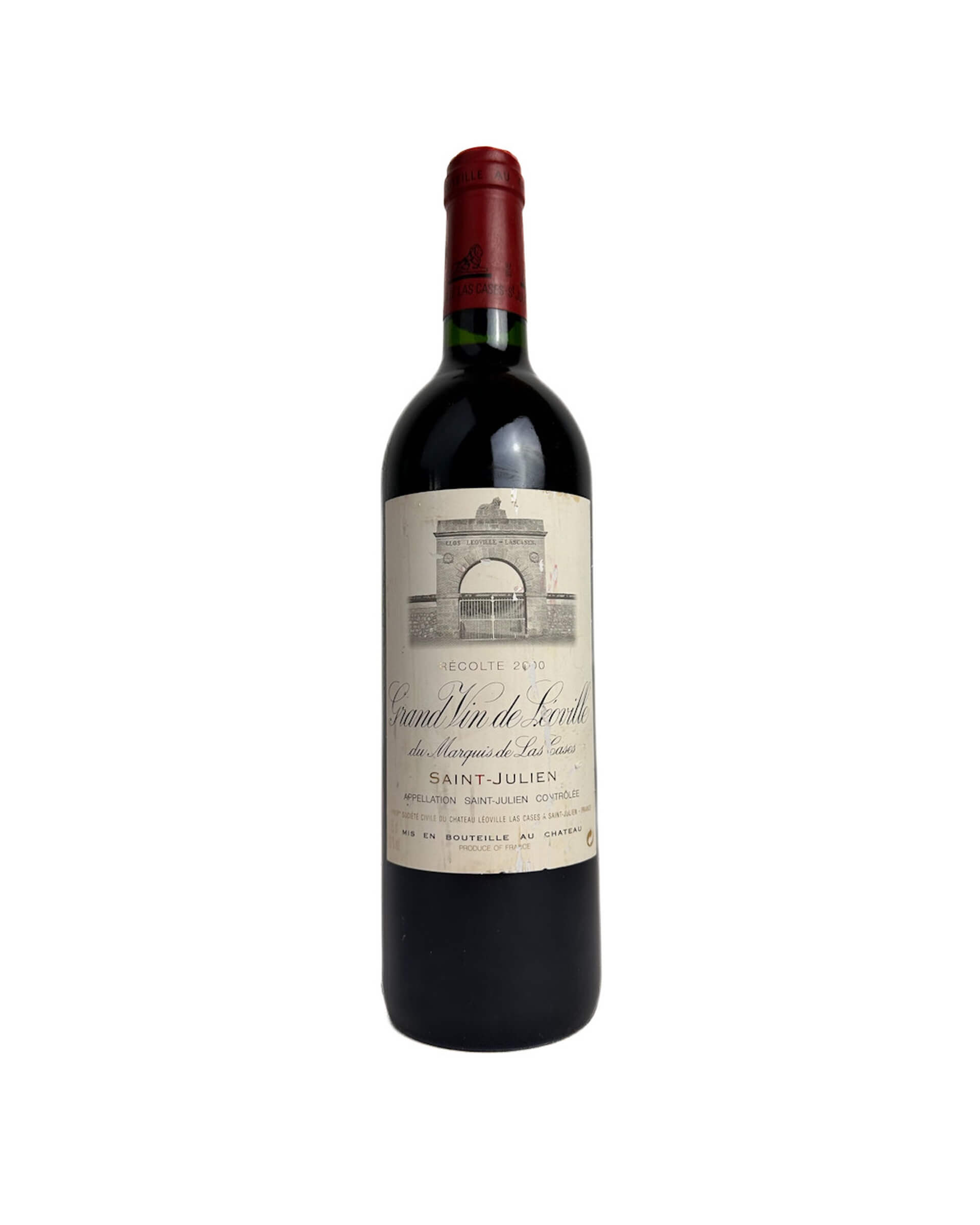
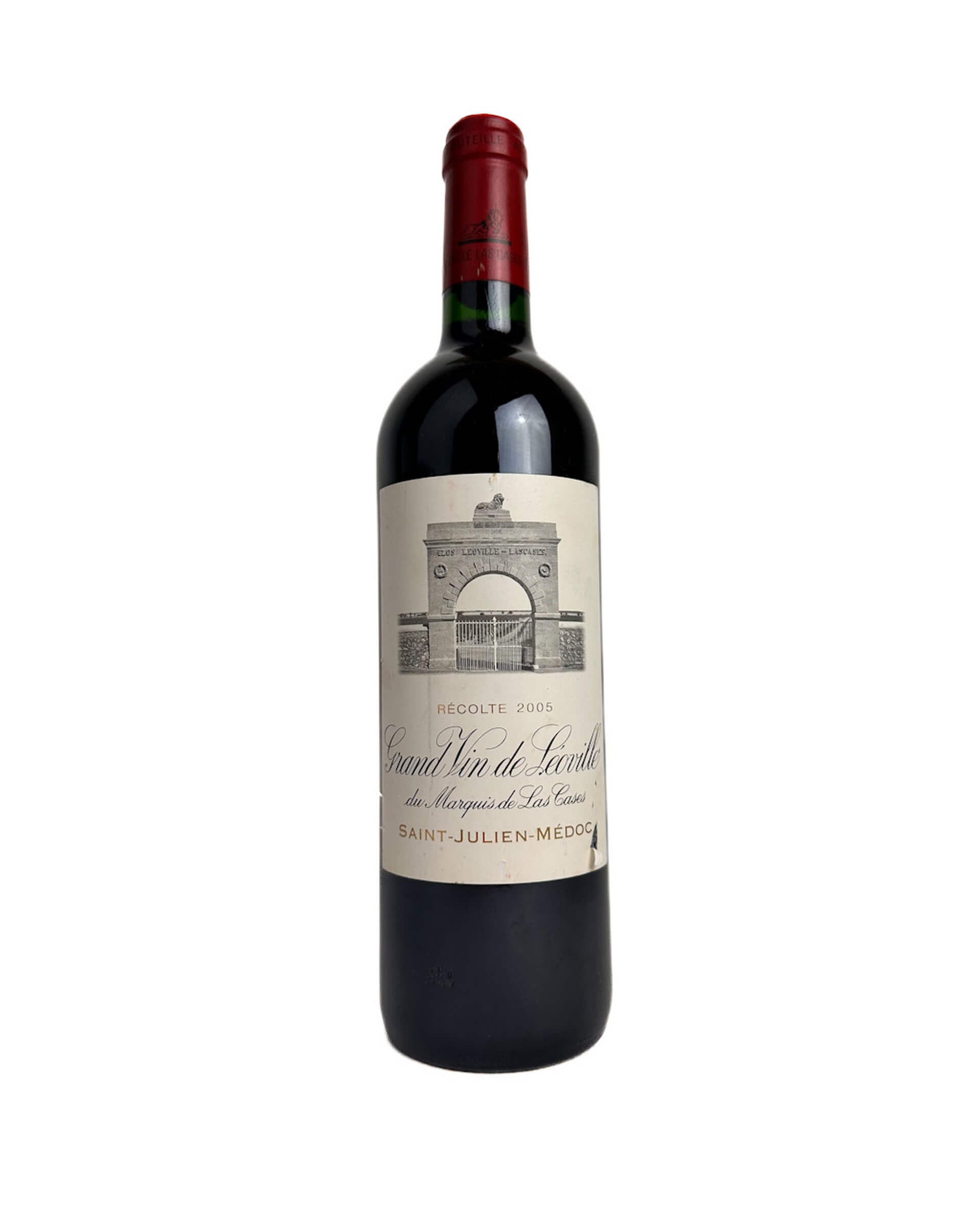
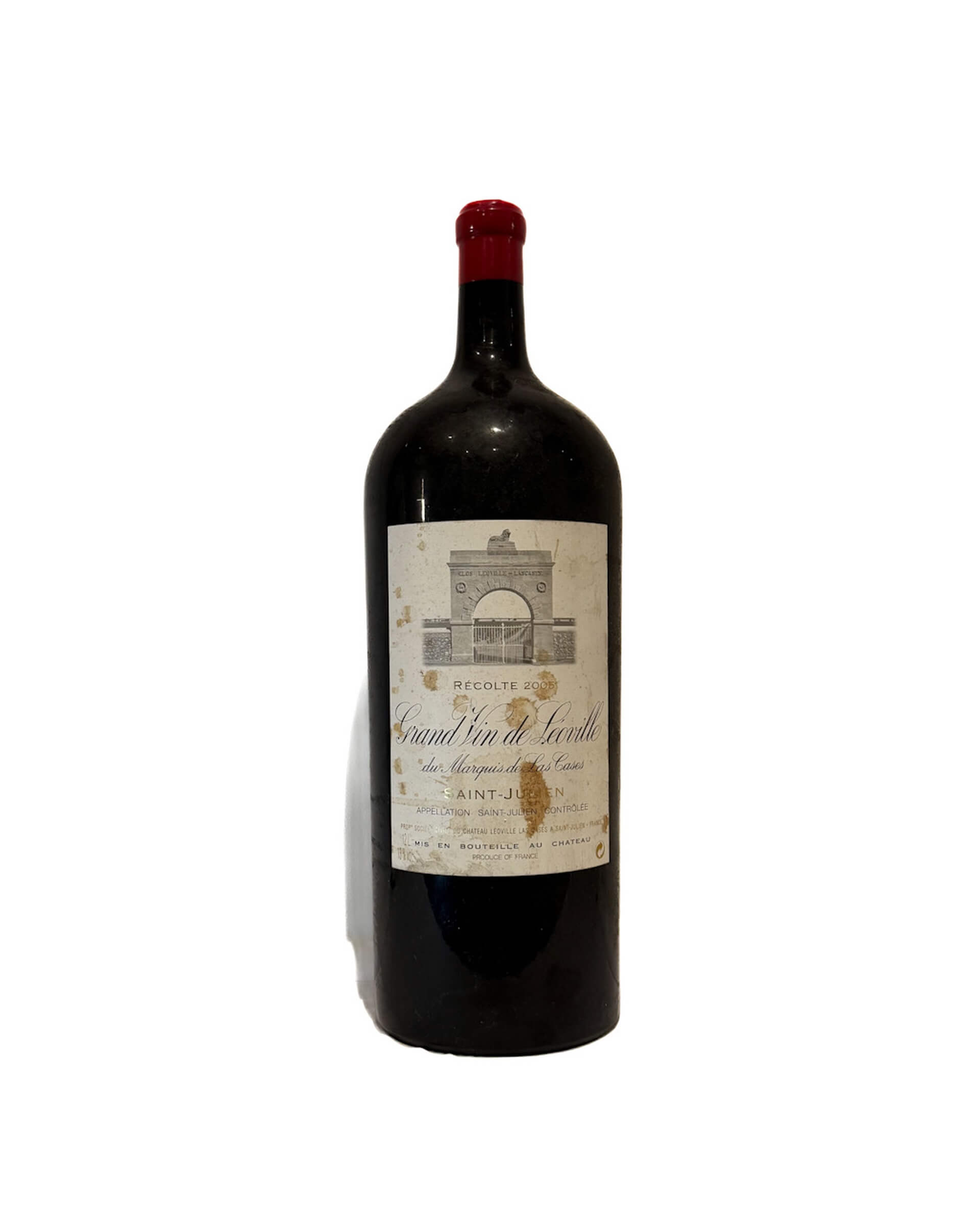
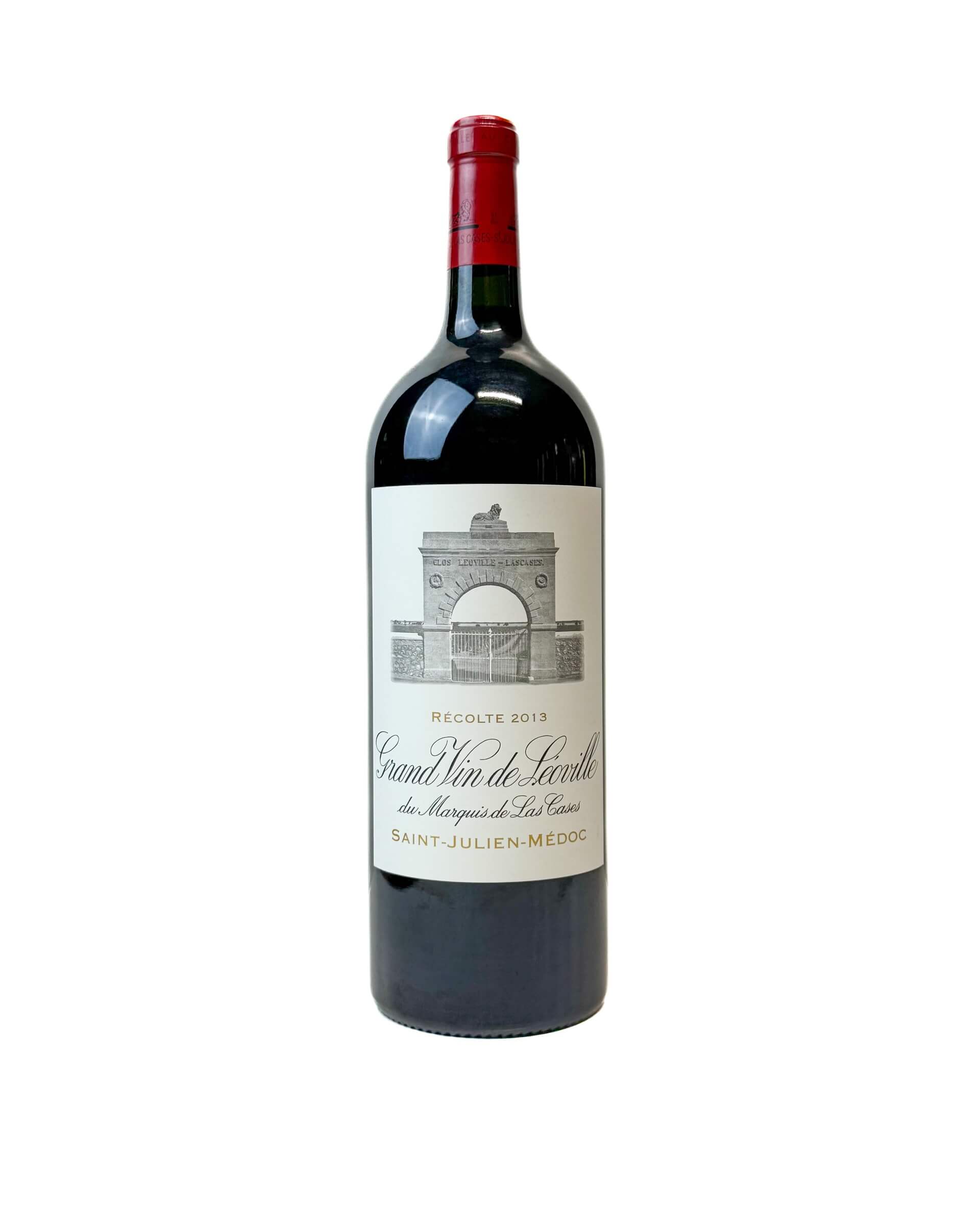
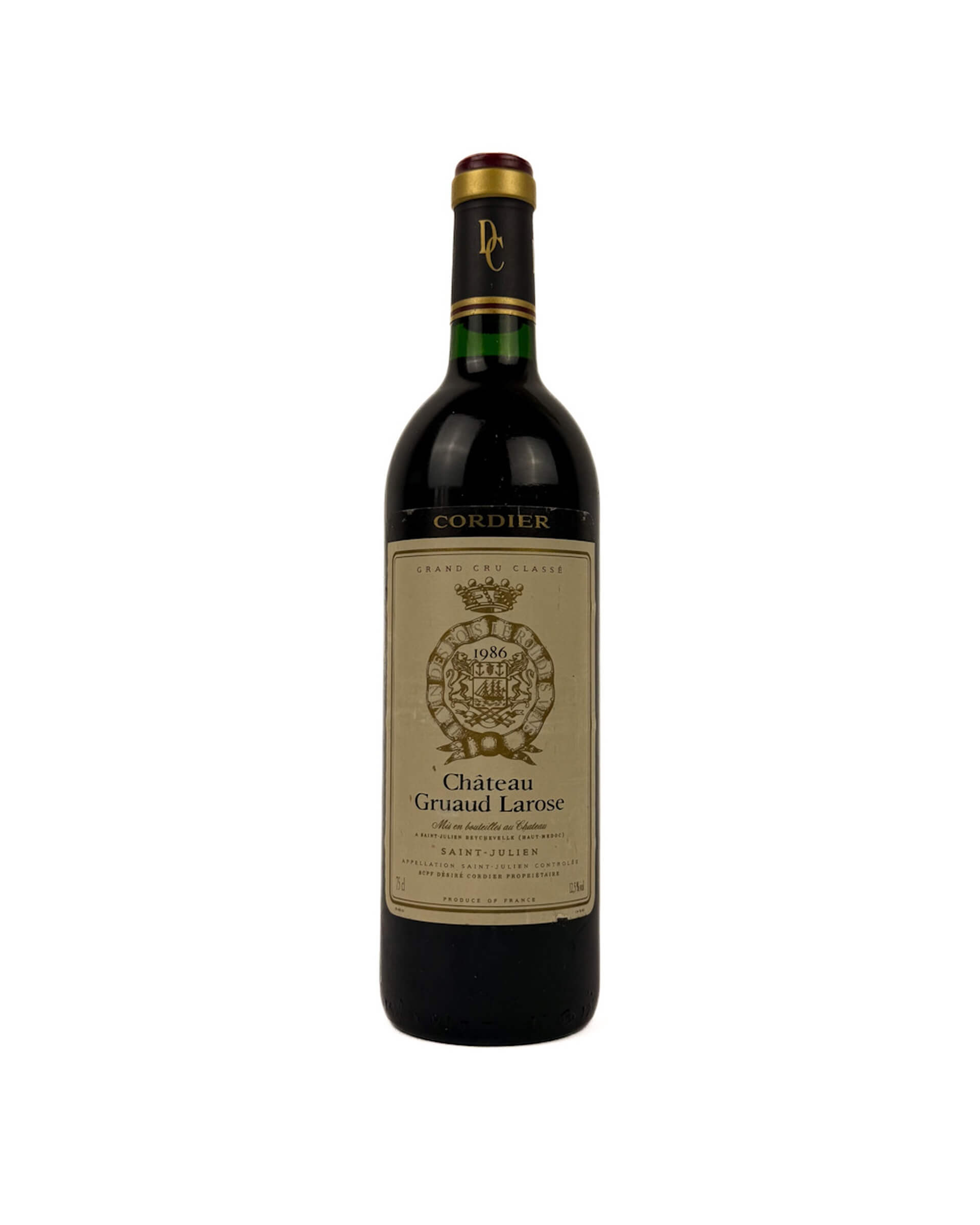
Saint-Julien is widely regarded as the left-bank commune that most reliably balances Médoc structure with finesse — it carries the highest share of classified estates by planted hectare in the entire Médoc, and a Saint-Julien wine is often the smartest way into classified-growth Bordeaux. Tucked into the heart of the Haut-Médoc on Bordeaux’s left bank, the appellation sits between powerful Pauillac to the north and perfumed Margaux to the south, borrowing something from each. Saint-Julien holds no First Growth, yet it is home to eleven 1855 classified estates and packs in more Second Growths per hectare than any other commune in the region — a density that underpins its reputation for consistency. The defining trait is poise: a 2010 Léoville-Barton, for instance, can show firm, age-worthy tannins on release yet still drink with real pleasure inside its first decade, where the same vintage in Pauillac would demand far more patience. Tour de Wine’s curated catalogue gathers 17 bottles from across the appellation — from approachable second labels to landmark Deuxièmes Crus — and the selection below is the place to start exploring.
Every Saint-Julien red is a blend, and its backbone is almost always Cabernet Sauvignon. The grape thrives on the commune’s deep gravel, lending the wines their firm spine, dark-fruited depth and long ageing potential. Merlot fleshes out the mid-palate, while small additions of Cabernet Franc and Petit Verdot bring aromatic lift and a touch of spice. A typical Saint-Julien blend runs roughly:
In the glass, a Saint-Julien red wine leads with dark plum, blackcurrant, cedar and tobacco leaf, often underpinned by a fine thread of graphite. The tannins are more finely grained than Pauillac’s and the aromatics carry more lift; the style is less overtly floral than Margaux but more precise. This is the commune’s “middle-child” argument made tangible — Saint-Julien tends to carry Pauillac-like structure with a more lifted, finely grained finish, which makes it a dependable choice when both depth and approachability are wanted in one bottle. Classified estates typically ask for 8–12 years to show their best, while second labels and lighter vintages can be approached at 5–7 years with a little decanting. The principal grapes are explored further in our Cabernet Sauvignon and Merlot collections.
Saint-Julien covers roughly 910 hectares of AOC vineyard on the left bank of the Gironde estuary, making it one of the more compact of the great Médoc communes. The foundation is deep Günzian gravel laid down over a clay-limestone subsoil; what sets Saint-Julien apart from a left-bank red grown further south is the depth and continuity of those gravel banks across its northern sector, where they run far thicker and less broken than the thinner, more patchy gravel of parts of Margaux. What gives the appellation its range is how that gravel is distributed across three broad sectors.
In the northern sector, near the boundary with Pauillac, the gravel banks are at their deepest and the sub-soil at its finest. The Léoville estates sit here — Léoville-Las Cases lies directly adjacent to the Latour vineyard — and the wines are the most structured and age-worthy of the commune. Across the central plateau, around Ducru-Beaucaillou and Gruaud-Larose, the gravel is more varied and shot through with patches of clay, yielding wines with a rounder, more immediately appealing texture. The southern riverside band, around Beychevelle and Branaire-Ducru, sits on lighter, sandier soils closer to the estuary; the wines here tend to be earlier-drinking and often more perfumed. Throughout, the Gironde estuary plays a decisive role: its thermal mass keeps minimum temperatures on the riverside vineyards roughly 1–2 °C above comparable inland sites, lengthening the frost-free period and helping the Médoc ripen late-maturing Cabernet Sauvignon reliably from one vintage to the next.
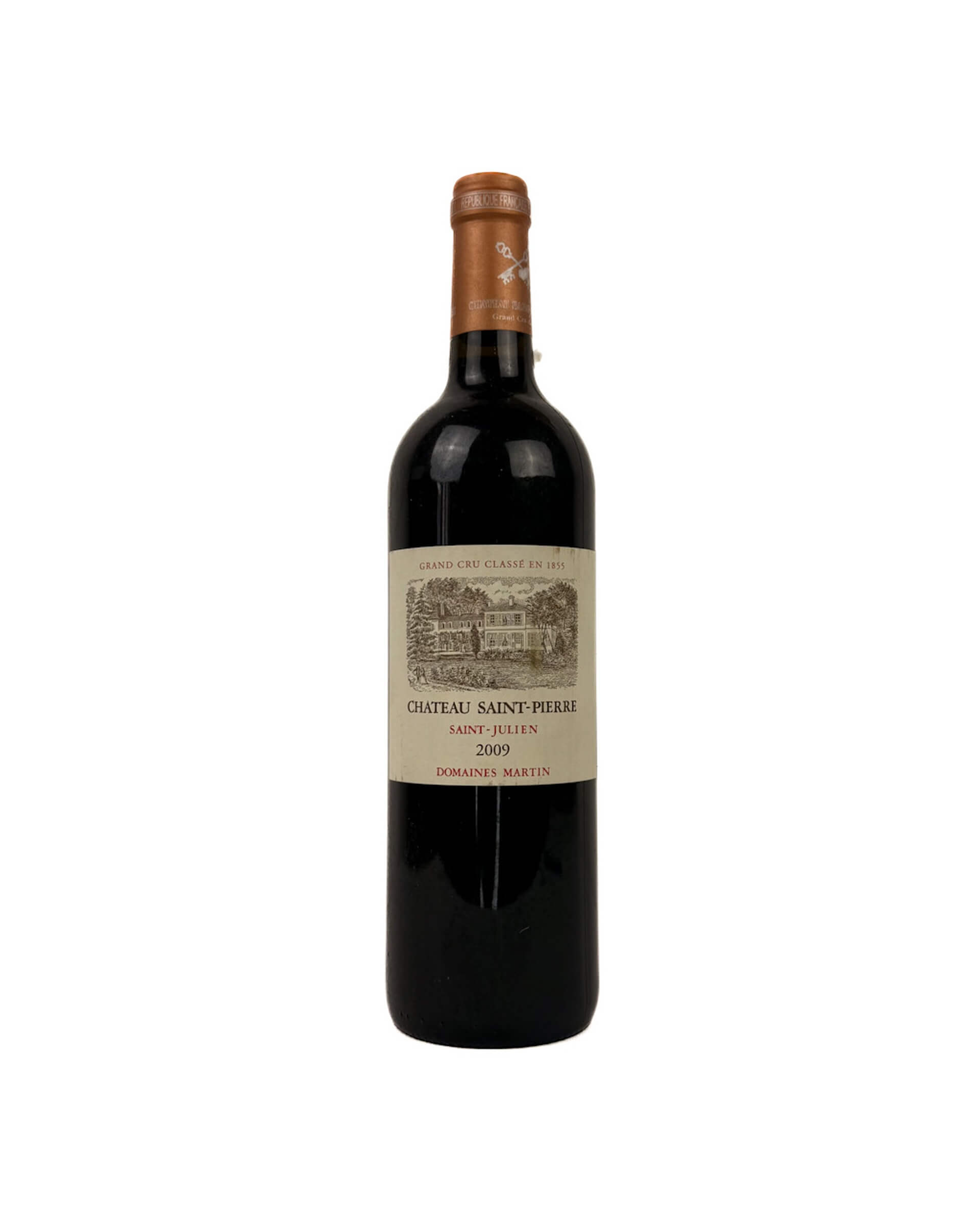
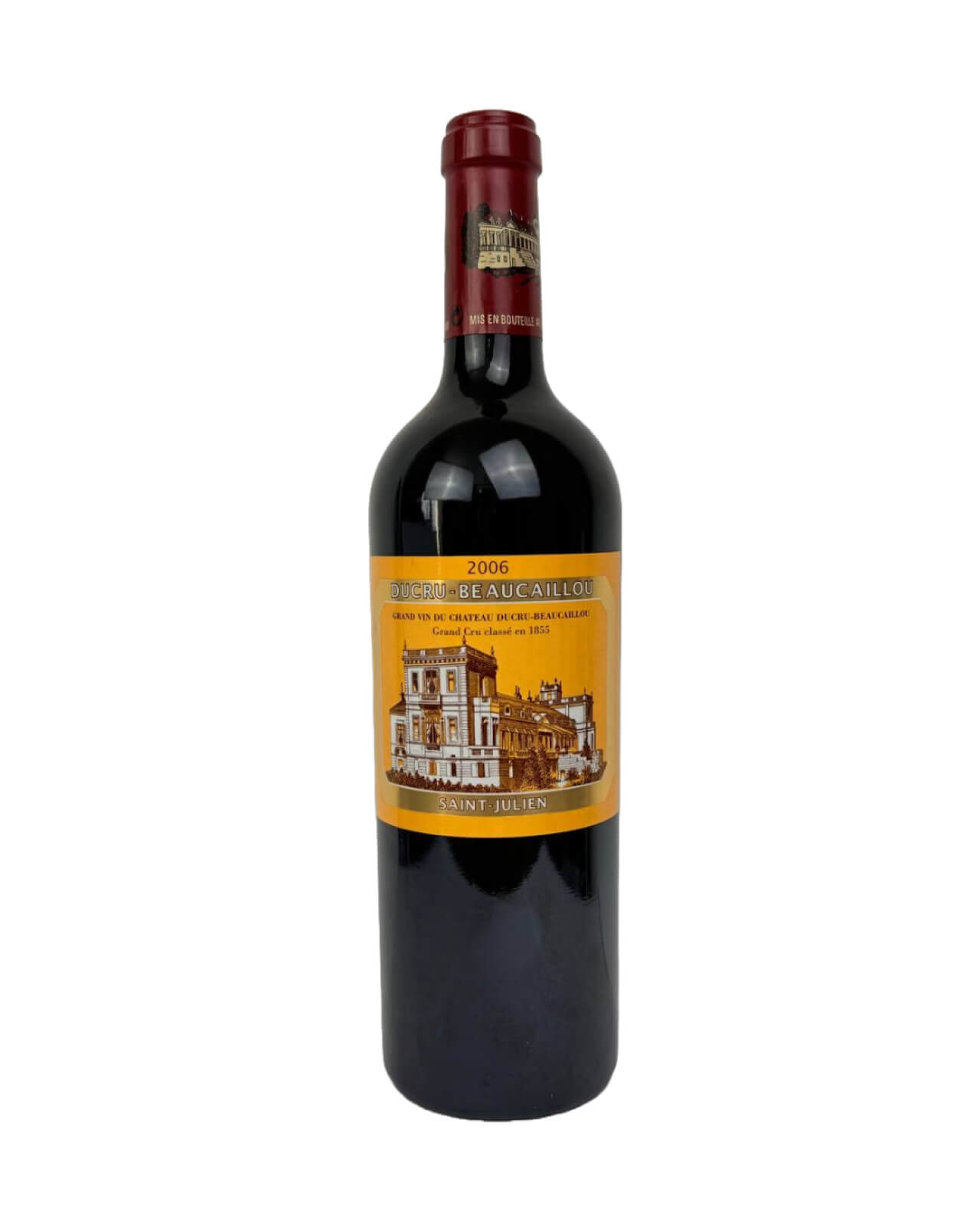
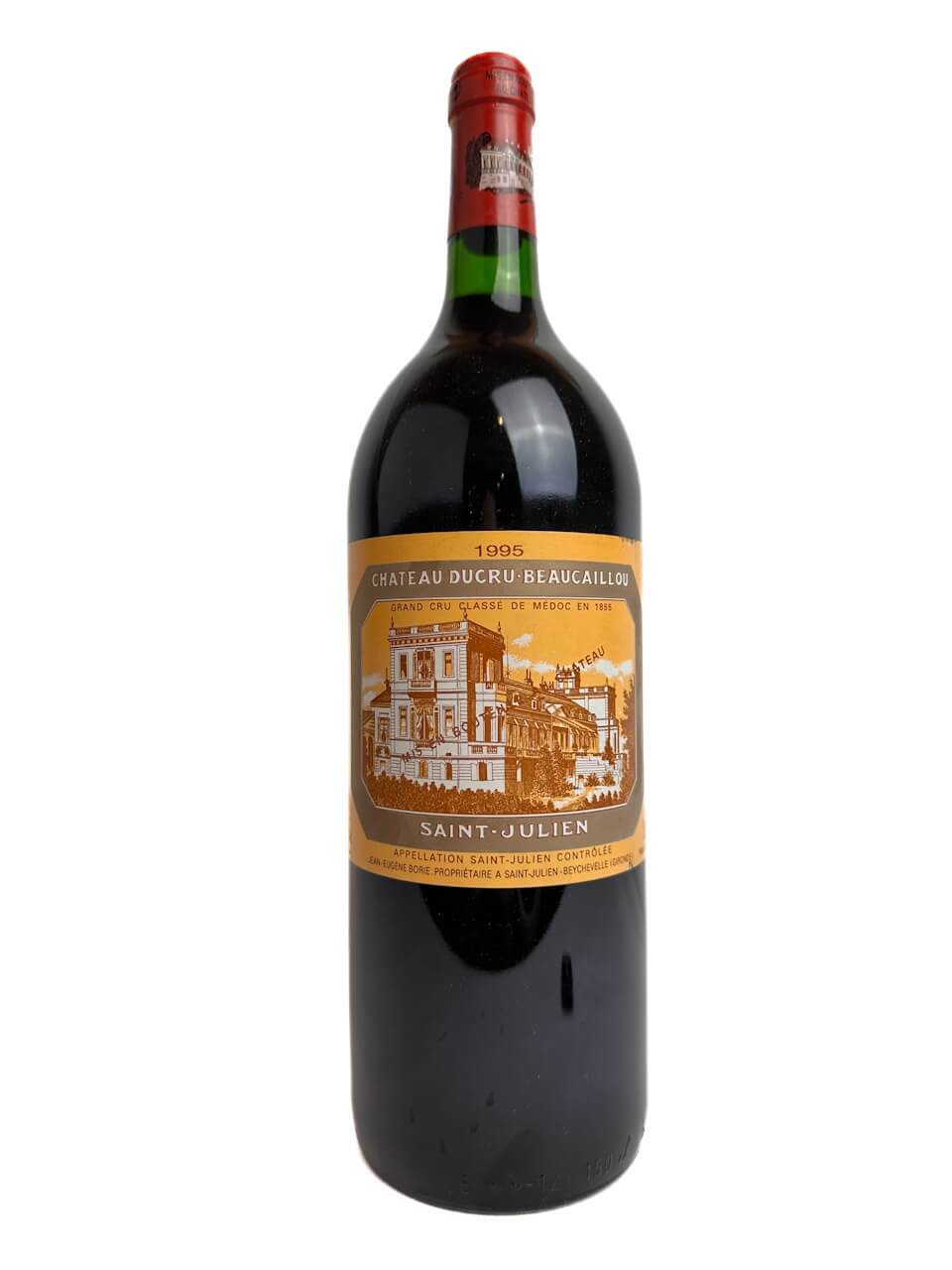
Saint-Julien claims no First Growth, yet no commune in the Médoc carries more Second Growths per hectare — which is why it so often punches at Premier Cru quality. The five Deuxièmes Crus are the three Léoville estates (Léoville-Las Cases, Léoville-Barton and Léoville-Poyferré) alongside Gruaud-Larose and Ducru-Beaucaillou. The two Troisièmes Crus are Lagrange and Langoa-Barton — the latter sharing both an owner and a roof with Léoville-Barton, a rare Médoc curiosity. The four Quatrièmes Crus — Talbot, Branaire-Ducru, Saint-Pierre and Beychevelle — offer some of the most accessible routes into classified Saint-Julien.
Beyond the classified wines, the appellation’s second labels are genuine quality in their own right: Clos du Marquis (of Léoville-Las Cases), La Réserve de Léoville-Barton and Croix de Beychevelle are the gateway bottles for anyone new to the commune. We name these estates as appellation context rather than a promise of stock — availability shifts — so always check the live 17-bottle catalogue for what is pourable today. For wider classification context, browse our 1er Cru and Grand Cru selections.
A Léoville-Barton 2014 is typically approachable by its eighth year yet can hold well past 2040 — a drinking window of two decades or more that rivals appellations costing far more per bottle. Decanting a young classified Saint-Julien shows a concrete change: a tight, graphite-edged nose on opening tends to broaden into sweeter cassis and cedar within roughly ninety minutes, a useful preview of how the bottle will evolve in the cellar.
In its first years a Saint-Julien shows intense dark fruit, firm but not aggressive tannins, and pronounced fresh acidity, with cedar and tobacco just beginning to emerge. Young classified growths reward 1–2 hours of decanting; second labels are often approachable a little earlier. The key contrast with young Pauillac is texture — the tannins here feel more refined and far less austere, so the wine is drinkable sooner without sacrificing seriousness.
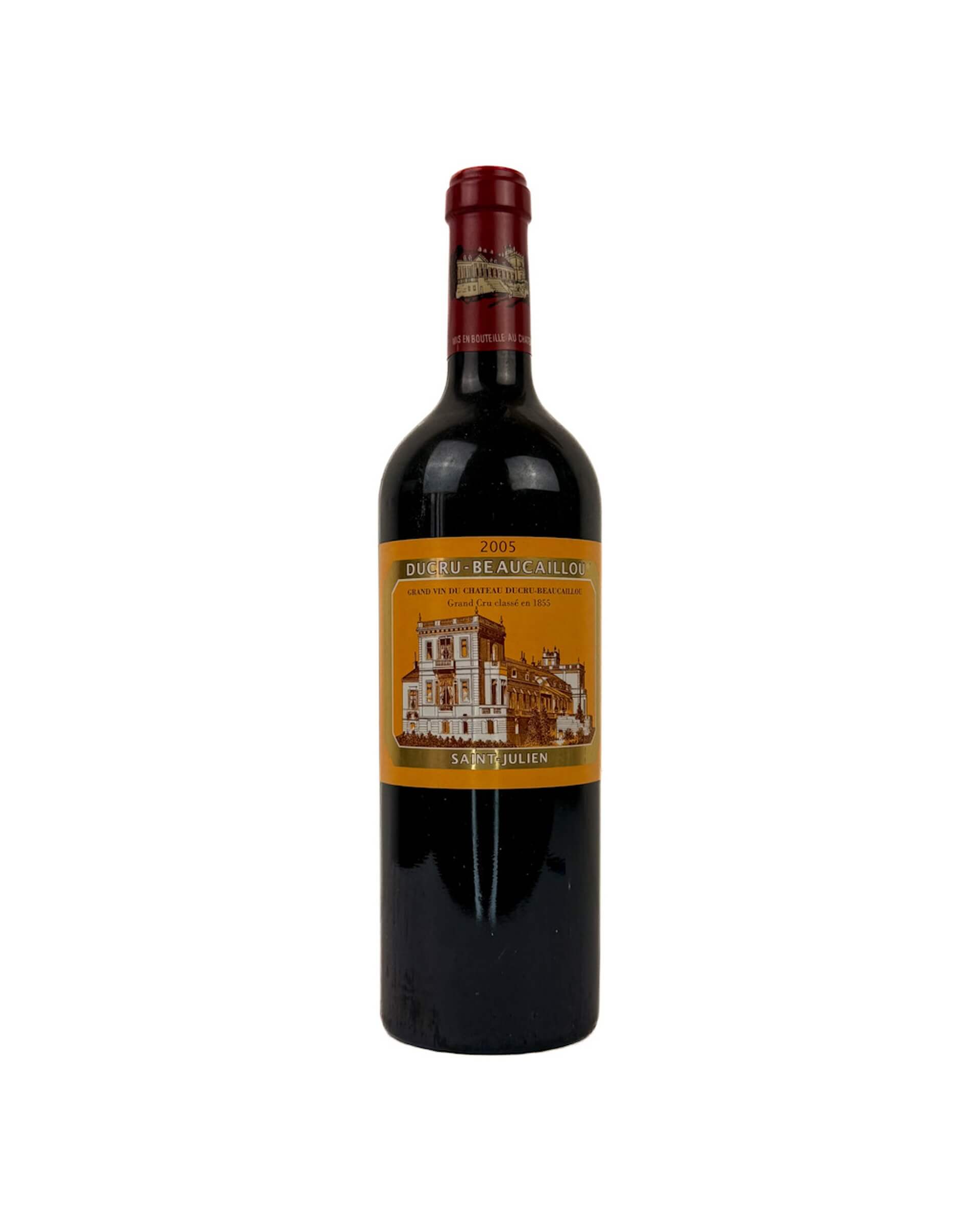
With age, secondary and tertiary notes unfurl: cigar box, dried herbs and the occasional truffle. What distinguishes a mature Saint-Julien from its neighbours is the way its graphite thread stays precise and tightly drawn rather than turning dusty as it can in an older Pauillac, while the cedar component tends to dominate over the tobacco-and-leather shift you typically meet in a mature Margaux. A Ducru-Beaucaillou 2005 tasted at around fifteen years of age is a fair benchmark: cassis softened into bramble and fig, that cedar core still front and centre, the graphite line intact and the tannins fully resolved. The fruit shifts from dark plum towards prune and fig, and the finish lengthens noticeably. Top Second Growths in great vintages — 2000, 2005, 2009, 2010, 2015, 2016 and 2018 among them — can peak at 20–30 years. The reward for that patience is one of Bordeaux’s most complete and harmonious drinking experiences.
Because its tannins are relatively finer than Pauillac’s, Saint-Julien is a touch more food-flexible. The classic match is still roast lamb and game, but the wine slots happily alongside a wider spread of rich preparations:
One pairing worth singling out: a mature Léoville-Barton, around twelve to fifteen years old, suits a well-aged Comté far better than a fresh, milder cheese. The wine’s developed cedar-and-tobacco tertiary notes lock onto the nutty, crystalline savour of a 24-month Comté, whereas a young Cheddar tends to flatten those same aromatics and leave the tannins exposed. It is a small swap that makes the bottle taste more complete.
Serve at 16–18 °C. Decant younger vintages for at least an hour, and give classified growths under ten years old a generous two. The pairings to avoid are delicate fish and cream-dominant sauces, both of which the tannin structure tends to overwhelm.
Saint-Julien spans a wide price range, and understanding the tiers makes it far easier to buy well. Across Tour de Wine’s 17-bottle selection, all prices are in euros, anchored in real catalogue figures rather than vague estimates.
The most accessible Saint-Julien in our catalogue starts at €75 — an entry tier below the classified estates, typically second labels and lighter vintages. The classified and top second-label entry tier begins from around €90. Either way, these are genuine appellation wines — not declassified or generic Bordeaux — and they often offer the best-value introduction to the commune. They drink beautifully within five to eight years, especially with a short decant.
The median price in our Saint-Julien range sits at €160. At this level buyers reach classified-growth vintages at sensible maturity — third and fourth growths in their drinking windows, plus younger second-label wines from the very top estates. This is the price point serious Bordeaux buyers return to most often for dependable quality.
At the 90th percentile, bottles reach €400 — Deuxième Cru classified growths in notable vintages, estates of the calibre of Léoville-Barton and Ducru-Beaucaillou in years worth cellaring further. The single most exceptional bottle in the catalogue reaches €8,800: a top-vintage, first-selection Second Growth of genuine rarity, for serious collectors or landmark celebrations. The estate name is withheld at the producer’s request — contact our team for details on the specific château and vintage. To browse the wider region, explore our full Bordeaux wines range or step up the country level to France.
Saint-Julien is an AOC appellation on Bordeaux’s left bank that produces exclusively Cabernet-dominant red wines. The quickest way to place it: where Pauillac is more powerful and slower to open, and Margaux is more perfumed and delicate, Saint-Julien sits between the two — Pauillac-like structure with a finer, more lifted finish that drinks well sooner. See the style section above for how that plays out from young to mature bottles.
At Tour de Wine, Saint-Julien starts from €75, with accessible classified and second-label bottles from around €90. The typical mid-range of the catalogue sits near €160. Prestige classified growths in sought-after vintages reach €400, and the rarest bottle in the catalogue is priced up to €8,800. All prices are in euros.
The most recognised names are the three Léoville estates — Las Cases, Barton and Poyferré — along with Ducru-Beaucaillou and Gruaud-Larose among the Second Growths, with Talbot, Branaire-Ducru, Beychevelle and Langoa-Barton as reliable Fourth and Third Growths. Of the châteaux that move through our 17-bottle catalogue, a Fourth Growth such as Beychevelle or Branaire-Ducru is a sensible first choice for newcomers, delivering true classified-growth character without a long cellar wait, while Léoville-Barton or Ducru-Beaucaillou suit those ready to lay bottles down. For an even gentler entry, a second label such as Clos du Marquis is a reliable way to taste the commune for the first time. Stock shifts, so check the live catalogue for what is pourable today.
Second labels and lighter vintages can be enjoyed with decanting from about five years. Classified growths typically need 8–12 years to integrate their tannins fully. Top Second Growths in great vintages such as 2000, 2005, 2009, 2010 and 2016 can evolve for 20–30 years. Always decant young classified Saint-Julien at least one hour before serving.
Written by the Tour de Wine buying team. Last reviewed: June 2026.
This site is restricted to adults. By entering, you confirm that you are of legal drinking age in your country of residence.