
97
0,75
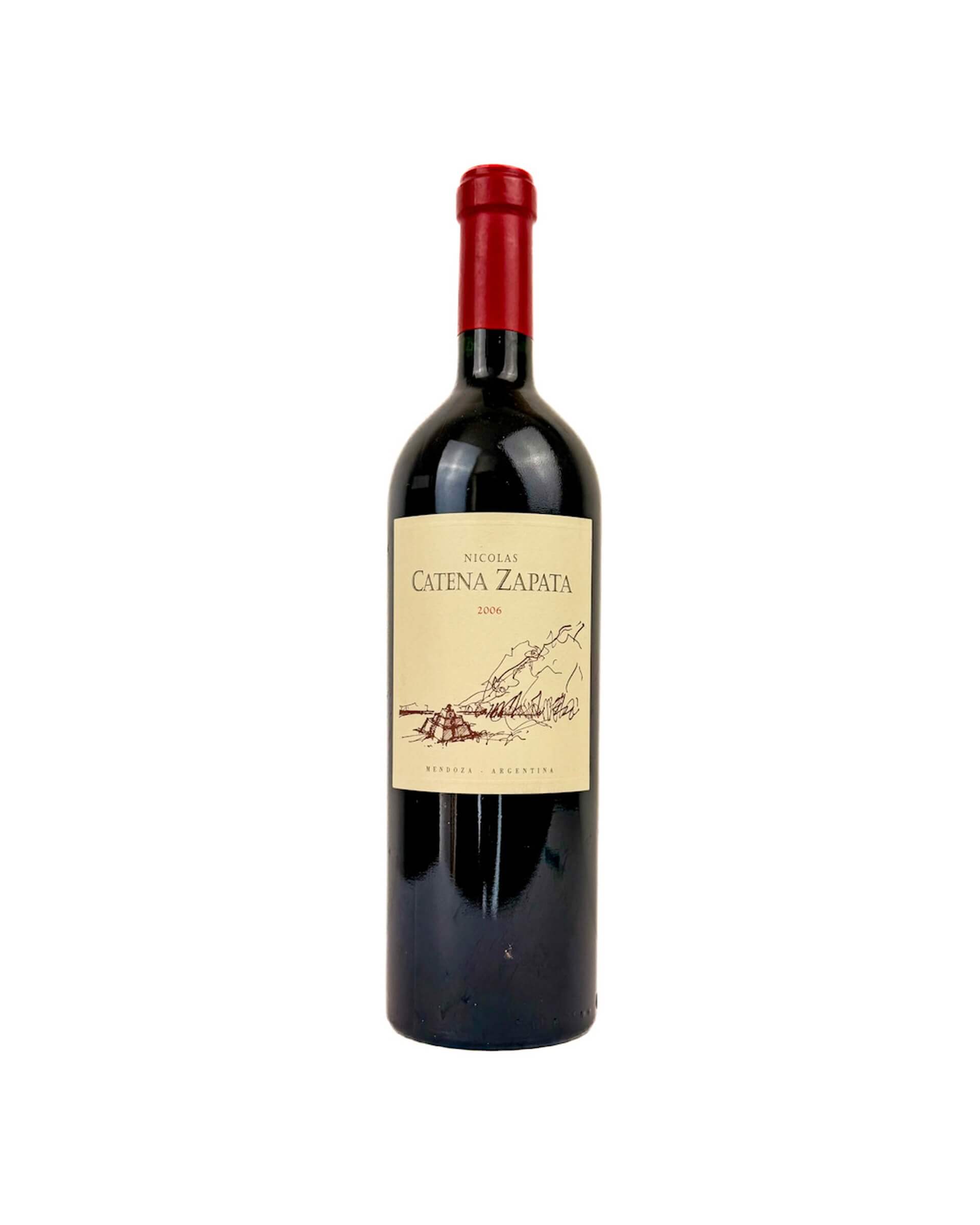
2006
Catena Zapata
Wines, producers, regions...
Argentina wine is, before anything else, a story of altitude. The country’s most important vineyards climb the eastern foothills of the Andes, from around 600 metres in mainstream Mendoza up to roughly 3,000 metres in the highest Salta sites around Cafayate — elevations that sit well above almost every European appellation. That altitude is not a marketing flourish; it is the operative quality mechanism behind the finest Argentine reds, and it explains why Argentine Malbec earned a place at serious tables across the world.
What makes the category genuinely compelling to us is that Malbec is, by origin, a French grape. It arrived in Mendoza in the mid-nineteenth century and found in the Andes a more celebrated expression than it had ever achieved in the vineyards it left behind. For a merchant whose core is our French range, an Argentine bottling is therefore not a departure from our compass but an extension of it — terroir read with the same precision we bring to Burgundy or Bordeaux.
The selection on this page is deliberately small. It is a curated edit of Argentina’s premium tier rather than an exhaustive survey: three bottles, opening from around €80, with most of the selection priced near €160 and the top expression reaching €165. Every bottle here is overwhelmingly a red wine, and every one was chosen because altitude and winemaking intent are legible in the glass. The sections below explain the regions, the grapes, and the buying logic behind that edit.
Argentina’s wine map runs north to south along the Andean spine, and the single thread connecting its very different regions is elevation. Even the lower-altitude Mendoza vineyards, at around 600 metres, would count as high-altitude sites almost anywhere in Europe. Climb into Valle de Uco or up to Cafayate and the vines are working at altitudes that change the character of the wine entirely. This is the central fact behind any honest discussion of Argentina wine regions, and the reason high altitude Argentina wine has become a recognised quality category rather than a curiosity.
The mechanism is straightforward. At elevation, intense daytime solar radiation coexists with cold nights, producing a large diurnal temperature range that slows the ripening cycle. Slower ripening means smaller berries with thicker skins — more colour, tannin, and aromatic compounds — alongside preserved natural acidity and greater complexity, all without the overripe, jammy character that affects warm, low-altitude wines. This is precisely why Argentina Malbec at the premium tier combines warmth of fruit with a structural precision that set it apart from other New World reds in the early 2000s and continues to define its finest expressions today.
Mendoza accounts for the overwhelming majority of Argentina’s wine production — roughly 70% — and it is home to the country’s most celebrated bottles. Spread across the high desert in the rain shadow of the Andes, it is a place where viticulture depends entirely on snowmelt irrigation and where sunshine is abundant but the nights stay cool. For anyone searching for Argentina wine Mendoza is the natural starting point, and the engine of nearly everything the country is known for in the glass.
But “Mendoza wine” is not a single thing. Within the province, two sub-zones define the premium tier, and the difference between them is exactly the difference a buyer should understand before choosing a bottle. To explore that depth and the bottles behind it, see our dedicated Mendoza wines selection.
Luján de Cuyo, at 850–1,050 metres south of Mendoza city, is the zone that established Argentine fine wine internationally. It holds some of the country’s oldest Malbec plantings — pre-phylloxera vines on sandy soils the phylloxera louse could not penetrate — and it produces the classic Argentine Malbec profile: deep ruby-violet colour, generous plum and dried-violet aromatics, a rounded and concentrated mid-palate, and firm tannins with an eight-to-twelve-year ageing horizon in fine examples.
Valle de Uco, at 900–1,500 metres further south, is the higher-altitude frontier. Its three sub-zones — Tupungato, Tunuyán, and San Carlos — share the altitude effect at its most pronounced: even slower ripening, cooler nights, more mineral soils. The resulting wines are more structured and fine-grained than classic Mendoza Malbec, with aromatics that shift from black plum toward red fruit, violet, graphite, and dark chocolate, and a mineral tension that places the best Valle de Uco bottlings alongside serious European reds in quality discussions. These are wines built for cellaring — twelve to twenty years for the finest single-vineyard expressions.
Argentina is a Malbec country first, but it is not a one-grape country. The Andean foothills support a surprisingly broad palette of red and white varieties, and at the premium level the supporting grapes matter as much to a serious buyer as the headline one.
Malbec is a French grape. It arrived in Mendoza around 1853, introduced by the French agronomist Michel Pouget as part of an effort to raise Argentine wine quality to European standards. The variety struggled in Bordeaux and made its finest French expression in Cahors, but it was in the Andes’ altitude and continental climate that it found a terroir perfectly suited to its structure: cool nights preserved the acidity that low-altitude plantings often lost, while the intense Andean sun gave the thick-skinned berry the warmth it needed to ripen fully. The result was a revelation, and Argentina now grows more Malbec than anywhere else on earth.
Mendoza’s second significant red variety, particularly in Luján de Cuyo and Valle de Uco. At altitude, Cabernet Sauvignon develops a more restrained, structured profile than in warm-climate New World regions: blackcurrant and cedar rather than jammy cassis, with firm tannins that integrate well over eight to fifteen years. It is increasingly used in prestige single-variety bottlings and in high-end Malbec–Cabernet blends.
Torrontés is Argentina’s most distinctive white grape and its most widely exported white. Grown principally in Salta around Cafayate at extreme altitude, it is intensely aromatic — floral, peach, rose petal — yet finishes dry and crisp on the palate, correcting any assumption that “aromatic” means “sweet.” It is unlike any European white variety and defines the upper end of the Argentine white category. We do not currently stock Torrontés, but no honest account of Argentina wine would leave it out.
Bonarda — locally known as Douce Noire — is Argentina’s second most planted red after Malbec: deep-coloured, fruit-forward, rarely exported at fine-wine level but widely grown for everyday blends. Syrah and Merlot are also planted across Mendoza, and Cabernet Franc appears as an occasional blending variety. In the cool south, Patagonian Pinot Noir is an emerging category of genuine interest for cooler-climate wine buyers.
Salta — the highest vineyards on earth. Cafayate, in the Salta province, sits between 1,700 and 3,100 metres above sea level, among the highest commercial vineyards anywhere. The extreme altitude amplifies the diurnal temperature range to its maximum: furnace-hot days, freezing nights. For Torrontés the result is a white wine of extraordinary aromatic intensity and palate freshness; for Malbec, Salta produces wines that are even more structured and perfumed than Valle de Uco — a niche category for serious collectors willing to seek them out.
Patagonia — Argentina’s cool-climate frontier. Patagonia, principally the Río Negro and Neuquén provinces, is Argentina’s southernmost wine region. Here the quality driver is latitude rather than altitude: the vineyards sit far lower than Mendoza — roughly 250–500 metres in Río Negro and 350–900 metres in Neuquén — but the southern latitude delivers a long, slow growing season with marked day–night temperature swings, giving a markedly different style from the high desert further north. Pinot Noir is the most interesting variety here — an Argentine Pinot Noir with genuine freshness, fine tannins, and strawberry-herb aromatics rather than the jammy profile of warmer climates. Patagonian Malbec, in turn, is more acid-driven and lighter-coloured than its Mendoza counterpart. Together these regions round out the Argentina wines map beyond the Mendoza heartland.
Malbec’s generous fruit and medium-to-firm tannins make Argentina Malbec unusually versatile at table — broad enough to match fatty grilled meats, yet structured enough to stand up to aged hard cheese. The right pairing still shifts as you move up the altitude and price ladder. Below are pairings differentiated by style tier, followed by serving guidance.
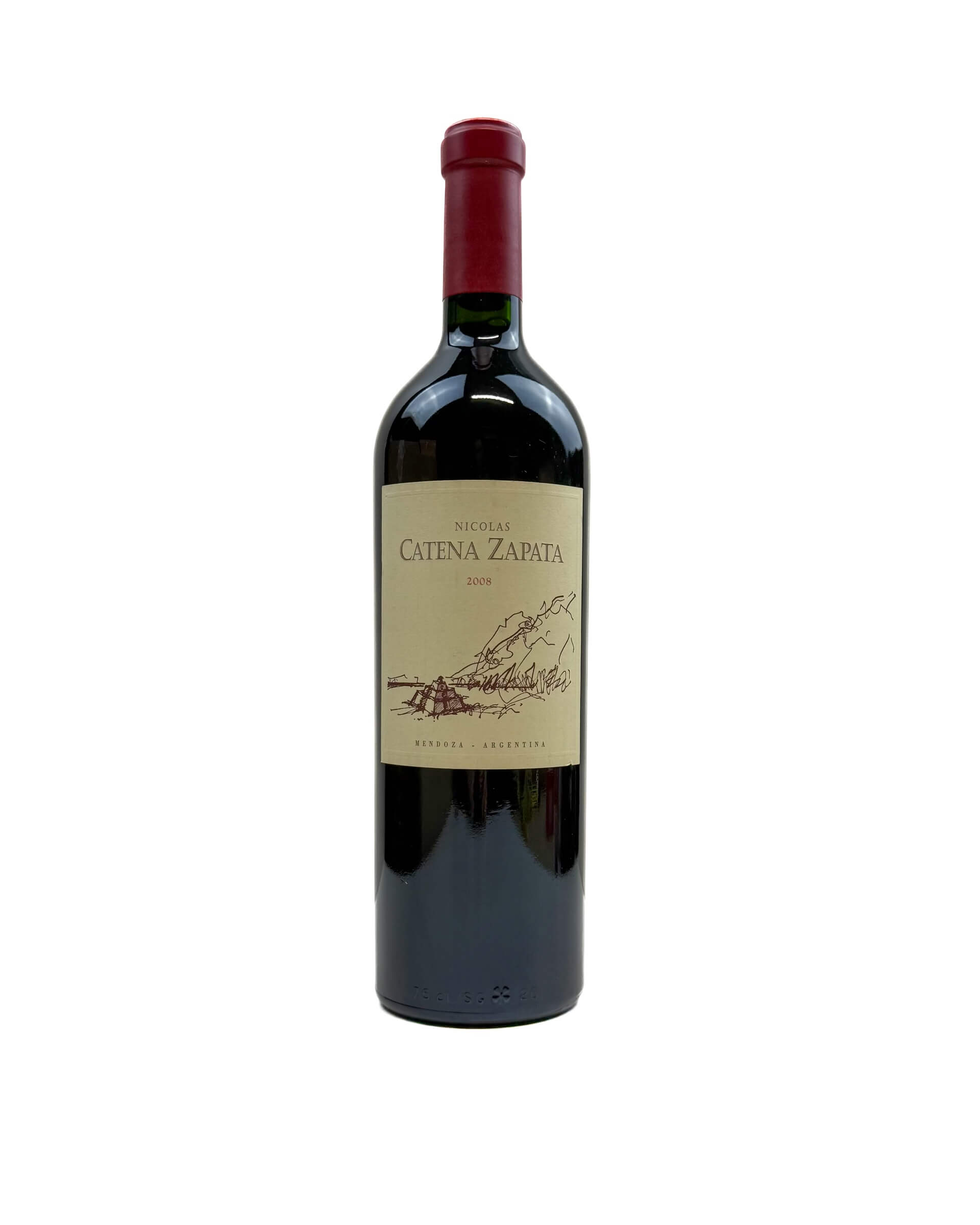
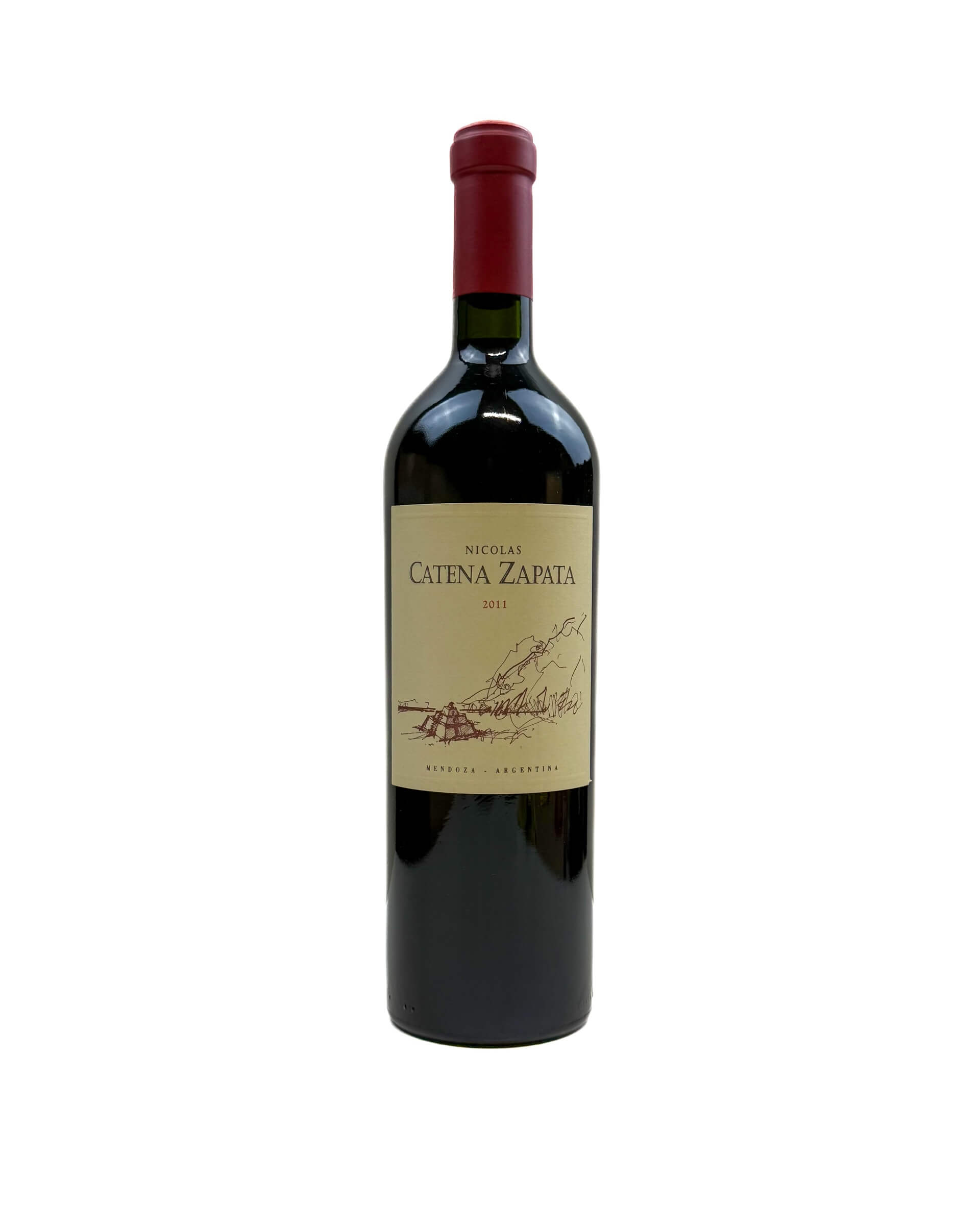
Tour de Wine’s Argentina selection opens from around €80 — already in the premium tier of Argentine wine, where sub-appellation and producer identity genuinely define the bottle. These are not supermarket Malbec. They represent a deliberate curatorial starting point, made by producers for whom terroir precision matters, and altitude and winemaking intent are legible in every bottle at this level. The benchmarks that defined this tier are well known — Catena Zapata, which pioneered high-altitude Malbec in Mendoza, and Zuccardi, whose Valle de Uco single-vineyard work helped establish the region’s mineral, structured style — and we select against that same standard of vineyard specificity rather than against a price point. For a buyer new to fine Argentine reds, this is the right place to begin.
The median price in the selection sits around €160 — the tier where structured, sub-appellation-specific Argentine wine fully reveals itself. At this level, a Luján de Cuyo old-vine expression or a Valle de Uco bottling with genuine mineral definition becomes the reward. A classic Luján de Cuyo Malbec here is built to age eight to twelve years; a genuine Valle de Uco single-vineyard expression rewards considerably longer cellaring, twelve to twenty years for the finest examples, developing a complexity that recalls the structural restraint of fine northern Rhône Syrah. This is where the altitude dividend is most clearly priced, and where most enthusiasts will find the best argentina wine for a considered cellar.
At the top of the current selection — up to €165 — you find the most precise and age-worthy expressions in the catalogue. The step up from the median is modest in price, while the quality argument, in terms of vineyard specificity, altitude, and winemaking intention, is decisive. These are wines for the cellar and the serious table. All prices are in euros, and the selection is intentionally small: when you buy Argentina wine from us, you are choosing from an edit made with the same standards we apply to our Old World range, not browsing a comprehensive survey.
Argentina is best known internationally for Malbec — a red grape of French origin that thrives at altitude in the Andean foothills and accounts for the majority of the country’s fine-wine production. But Argentina produces a wider range: Cabernet Sauvignon (particularly from Mendoza’s Luján de Cuyo and Valle de Uco sub-zones), Bonarda (the second most planted red, mostly in everyday blends), Syrah, and — most distinctively among whites — Torrontés, an intensely aromatic dry white grown at extreme altitude in Salta. Patagonian Pinot Noir is an emerging category with genuine cool-climate credentials. Argentina is not a one-variety country; Malbec is simply the one that made its international reputation.
There is no single best region, only the best region for a given style. Mendoza is the safe default and the volume leader, but the more useful answer is by intent: choose Luján de Cuyo for classic, rounded richness, Valle de Uco for mineral precision and cellar life, and Cafayate (Salta) for sheer aromatic intensity. From a value standpoint, Valle de Uco currently offers the strongest quality-to-price ratio in Argentine fine wine — its single-vineyard bottlings deliver structure comparable to far pricier Old World reds. For most buyers exploring the category for the first time, a structured Luján de Cuyo Malbec is the most reliable introduction.
No — but Malbec dominates for good reason. The variety found in Argentina’s Andean altitude a terroir that suits its character more completely than any site in France, its homeland, or elsewhere. That said, Mendoza produces serious Cabernet Sauvignon, single-variety Syrah, and increasingly accomplished blends. Salta produces Torrontés — Argentina’s flagship white — which is unlike any European white variety. Patagonian Pinot Noir is the country’s clearest step toward cool-climate fine wine. Argentine wine is a Malbec story first, but it does not end there; and at the premium level, the sub-appellation and altitude details matter as much as the grape name on the label.
Altitude buys two things at once: warm, sunny days that ripen Malbec’s thick skins fully, and cold mountain nights that lock in acidity. That balance lets the grape reach full flavour without turning jammy or losing freshness — the wider the day-to-night temperature gap, the finer the tannin and the more lifted the aromatics. In practice the effect compounds with elevation, which is why a Cafayate Malbec at close to 3,000 metres reads as more perfumed and tense than a Luján de Cuyo wine grown nearer 1,000 metres. It is a measurable viticultural advantage, not a slogan, and it is the single best reason these wines justify their price.
Written by the Tour de Wine buying team. Last reviewed: June 2026.
This site is restricted to adults. By entering, you confirm that you are of legal drinking age in your country of residence.