
97
0,75
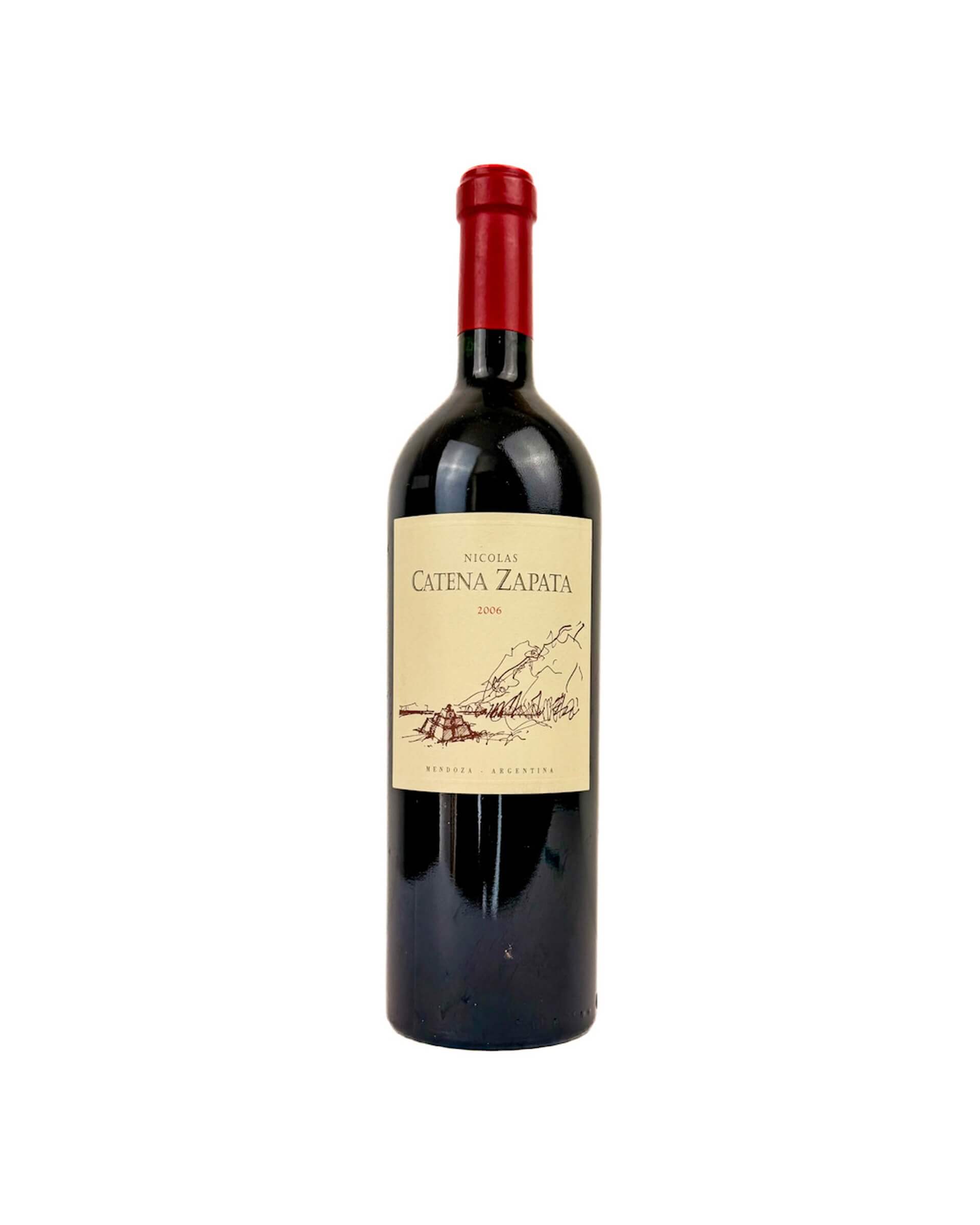
2006
Catena Zapata
Wines, producers, regions...
Mendoza is the engine room of Argentine fine wine, and for most collectors the words are inseparable from a single grape. Mendoza wine means Malbec above all — deep, perfumed, and grown higher than almost any vineyard in Europe. Spread across the desert foothills of the Andes, this is the world’s foremost high-altitude wine region, where intense mountain sun and cold Andean nights combine to produce reds of rare concentration and freshness.
The story of Mendoza Malbec is, at its root, a French one. Malbec is a grape of south-west France, and it was a French agronomist, Michel Pouget, who introduced the first cuttings to Mendoza around 1853. In the Andean foothills the variety found a terroir better suited to its character than anywhere it had grown before — and the modern result is the most celebrated Malbec on earth. Tour de Wine approaches the region through that French lens: precise about terroir, selective about quality, and honest about price.
Our Mendoza selection is small and deliberately curated — three bottles that begin at €80 and reach €165, drawn from the sub-appellations where altitude genuinely shapes the wine. What follows is a buyer’s briefing on why Mendoza tastes the way it does, how its sub-regions differ, and how to choose between them. You can explore the wider range through our Argentina wines collection.
Mendoza lies in the rain-shadow of the Andes, a semi-arid, continental landscape where viticulture depends on snowmelt irrigation rather than rainfall. What sets it apart from almost every classic European appellation is sheer elevation: even the lower-lying viticultural zones sit at 600–900 metres above sea level, and the finest vineyards climb far higher. This is, by any measure, the benchmark for high altitude Argentina wine.
Altitude is not a marketing flourish here — it is the central quality mechanism. At elevation the air is thinner and clearer, so vines receive intense solar radiation that thickens grape skins and deepens colour. At the same time, nights turn cold, creating a large diurnal temperature range that slows ripening, preserves natural acidity, reduces berry size, and concentrates flavour without tipping into jammy overripeness. Low humidity keeps the fruit healthy. The higher a Mendoza vineyard sits, the slower and more even the ripening — and, broadly, the finer and more age-worthy the wine. Understanding the altitude ladder is the key to reading any Mendoza Argentina wine on a shelf.
Malbec is the signature, but a serious read of Mendoza wine recognises a broader palette. Cabernet Sauvignon, Bonarda, Syrah, Chardonnay, and the aromatic Torrontés all have a place, and the region’s best producers increasingly work across several varieties. Below are the grapes that matter most when choosing from a Mendoza shelf.
What altitude does to Malbec is best understood by comparison with Cahors, the variety’s French home, where the grape ripens slowly under cloud and damp to give dark, savoury, sometimes austere wines. Lift the same grape to 1,000 metres and above in the dry Andean light and its phenolic expression changes entirely: the intense ultraviolet radiation drives anthocyanin and tannin development in the skins, building deep colour and ripe structure, while the cold nights lock in acidity and slow sugar accumulation. The fruit reads riper and more floral than in Cahors, yet the tannins stay fine and the acid line firm — a combination the variety simply cannot achieve at lower, warmer elevation. The result ranges from generous and approachable in the lower zones to structured and cellar-worthy in the Valle de Uco. For the French origin of the variety, see our France collection.
Mendoza’s second great red. At altitude — particularly in Luján de Cuyo and Tupungato — Cabernet Sauvignon develops a cleaner, more restrained profile than it shows in hotter climates: blackcurrant and cedar rather than jammy cassis, with tannins that are firm without being aggressive. It is increasingly used in prestige blends alongside Malbec, and it makes characterful single-varietal wines in its own right. Explore the grape further through our Cabernet Sauvignon selection.
Argentina’s second most planted red variety after Malbec, Bonarda rarely reaches export markets at fine-wine level, but it is worth naming as part of Mendoza’s true viticultural identity. Deep-coloured, juicy, and early-drinking, it is the regional workhorse — the grape behind much of the everyday red that locals actually pour.
White wine accounts for a small share of Mendoza’s output, but high-altitude Chardonnay from the Valle de Uco — Tupungato especially — produces wines of genuine finesse: crisp, mineral, and quite unlike the richer Chardonnays of warmer New World zones. Torrontés, Argentina’s signature aromatic white, is more closely associated with Salta further north, but appears occasionally in Mendoza plantings and blends. Blending varieties such as Merlot also play a supporting role in some of the region’s reds.
Luján de Cuyo, lying south of the city of Mendoza at roughly 850–1,050 metres, is the zone that built Argentine Malbec’s international reputation. It was among the first Argentine areas to gain its own controlled denomination of origin, and it holds some of the country’s oldest Malbec plantings — venerable vines on sandy soils that survived in part because the Andes’ sand-based subsoils were inhospitable to the phylloxera louse that devastated Europe’s vineyards.
In the glass, Luján de Cuyo is the “classic” Argentine Malbec: deep ruby-violet in colour, with generous black-plum and dried-violet aromatics and a rounded, concentrated mid-palate framed by firm but accessible tannins. The best bottles age gracefully over eight to twelve years, developing leather, tobacco, and graphite complexity. Compared with the Valle de Uco, Luján de Cuyo is less overtly mineral — richer, plusher, and more immediately welcoming. It is the obvious starting point for anyone learning what Mendoza wine region quality means at the premium level.
The Valle de Uco, south of Luján de Cuyo and climbing from roughly 900 to 1,500 metres, is the high-altitude frontier of Argentine winemaking and the source of much of the country’s most exciting fine wine. This is where the search for the best Mendoza wine has concentrated over the past two decades, as producers have pushed plantings ever higher up the Andean benchland in pursuit of freshness, tension, and precision.
The valley’s character is the altitude effect in its purest form: slower ripening, lower average temperatures, large diurnal ranges, and natural acidity retention. These are the qualities that define the modern, high altitude Argentina wine style — and the reason serious collectors increasingly look here first.
The three sub-zones of the Valle de Uco each have distinct soils and microclimates, but they share a recognisable house style: more structured and mineral than classic Mendoza or Luján de Cuyo, with primary aromatics that shift from black plum toward red fruit, violet, fresh herbs, and dark chocolate. Tannins are finer-grained and acidity more pronounced, and the finest single-vineyard expressions can age for twelve to twenty years. These are the wines Argentine producers credibly pitch against the world’s top reds. Tupungato, with its granitic and alluvial soils, has emerged as the sub-zone most closely tied to Mendoza’s prestige tier, while Tunuyán and San Carlos contribute their own structured, age-worthy expressions to the valley’s reputation.
One of the pleasures of Mendoza wine is how clearly its style tiers map onto the table. A ripe, lower-altitude Malbec wants different food from a taut Valle de Uco single-vineyard bottle, and matching the wine to the dish — and to the right glass and temperature — repays the effort.
Because Tour de Wine is a French specialist merchant, our Mendoza range is intentionally small and curated rather than exhaustive — a tight edit of the region’s finest, not a price-led catalogue. Each of the three bottles we list was chosen for a specific reason: every one comes from a named high-altitude sub-appellation rather than a generic “Mendoza” bottling, and together they trace the altitude ladder from the classic heartland of Luján de Cuyo up into the high-elevation Valle de Uco. For the buyer seeking the best Mendoza wine without wading through hundreds of labels, that focus is the point. The selection opens at €80: already at the quality tier where altitude and sub-appellation genuinely shape the wine. These are not introductory bottles but the serious entry point to premium Argentine Malbec, made by producers with a clear terroir argument.
The median price in the selection sits around €160 — the sweet spot for structured, complex Mendoza from a defined sub-appellation, the level at which the wine rewards five to ten years of cellaring and delivers real depth at the table. The top of the selection reaches €165, reserved for the most precise and age-worthy expression we currently stock. Rather than guess at the label, use a simple framework: for maximum cellaring potential and the most mineral, tightly wound style, look to the Valle de Uco expressions at the top of this selection; for the rounder, more immediately generous classic-Argentine profile, choose the Luján de Cuyo end. The €5 step between the median and the top bottle is small, so let style and intended drink window — not price — drive the choice.
To buy Mendoza wine with confidence, let altitude guide you: lower zones for generous, ready-to-drink pleasure; Luján de Cuyo for the classic, ageable Argentine style; Valle de Uco for mineral precision and the longest cellaring. Every bottle here is priced in euros and chosen on quality alone. You can also browse the wider category through our Red wines collection.
Mendoza is most famous for Malbec, which thrives at altitude and accounts for the majority of the region’s fine-wine production. But the region also makes notable Cabernet Sauvignon — particularly in Luján de Cuyo and the Valle de Uco, where altitude yields a more restrained, structured style than warmer New World areas. Bonarda is widely planted and used mostly in easy-drinking reds, while white output, though small, includes high-altitude Chardonnay from the Valle de Uco’s Tupungato sub-zone: wines of genuine mineral tension that challenge the idea that Mendoza is exclusively a red-wine region.
For a buyer, the practical answer is that the style shift becomes detectable in the glass at roughly 1,000 metres and grows unmistakable above 1,200: the wine gains a perceptible acid line and a savoury, mineral edge, and the fruit moves from soft black plum toward firmer red fruit and violet. At these elevations the growing season also extends by roughly three to four weeks compared with Luján de Cuyo, which is why high-altitude bottles tend to need — and reward — longer cellaring. If you want a wine to drink tonight, stay lower; if you are buying to lay down for five to fifteen years, the higher the listed vineyard, the safer the bet. As a rule, a Valle de Uco label on the bottle signals more structure, more mineral character, and a longer drink window than a standard Mendoza expression.
Both are Mendoza’s premium sub-zones, but they produce distinct styles. Luján de Cuyo is the older-established area, home to many of Argentina’s oldest Malbec vines, and it defines the “classic” Argentine Malbec profile: concentrated, rounded, generous, and built to age. The Valle de Uco is the higher-altitude frontier — vineyards sit several hundred metres higher, which extends the growing season by roughly three to four weeks — and its wines are more mineral, more structured, and more aromatic, with finer tannins and better acidity retention. The Valle de Uco — Tupungato above all — is increasingly tied to Argentina’s prestige single-vineyard tier. If Luján de Cuyo is the classic, the Valle de Uco is the emerging master class.
No. The style of Mendoza Malbec varies considerably with altitude and producer intent. Entry-level Malbec from the lower zones is approachable, fruit-forward, and medium-to-full-bodied, designed for early drinking. Luján de Cuyo and Valle de Uco wines are typically fuller-bodied and more tannic in youth but gain elegance and complexity with cellaring. A high-altitude single-vineyard Valle de Uco Malbec can be surprisingly fine-grained for a full-bodied red, with a mineral, tightly wound tension more reminiscent of a structured Left Bank Bordeaux than of the plush, generous profile many drinkers associate with Argentine reds. If you want elegance over power, skip the lower-altitude tier and go straight to the Valle de Uco bottles at the top of our selection — they are the expressions built for finesse and the long cellar, not for immediate, fruit-driven impact.
Written by the Tour de Wine buying team. Last reviewed: June 2026.
This site is restricted to adults. By entering, you confirm that you are of legal drinking age in your country of residence.