
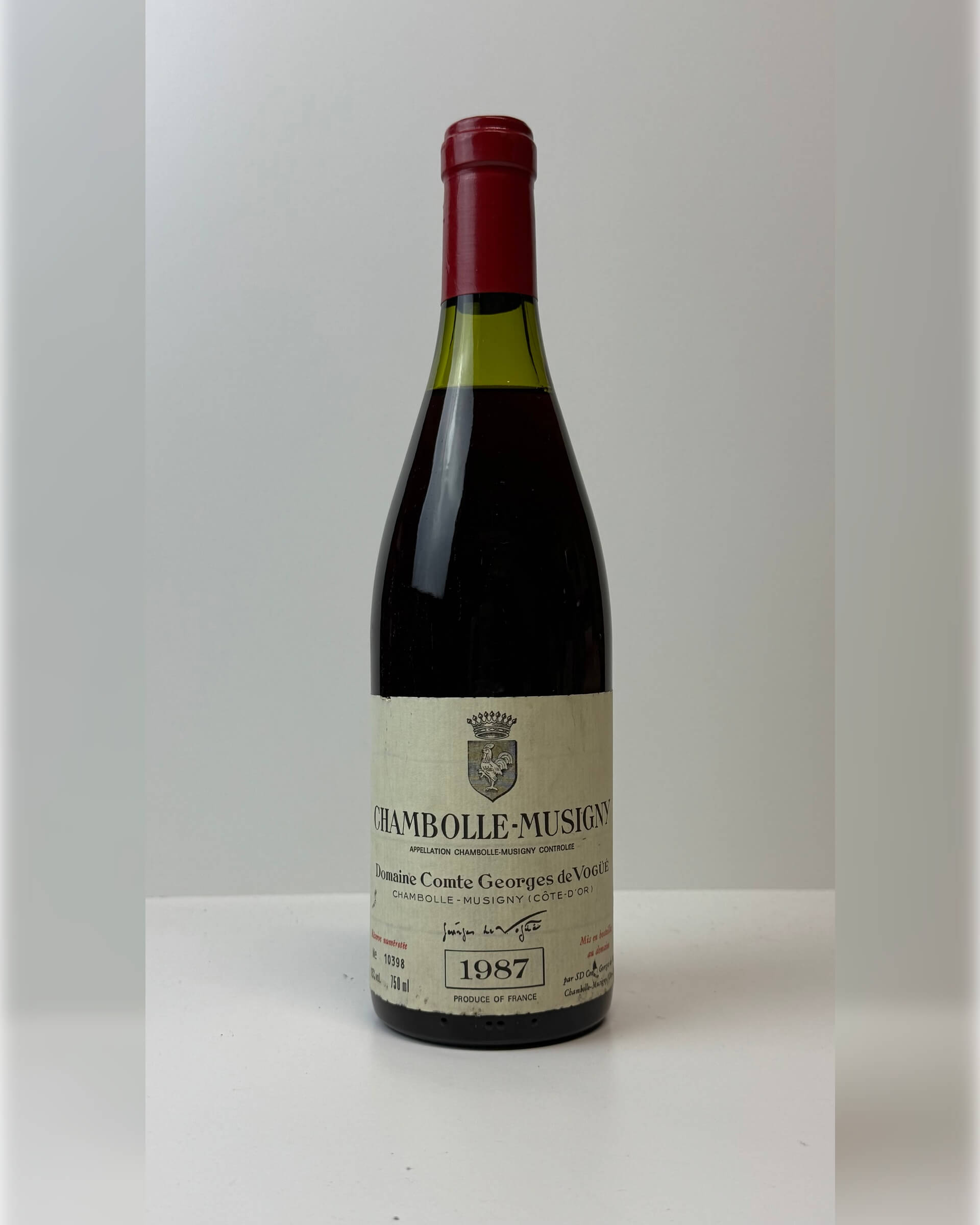
82
0,75
1987
Domaine Comte Georges de Vogue
Wines, producers, regions...
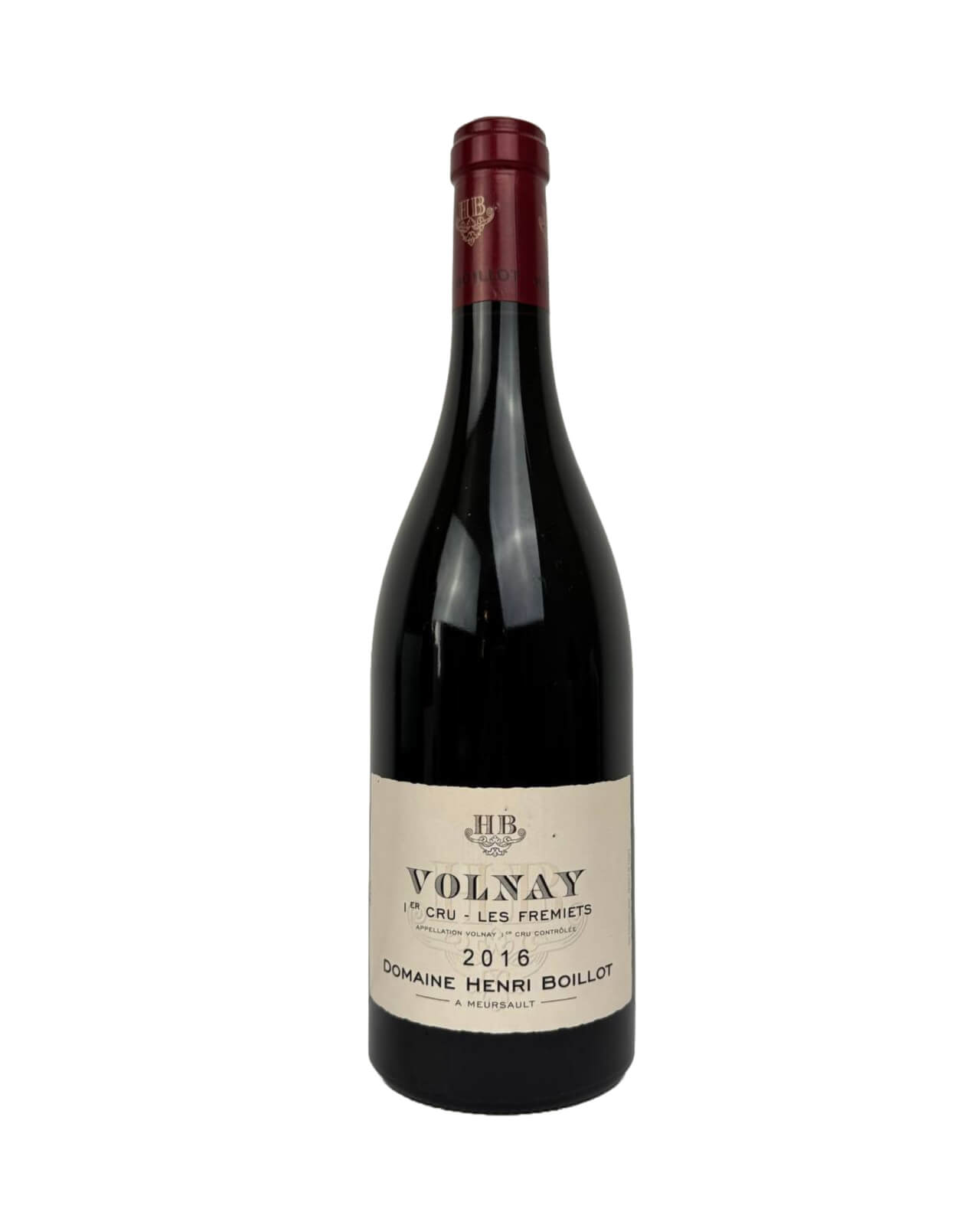
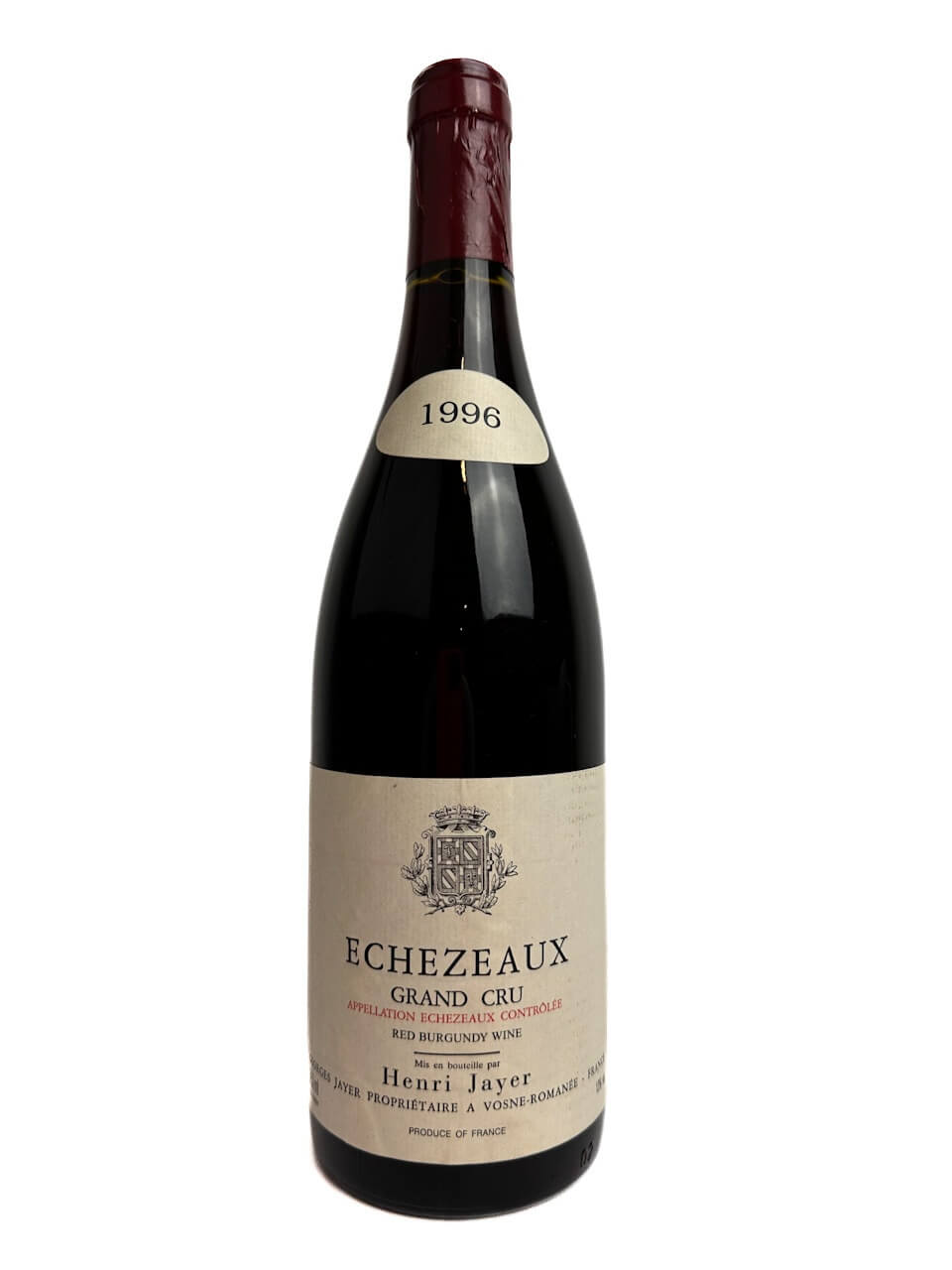
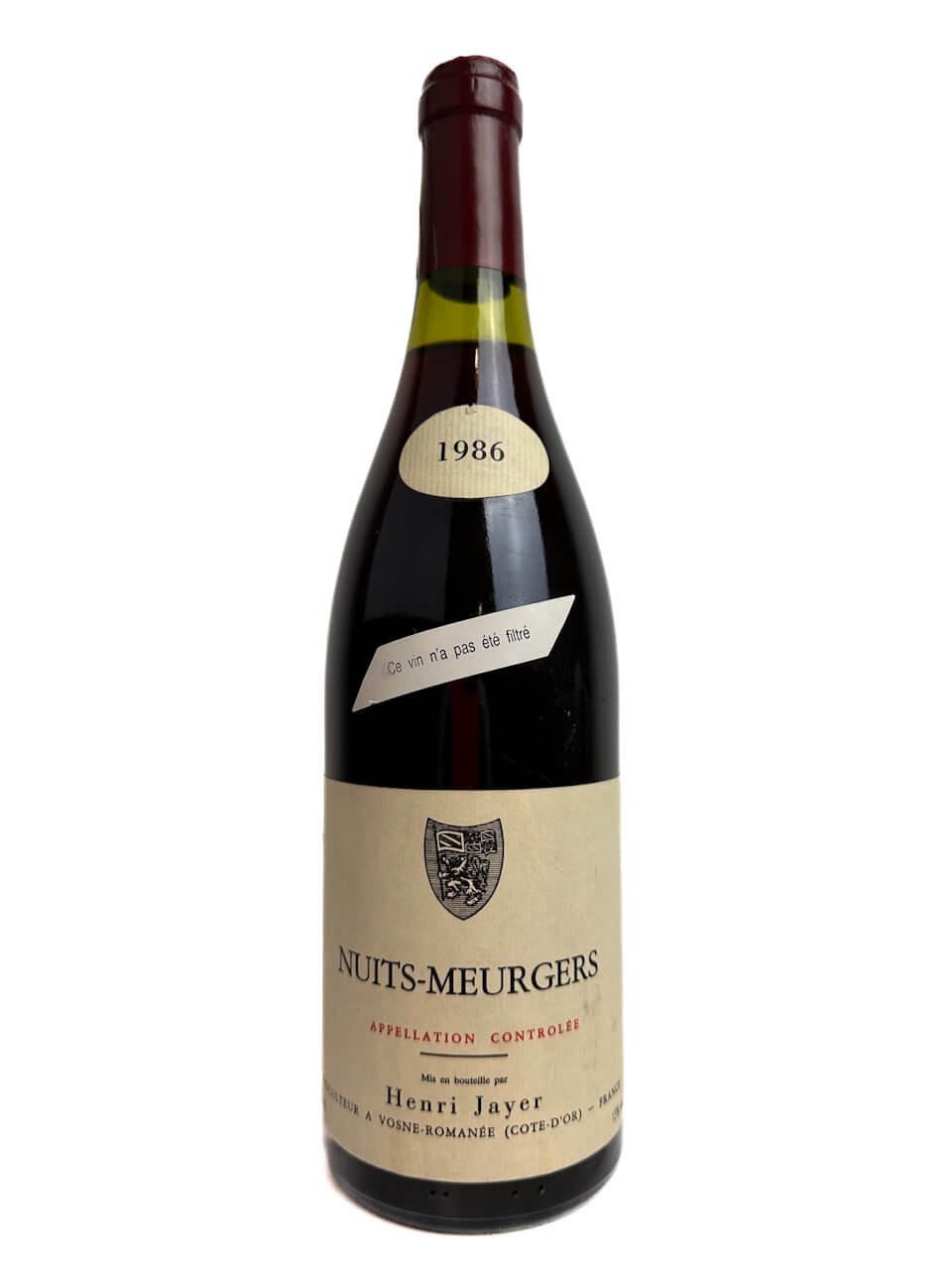
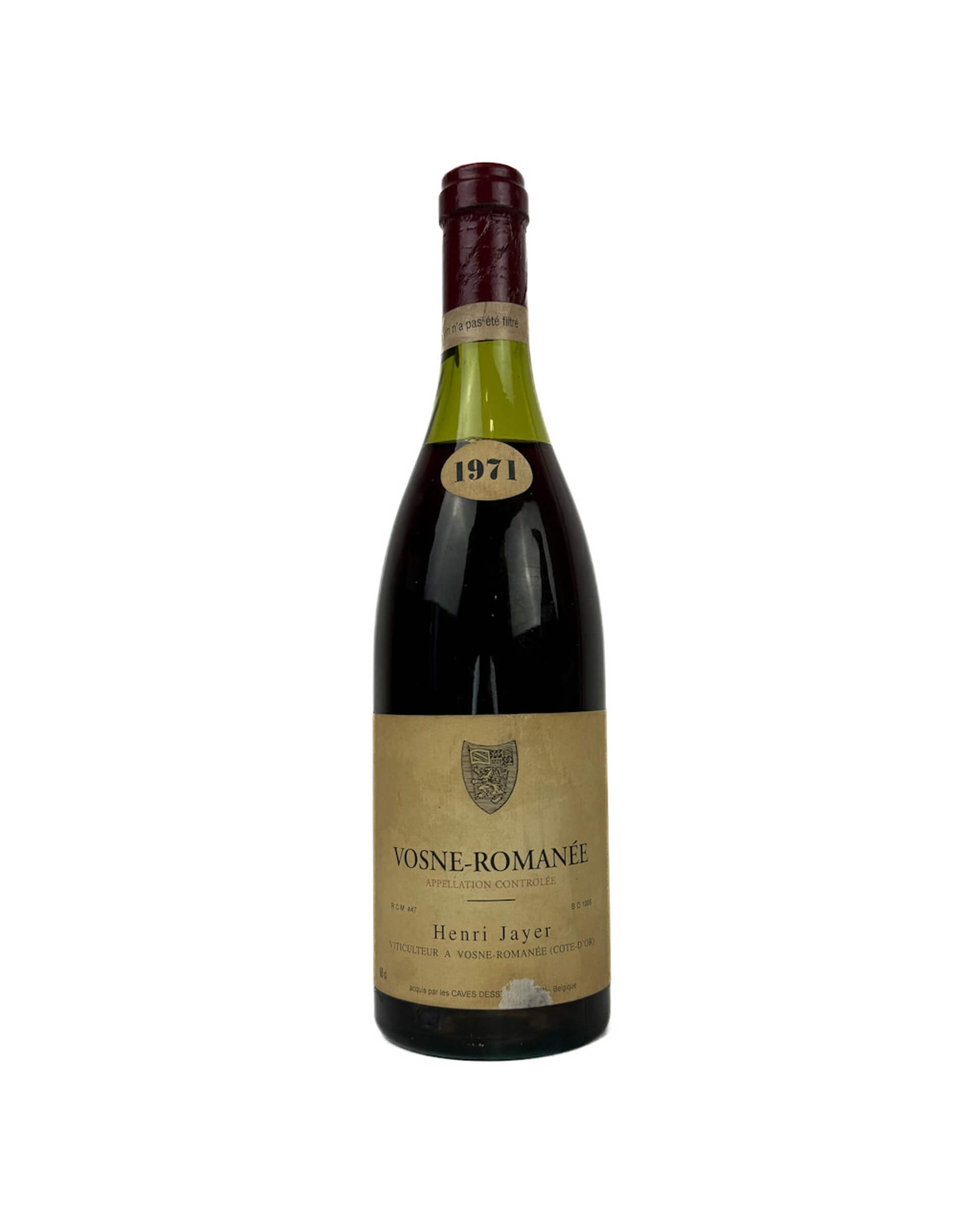
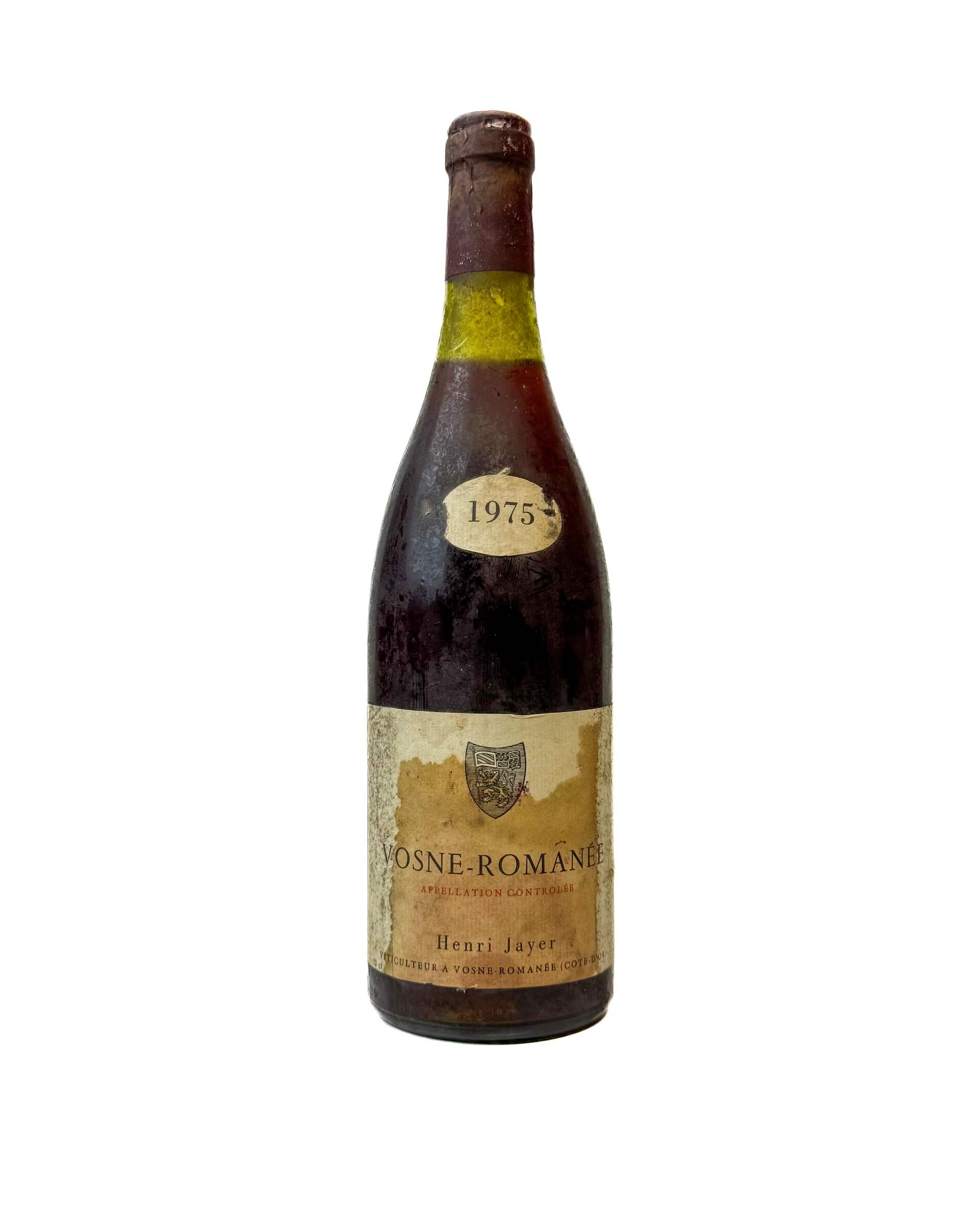
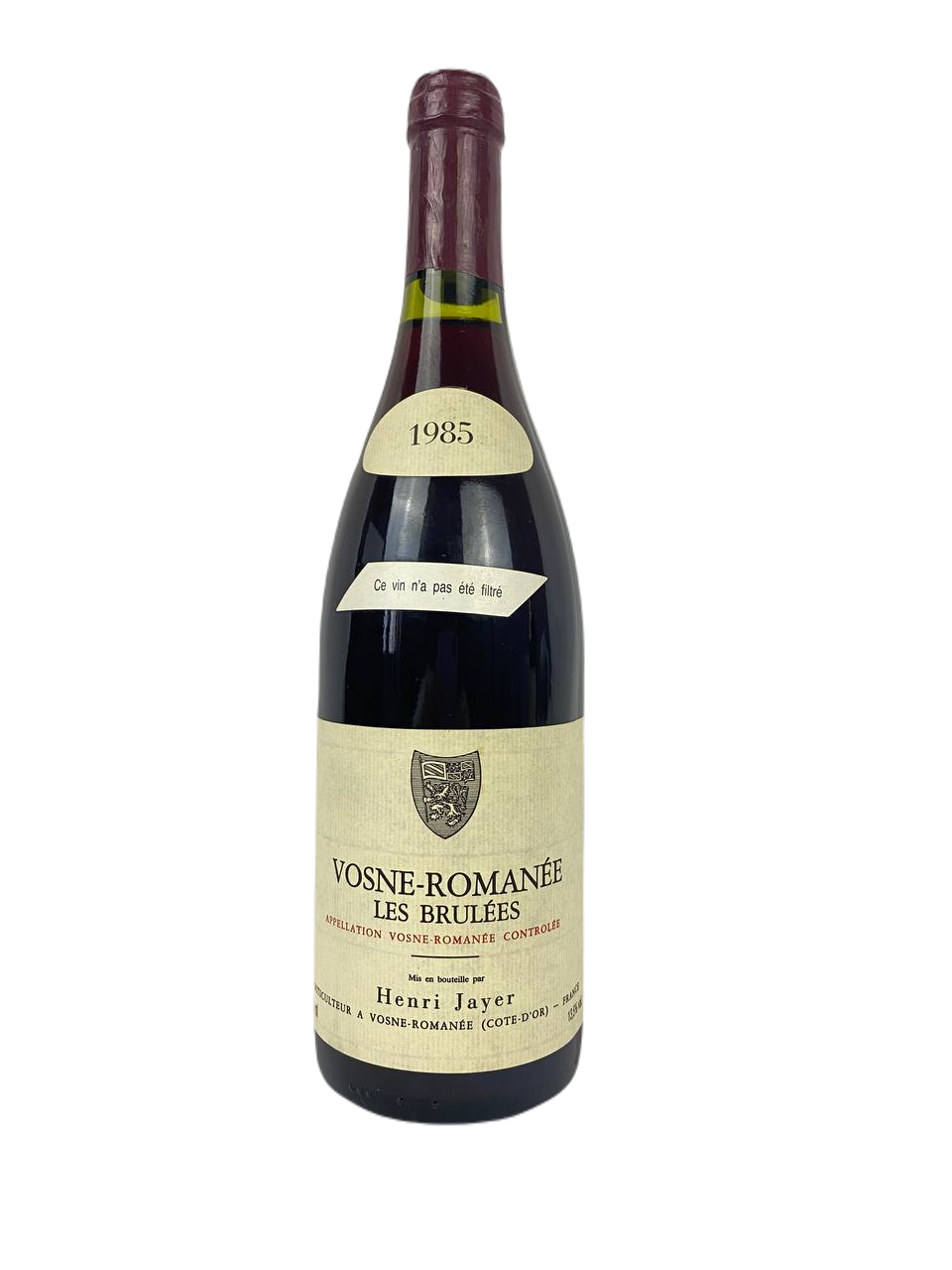
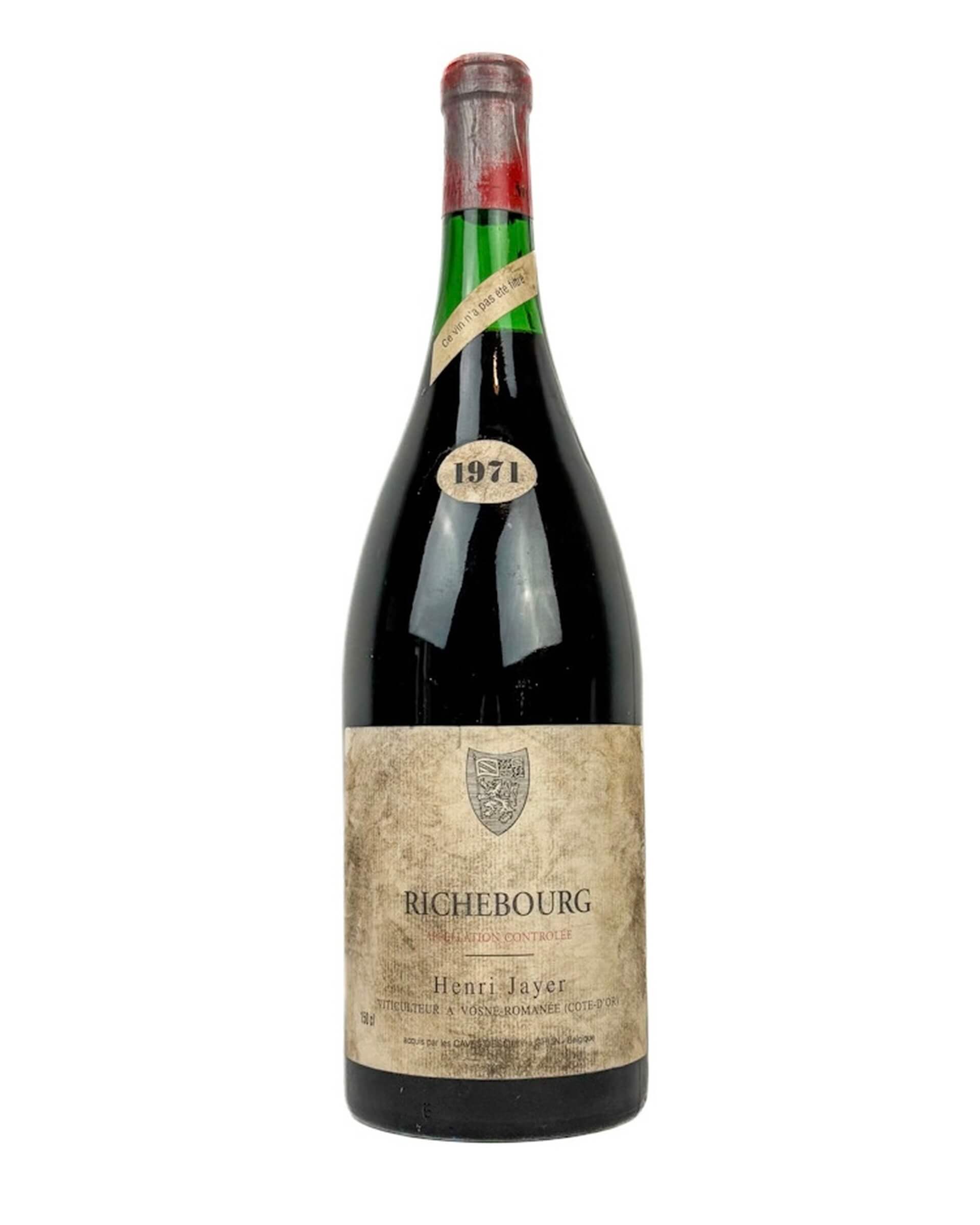
The Côte d’Or is the beating heart of Burgundy and, for many collectors, the single greatest stretch of vineyard on earth. This narrow east-south-east-facing escarpment runs for roughly 50 kilometres from Marsannay in the north to Santenay in the south, yet on a band often less than two kilometres wide it concentrates the overwhelming majority of Burgundy’s Grands Crus and Premiers Crus. Our Tour de Wine selection brings together eight references from across this golden slope, spanning both sub-regions and reaching back to mature vintages from the 1970s — chosen to set the legendary reds of the Côte de Nuits, several of them from the cult cellar of Henri Jayer, alongside the silken reds of the Côte de Beaune.
To buy a wine from the Côte d’Or is to choose among names that anchor the world’s auction and collector markets: Chambertin, Musigny and Romanée-Conti for the reds; Montrachet and Corton-Charlemagne for the whites. Each is the expression of a terroir measured in metres rather than hectares, where a parcel ten metres from its neighbour can yield a fundamentally different wine. This page is your guide to understanding that territory — its geography, its two souls, its grapes and vintages — and to choosing the bottle best suited to your project and your budget.
The Côte d’Or — literally the “golden slope” — is the limestone escarpment that gives its name to a French département and to the most prestigious vineyards in Burgundy. It stretches north to south between Dijon and Chagny, with around 8,000 hectares of AOC vines clinging to its eastern face. The magic lies in the geology: an alternation of Jurassic marls and limestones, broken by slope scree, creates extraordinarily complex soils that shift over a few metres. This is precisely why the appellations here are so finely parcelled — the land itself dictates an almost obsessive hierarchy of named vineyards.
The best parcels face east to south-east, sitting at altitudes of roughly 230 to 420 metres on the mid-slope, where drainage, sunlight and exposure align. The climate is semi-continental — cold winters, warm summers, and increasingly early harvests. The Côte d’Or divides naturally into two sub-regions: the Côte de Nuits in the north, from Marsannay to Corgoloin, and the Côte de Beaune in the south, from Ladoix-Serrigny to Santenay. That division is not administrative trivia — it defines the entire style spectrum of the wines, from the most structured reds of the planet to its most profound dry whites.
The first decision any Côte d’Or buyer faces is which of the two sub-regions to explore. They share a grape and a hierarchy, yet they speak with very different voices. The table below sets out the essentials before we look at each in turn.
Home to flagship appellations such as Gevrey-Chambertin, Chambolle-Musigny, Vosne-Romanée and Nuits-Saint-Georges, the Côte de Nuits concentrates 24 of Burgundy’s red Grands Crus along barely 20 kilometres of slope — including Romanée-Conti, routinely among the most expensive wines at international auction. Here Pinot Noir on Jurassic limestone achieves a rare combination: depth, minerality, firm tannic structure and an ageing potential that can run for decades. Explore the full range through our Côte de Nuits selection, where the great reds of the northern slope sit side by side.
The Côte de Beaune carries a dual identity. It produces dry whites widely ranked among the finest in the world — Montrachet and Corton-Charlemagne — alongside graceful reds from Pommard and Volnay. Seven of Burgundy’s eight white Grands Crus lie here, and the Chardonnay reveals a remarkable spectrum: the chiselled minerality of Puligny-Montrachet, the buttery opulence of Meursault, the hazelnut richness of Chassagne-Montrachet. For a buyer, this is the place to find a benchmark white or a more supple, gastronomic red, all rooted in the same limestone heritage as their northern neighbours.
Nowhere else does the French AOC pyramid — regional, village, premier cru, grand cru — reach so high. The Grands Crus of the Côte d’Or represent the apex of Burgundian winemaking, and they account for much of the rarity and pricing you will encounter across our selection.
Chambertin and the nine Grands Crus of Gevrey-Chambertin, Musigny at Chambolle, Clos de Vougeot, and the six Grands Crus of Vosne-Romanée — among them Romanée-Conti, La Tâche and Richebourg. The Côte de Nuits alone holds 24 of Burgundy’s 33 Grands Crus. Production is tiny, measured in mere hectolitres for the rarest, and the best vintages reward 15 to 30 years of cellaring. That scarcity is precisely what drives both their price and their limited availability — browse them through our Grands Crus of Burgundy.
Montrachet — eight hectares shared between Puligny and Chassagne — Chevalier-Montrachet, Bâtard-Montrachet, Bienvenues-Bâtard-Montrachet, Criots-Bâtard-Montrachet, Corton-Charlemagne and Corton. These seven Grand Cru appellations yield Chardonnays of a tension and complexity found nowhere else, capable of ageing for 20 years and more. Their extreme rarity — often just 60 to 150 hectolitres per appellation — explains why they are among the most coveted white wines on the planet.
The entire reputation of the Côte d’Or rests on two grapes. Pinot Noir is the only red variety permitted in the appellations of the golden slope, and it is the most terroir-sensitive grape in the world. Parcels ten metres apart can produce wines that differ fundamentally in texture, aroma and ageing potential — from the floral, delicate Pinot Noir of Chambolle-Musigny to the muscular, fleshy expression of Gevrey-Chambertin. This sensitivity is what makes the Côte d’Or a map of named vineyards rather than a single style.
Chardonnay finds its ultimate expression in the Côte de Beaune, and the differences between its three great white villages are driven as much by soil as by cellar practice. Puligny-Montrachet sits on thin, active limestone with a shallow water table, which restrains the vine and produces the variety’s signature tension and saline minerality. Meursault rests on deeper, marl-rich soils that feed a fuller, rounder, more generous style. Chassagne-Montrachet mixes harder Bathonian limestone with iron-tinged marls, lending its whites a firmer frame and a nutty, structured finish. In the Côte de Nuits, Chardonnay is almost absent — the curious exception being a few ares of white Musigny. Together these two grapes give the Côte d’Or its rare ability to crown both the red and the white tables of fine wine.
Choosing a vintage means balancing immediate drinkability against long-term cellaring potential. The following recent years are the most relevant for buyers today:
Few regions on earth match the gastronomic reach of the Côte d’Or, which crowns both the red and white tables. Pairings should respect the weight and pedigree of each style.
Buying at this level is a considered decision. The guidance below draws on the real prices of our eight-strong Côte d’Or selection, so you can match a bottle to your budget and your intention with confidence.
Our current selection holds eight bottles spanning both slopes and four decades of vintages, with a clear weighting towards the Côte de Nuits and the legacy of Henri Jayer. Each wine is named below with a short note from our buying team.
You can refine your choice by classification — for example our Premiers Crus of Burgundy — or set the Côte d’Or in its wider context within the full range of Burgundy wines we hold.
The Côte d’Or is the territory that brings together Burgundy’s two great fine-wine sub-regions: the Côte de Nuits in the north (Marsannay to Corgoloin), which holds 24 of Burgundy’s 33 Grands Crus along barely 20 kilometres of slope, and the Côte de Beaune in the south (Ladoix-Serrigny to Santenay), home to seven of Burgundy’s eight white Grands Crus, including Montrachet — a single 8-hectare vineyard split between the communes of Puligny and Chassagne. The Côte d’Or is, in effect, the umbrella that encompasses both: to choose a wine from it is to choose between two great winemaking traditions.
Tour de Wine’s Côte d’Or selection starts from around €400 for a mature Chambolle-Musigny village wine. The true median of our catalogue stands at €6,500 — a reflection of a range oriented towards the Grands and Premiers Crus of the finest domaines. For the rarest and most sought-after cuvées, prices reach €17,500, and the single most exceptional lot is a 1971 Richebourg Grand Cru in magnum at €42,750 — the price gap between entry and summit reflecting how sharply rarity, format and bottle age compound at this level.
That choice depends on your taste and your project. A lover of great age-worthy reds (Chambertin, Romanée-Conti, Richebourg) will turn to the Côte de Nuits, where Pinot Noir is the only permitted red grape and ageing for red Grands Crus typically runs 15 to 30 years. A lover of great whites (Montrachet, Corton-Charlemagne, Meursault) or of finer, more floral reds such as Volnay will prefer the Côte de Beaune, whose Volnay is itself represented in our selection by a Premier Cru from the Les Frémiets parcel. Both sub-regions are accessible directly from our catalogue.
2022 is widely regarded as a great year in both red and white, with exceptional ageing potential, while 2019 offers concentrated, generous reds and 2020 stands out for its precise, tense whites. That said, the Côte d’Or rewards patience as much as recency: mature vintages drink at their peak only after long cellaring, which is why our own selection reaches back to 1971, with several wines from the 1970s and 1980s now in their drinking window. Note too that 2021 was reshaped by severe spring frost into a small crop — its survivors, prized for freshness and lower alcohol, are appearing on the market and merit attention at village and Premier Cru level.
Written by the Tour de Wine buying team. Last reviewed: June 2026.
This site is restricted to adults. By entering, you confirm that you are of legal drinking age in your country of residence.