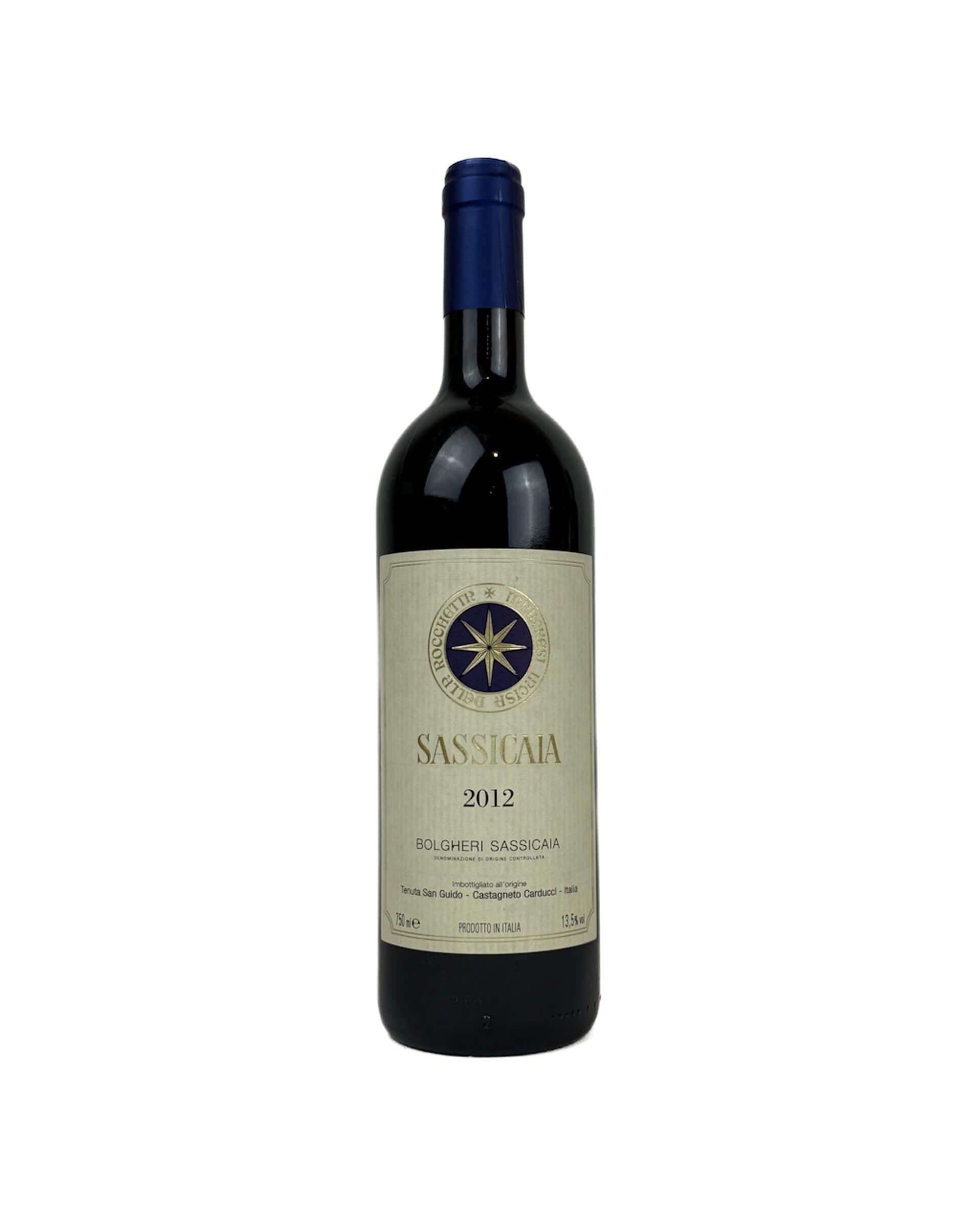
93
0,75
2004
Tenuta San Guido
Wines, producers, regions...
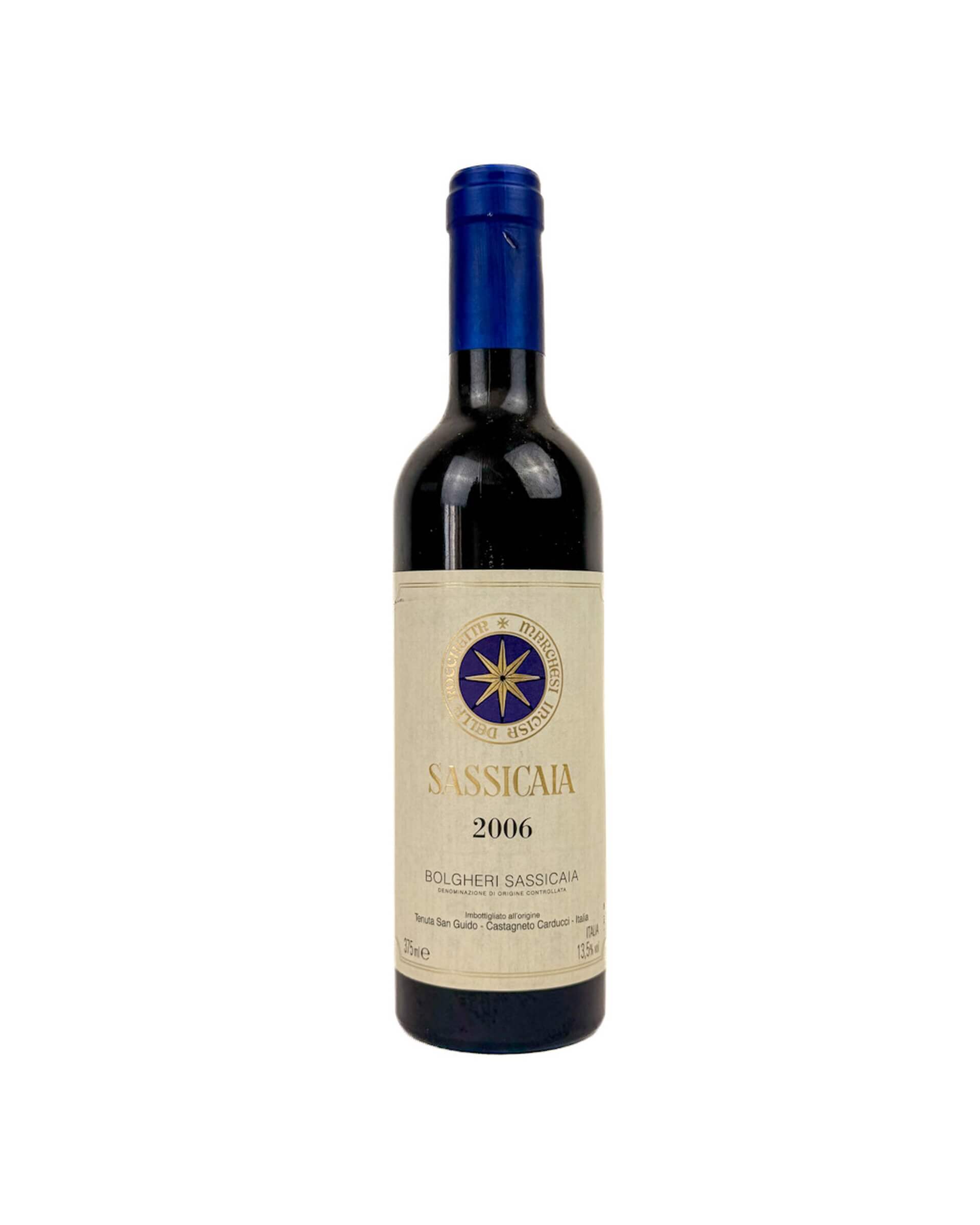
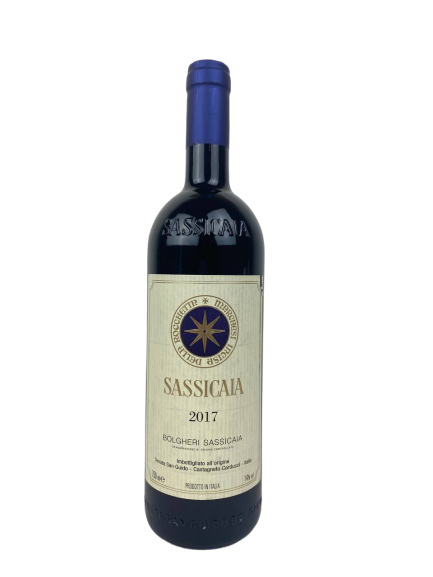
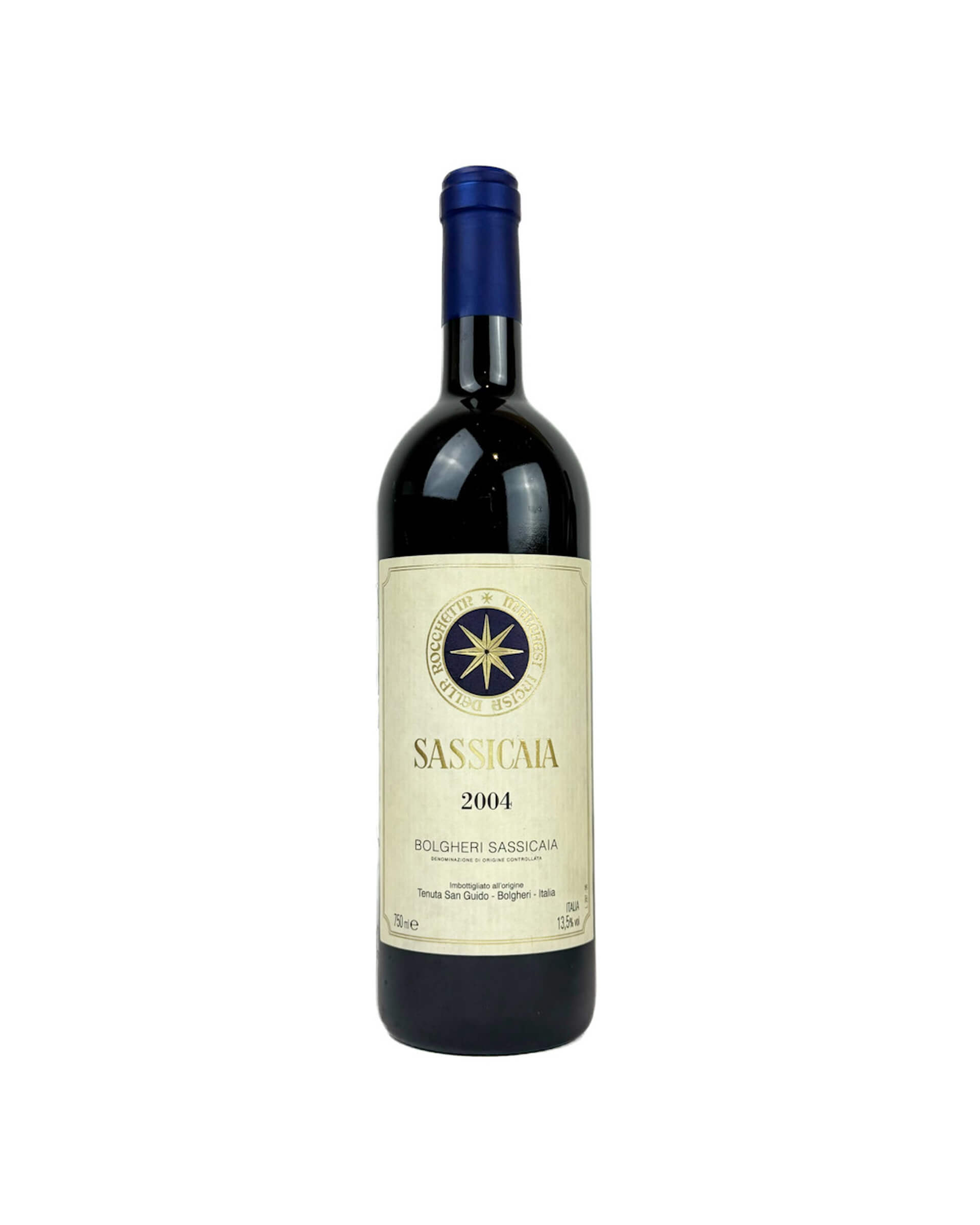
Bolgheri Sassicaia holds a status no other wine in Italy can claim: it is the only appellation in the country created by law for a single estate and a single wine. The Bolgheri Sassicaia DOC belongs exclusively to Tenuta San Guido, the Tuscan estate whose Cabernet was first released in 1968 with nothing grander than a “Vino da Tavola” (table wine) label, because no Italian appellation of the day recognised what was in the bottle. When you read the words on the label, you are not reading a brand — you are reading a legal guarantee.
At Tour de Wine we curate a focused, four-bottle selection of Sassicaia rather than a sprawling grid we cannot stand behind. As a French fine wine merchant, every Sassicaia we list is held in temperature-controlled storage at 12–14°C and shipped in insulated packaging, so the bottle reaches you in the condition the estate intended. Each listing states the specific vintage, fill level, and a recommended drinking window — so you buy the right bottle for your cellar, your table, or your gift.
The Bolgheri Sassicaia DOC is a sub-appellation that sits within the broader Bolgheri DOC, on the Tuscan coast in the province of Livorno, south of the city of Livorno near Castagneto Carducci. It was established by Italian law in 1994 specifically and exclusively for the Sassicaia wine of the Tenuta San Guido estate. No other producer may legally use it. Every other wine from this coastal strip, however brilliant, is bottled under the Bolgheri DOC or Bolgheri Superiore designation — never Bolgheri Sassicaia.
That single legal fact sets every bottle on this page apart from any other Italian wine. The appellation is simultaneously a geographic delimitation and a quality guarantee tied to one house: a DOC that functions, in practice, as a certificate of authenticity. It is the reason “Bolgheri Sassicaia DOC” is more than a marketing line — it is a verifiable statement of origin that no marketplace listing or stylistic imitation can replicate.
The estate itself lies on low hills just inland of the village of Bolgheri, with soils built from marine deposits, clay, and rounded pebbles washed down from the Apennine foothills — the “sassi” (stones) that give the wine its name. The Tyrrhenian Sea is close enough to temper the summer heat and keep the grapes from over-ripening, preserving the freshness that defines the house style. Readers who want to look beyond a single estate can explore our wider Tuscany selection or the full breadth of Italy.
In the late 1940s, Marchese Mario Incisa della Rocchetta planted Cabernet Sauvignon cuttings on his Bolgheri estate — reportedly inspired by the wines of Château Lafite, and entirely outside the rules of Italian DOC law of the era, which had no place for a Cabernet-dominant red from the Tuscan coast. For more than two decades the wine was made privately, poured only for family and guests, with no commercial ambition at all.
The first commercial vintage, 1968, was released with the humblest label Italian law could offer: “Vino da Tavola,” ordinary table wine, because no appellation recognised what was in the bottle. The Marchese’s nephew brought in the gifted Antinori winemaker Giacomo Tachis, who refined the cellar work and carried Sassicaia to an international audience. The turning point came in 1978, when Decanter staged a blind tasting of the world’s leading Cabernet-based wines and the 1972 Sassicaia was ranked first in its field — placing a Tuscan “table wine” ahead of Bordeaux first growths. The result, reported in Decanter and the international wine press, made the wine’s reputation overnight.
The Italian establishment could no longer classify such a wine as an ordinary table wine. The Bolgheri DOC, and the dedicated Bolgheri Sassicaia sub-appellation, followed in the early 1990s. This is, quite literally, the wine that forced Italy to rewrite its own classification law through sheer quality — the founding chapter of the Super Tuscan story and the standard against which every coastal Tuscan red is still measured.
The DOC regulations require a minimum of 80% Cabernet Sauvignon, with the balance made up primarily of Cabernet Franc. Crucially, Merlot is not part of the Sassicaia blend — a structural distinction from neighbouring Ornellaia (Cabernet Sauvignon, Merlot, Cabernet Franc, Petit Verdot) and from most Bordeaux left-bank blends, which lean on a measure of Merlot for early softness. Sassicaia takes a different path, and the difference is in the glass.
The result is a wine of linear precision: dark fruit (blackcurrant, cassis, black cherry) framed by graphite minerality, fine-grained tannins, cedar and cigar box, and a persistent saline finish drawn from the coastal terroir. In youth it can be tightly wound and almost austere; given 10 to 20 years in bottle it unfolds progressively, gaining complexity without ever surrendering its freshness. The Cabernet Franc contributes the aromatic lift — dried herbs, violet, pencil shaving — that distinguishes Sassicaia from a plush Napa Cabernet or a brooding Pauillac. For buyers exploring the varieties behind the blend, see our Cabernet Sauvignon and Cabernet Franc selections, or compare with the left-bank originals in Bordeaux.
Bolgheri Sassicaia has produced a consistent run of strong vintages since 2010, but the years are not interchangeable, and a little vintage literacy goes a long way when you are choosing a bottle to drink tonight versus one to lay down. A few recent standouts are worth knowing.
Warmer years such as 2017 and 2018 produced richer, more open styles that show their character younger and drink well now with 90 minutes of decanting. For the specific vintages available in Tour de Wine’s four-bottle selection, each individual product page carries detailed tasting notes and a recommended drinking window, so you can match the year to the moment.
Sassicaia is a wine of firm tannin and high acidity, which means it wants proteins of equivalent weight on the plate. Two traits set its pairings apart from a generic Bordeaux-style red. First, the saline, mineral edge drawn from its coastal terroir makes it unusually flattering with salt-crusted and umami-forward dishes. Second, because there is no Merlot to soften it, a young Sassicaia stays tighter and needs more air than an Ornellaia of the same age — so the food has to meet a wine that opens slowly.
Prices in our red wine selection of Bolgheri Sassicaia start from around €150 for the most accessible vintages, with most bottles priced near €260. The most sought-after recent years reach €370 — a price that reflects both vintage quality and the provenance guarantee of the only single-estate DOC in Italy. This is a prestige sub-appellation with a tight, premium-only range; there are no entry-level wines here, and the pricing reflects that.
With four bottles in the selection, every product page shows full tasting notes, the current drinking window, and vintage context — so you can buy Sassicaia with the same confidence you would expect from a specialist European cellar.
Bolgheri Sassicaia is not simply a Bolgheri wine with a famous label — it is a separate, legally distinct DOC appellation within Bolgheri, created in 1994 exclusively for the Tenuta San Guido estate’s Sassicaia wine. It is the only single-estate DOC in Italy. Other excellent wines from the Bolgheri coastal strip — Ornellaia, Guado al Tasso, and many others — carry the Bolgheri DOC or Bolgheri Superiore designation but cannot use the Bolgheri Sassicaia DOC. When you see “Bolgheri Sassicaia DOC” on a label, you are buying the specific wine made by that one estate, under its own dedicated classification, with no equivalents.
The Bolgheri Sassicaia DOC requires a minimum of 80% Cabernet Sauvignon, with the remainder composed primarily of Cabernet Franc. Merlot is not included in the Sassicaia blend — this sets it apart from Ornellaia (which includes Merlot) and from most Bordeaux blends. The Cabernet Franc component (typically 15–20%) provides the aromatic signature: dried herbs, violet, pencil shaving, and a lift that distinguishes the wine from Napa Cabernet or Médoc-style blends. The result is a wine of linear precision and coastal mineral freshness rather than the plush, Merlot-driven richness found in right-bank Bordeaux or in a neighbouring Bolgheri-area Merlot such as Masseto, which is bottled as Toscana IGT rather than under the Bolgheri DOC.
Bolgheri Sassicaia has a well-documented record of critical and secondary-market recognition. The 2015 vintage was named Wine Spectator’s Wine of the Year in 2018, and James Suckling has scored both the 2015 and 2016 at 98 points; the 2010 earned a perfect 100 points from Wine Spectator and went on to be named Decanter Wine of the Year in 2013. On the secondary market, Sassicaia is a Liv-ex Italy benchmark, and top vintages are traded regularly through houses such as Sotheby’s and Christie’s. Its single-estate DOC status, limited annual production, and that documented track record supply the three conditions that underpin collector wine value: scarcity, provenance certainty, and consistent critical acclaim. Prices at Tour de Wine range from around €150 to €370 depending on vintage — the cost of acquiring the wine at source, before secondary-market premiums apply. Whether you buy to drink or to cellar, the provenance guarantee of purchasing from a specialist European merchant is a meaningful differentiator from a large marketplace.
Entry and current-release vintages are approachable from five to eight years after harvest, particularly with 90 minutes of decanting. The wine’s structure — firm Cabernet Sauvignon tannins, high acidity, and concentrated coastal fruit — means it rarely gives its best in the first three or four years. The most structured vintages (2015, 2016, 2019) are built for 15 to 25 years of bottle evolution. Bottles already 10 or more years old can be opened with 30 to 45 minutes of careful decanting; wines over 20 years need particular care — stand them upright for 24 hours before opening to settle any sediment, then decant slowly into a clean carafe.
Written by the Tour de Wine buying team. Last reviewed: June 2026.
This site is restricted to adults. By entering, you confirm that you are of legal drinking age in your country of residence.