
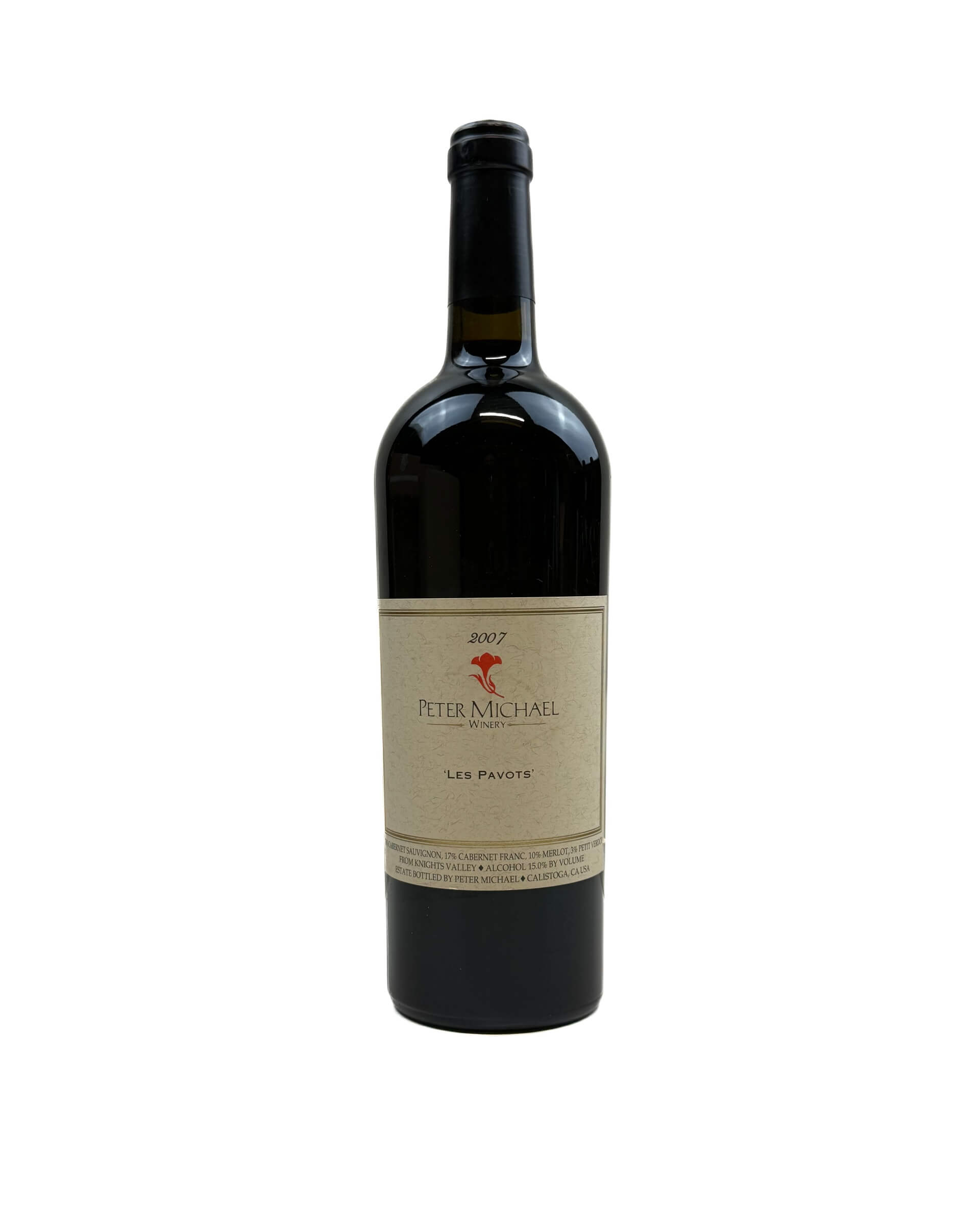
97
0,75
2007
Peter Michael
Wines, producers, regions...

Sonoma County wine is one of California’s most climatically diverse expressions, home to 19 American Viticultural Areas (AVAs) and among the most rewarding regions for a serious collector to explore. Within a single county’s borders, cold Pacific fog and warm inland valleys conspire to produce wines of startling range — from delicate, perfumed Pinot Noir grown almost within sight of the ocean to broad, spiced Zinfandel ripened in sheltered inland benchland. Few regions in the New World offer such breadth of credible, age-worthy California wine styles in one place.
At Tour de Wine, we approach Sonoma County as a specialist French merchant would: with a small, deliberately curated selection of three bottles, each chosen from an established Sonoma estate for the way it expresses its sub-appellation, priced between €210 and €370. Our Sonoma bottles sit within our wider California wines collection, where the cool-climate finesse of this county speaks directly to anyone who already loves fine Burgundy and its Pinot Noir.
The defining quality of Sonoma County wine is its sheer climatic and geological diversity. The county stretches from the warm, sheltered Alexander Valley and Dry Creek Valley in the north to the fog-soaked Sonoma Coast and Russian River Valley along its western and southern edges. That span allows Sonoma to excel across a far wider range of grape varieties than almost any other county in California — cool-climate Pinot Noir and Chardonnay in one corner, robust Zinfandel and Cabernet Sauvignon in another.
The engine behind the cool sites is the Pacific Ocean and San Francisco Bay, which together pull cold morning fog through the Petaluma Gap and along the Sonoma Coast corridor. That marine influence shortens the heat of the day, lengthens the growing season, and gives the western appellations their nervy freshness and aromatic precision. Remarkably, Sonoma County holds 19 official American Viticultural Areas (AVAs) within its borders — more than any other California county — which is precisely what makes it such an absorbing region to collect across.
Set against neighbouring Napa Valley, Sonoma is broader in style and less defined by one single iconic grape. Where Napa is built around powerful Cabernet Sauvignon and commands California’s highest prices, Sonoma offers genuine world-class quality across several varieties, and at premium levels its wines tend to be priced rather more accessibly.
Understanding Sonoma means understanding its sub-appellations. Four AVAs in particular define the county’s reputation and shape almost every buying decision worth making. Each has its own climate, its own signature grape, and its own style — and knowing how they differ is the single most useful thing a buyer can carry into the selection.
The Russian River Valley is Sonoma County’s most celebrated cool-climate AVA and the undisputed benchmark for California Pinot Noir. Morning fog rolls in from the Pacific along the Russian River corridor, cooling the valley and extending the growing season dramatically — the grapes often hang on the vine well into October, building extraordinary complexity and aromatic depth. The resulting Pinot Noirs are silky, perfumed, and layered, with red cherry, raspberry, forest floor, and spice, and a length on the palate that earns its comparisons with fine Burgundy. Chardonnay here shares that grace: mineral, restrained, and built for the cellar.
The Sonoma Coast AVA runs along the county’s western edge, exposed to Pacific maritime influence more directly than almost any other California appellation. Producers who farm the steepest, coldest sites — frequently labelled under the more specific West Sonoma Coast designation — make Pinot Noir of lean intensity, saline minerality, and a grip that genuinely rewards bottle age. These are the Sonoma wines that travel best to European cellars and speak most clearly to collectors raised on cool-climate Burgundy. Their scarcity and the difficulty of farming such marginal sites push prices to the upper end of the county’s range.
Dry Creek Valley sits inland, shielded from Pacific influence by ridgelines that keep temperatures warm and reliable across the season. This is Sonoma’s heartland for Zinfandel — robust, spiced, and generously fruited, with black pepper, bramble, and dried plum that reflect the valley’s rocky benchland soils. Cabernet Sauvignon thrives here too, producing wines more approachable and less austere than their Napa counterparts at a comparable quality level. Dry Creek’s wines are the most food-generous of the Sonoma sub-appellations: broad-shouldered, warm, and immediately satisfying at the table.
Alexander Valley occupies the northernmost, warmest reaches of the county, where the Russian River widens into a broad, sun-drenched valley floor. The signature here is Cabernet Sauvignon of a distinctly softer character than Napa Valley — less austere in tannin, more plush and approachable even in youth, with dark cherry, plum, and a gentle earthiness from gravelly alluvial soils. Merlot-based blends also perform well across the valley. Alexander Valley Cabernet is the natural entry point for buyers curious about California’s finest reds who want elegance without Napa’s structural demands.
If the sub-appellations tell you what a Sonoma wine tastes like, the variety and vintage tell you how long to keep it and when to open it. Sonoma’s two climatic halves age on different clocks, and understanding that differential is what separates a confident cellaring decision from a guess.
The cool-climate Pinot Noir of the Russian River Valley typically drinks beautifully from three to ten years, its fruit softening into the forest-floor and game notes that collectors prize. The same grape grown on the wind-battered West Sonoma Coast carries more acidity and firmer structure, and rewards patience: the best bottles need five years to unwind and can hold for twelve to fifteen. Chardonnay follows the same logic — Russian River examples are generous earlier, while the leanest coastal whites tighten for the first few years before their citrus and oyster-shell minerality fully open, repaying three to eight years in the cellar. Inland, Dry Creek Zinfandel is built for nearer-term pleasure, at its most generous within three to six years, whereas Alexander Valley Cabernet Sauvignon carries the tannin to develop over eight to twelve.
Because Sonoma spans cool coast and warm interior, no single vintage verdict fits the whole county. A cool, fog-heavy year flatters the western Pinot Noir and Chardonnay, lending tension and length, while the same conditions can leave inland Zinfandel a touch leaner than its plush norm. A warm, dry year does the reverse: it ripens Dry Creek and Alexander Valley reds to their generous best, but can blunt the nervy freshness that defines the coastal whites. When choosing a Sonoma bottle to lay down, weigh the season against the appellation rather than the county as a whole — and lean on the cool-climate red wines from the western AVAs when finesse and longevity are the priority.
The serving logic for Sonoma wine follows the climate that made it. A cool-climate Russian River Valley or Sonoma Coast Pinot Noir loves salmon, duck breast, mushroom risotto, rabbit, and mild soft cheeses such as Brie or Époisses. Serve it at 15–16°C in a wide-bowled Burgundy-style glass; decant young vintages (under six years) for 30 to 45 minutes, and give mature bottles of ten years or more no more than 15 minutes of air.
A cool-climate Chardonnay from the same appellations is happiest beside lobster, crab, turbot, sole, or chicken in a cream sauce. Serve it at 10–12°C in a white-Burgundy glass, with no decanting. For the inland reds — Dry Creek Zinfandel and Alexander Valley Cabernet — reach for charcuterie boards, braised short rib, barbecued pork ribs, and aged hard cheeses such as Comté or Manchego. Serve at 17°C in a large-bowled Bordeaux glass; the Cabernet appreciates a short decant, while the Zinfandel can go straight from the bottle. At our price range these are occasion-level bottles, so match them to a meal that reflects their quality rather than over-seasoned or sharply acidic dishes that flatten their nuance.
Our Sonoma County selection sits at the premium end of the county’s offering. These are not everyday commercial releases but bottles chosen from producers whose work rewards attention and cellaring. The pricing falls into a clear, honest band drawn from our current catalogue.
Entry level (from around €210): the most accessible bottles in the selection, still from respected Sonoma County producers and representing the quality floor of what we stock. At this level a buyer gets a genuine appellation-character wine — from either a cool-climate Pinot Noir zone or one of the warmer inland appellations — approachable on release and best enjoyed within three to five years.
Core of the selection (around €350, the catalogue median): this is where the majority of our Sonoma wines sit. At €350 a buyer reaches the benchmark expression of the sub-appellation — typically a Russian River Valley or Sonoma Coast Pinot Noir from an established producer, with real complexity and a five to ten year cellaring window. This is the price point to lead with for a significant dinner.
Upper range (up to €370): the highest tier of the current selection, representing the best producers and most sought-after vintages available. These bottles carry only a modest premium over the median and are worth seeking out when a specific producer or appellation is the priority. This is a small, curated selection — three bottles chosen for quality and pedigree rather than breadth. Buyers wanting a wider choice can explore the broader California wines category for further options.
Sonoma County is California’s most diverse wine county, producing wines across an unusually wide range of styles and varieties. Its cool-climate appellations — Russian River Valley and Sonoma Coast — are internationally regarded as the finest sources of California Pinot Noir and Chardonnay, drawing direct comparisons with red and white Burgundy. Its warmer inland zones, Dry Creek Valley and Alexander Valley, excel at Zinfandel and Cabernet Sauvignon respectively. With 19 official AVAs, the county rewards a collector across many bottles and many visits.
Napa Valley and Sonoma County are California’s two most celebrated wine counties, sitting side by side yet differing markedly in character. Napa is dominated by Cabernet Sauvignon from a warm, sheltered valley and tends toward power, structure, and the highest prices in California. Sonoma is more diverse in both climate and variety, its cool western appellations producing world-class Pinot Noir and Chardonnay at prices often more accessible than comparable Napa Cabernet. A serious collector explores both. At Tour de Wine the Sonoma selection begins at €210 and centres around €350, offering world-class cool-climate wine at the accessible end of fine California pricing.
The choice depends on the style you want. For cool-climate Pinot Noir and Chardonnay of Burgundy-like elegance, Russian River Valley is the benchmark; for leaner, more mineral, age-demanding expressions, look to Sonoma Coast. For generous, warm-climate reds — Zinfandel or approachable Cabernet Sauvignon — Dry Creek Valley and Alexander Valley are the natural choices. For a first Sonoma purchase, Russian River Valley Pinot Noir is the most reliable entry point, especially for collectors already familiar with Burgundy.
Our Sonoma County wine selection starts from around €210, with the majority of bottles priced close to €350 — the median of the current three-bottle curation — and the upper end reaching €370. These price points reflect wines chosen for quality and producer pedigree rather than commercial-release volume. The selection is intentionally small and curated; for a broader California choice, our California wines category offers additional options.
Written by the Tour de Wine buying team. Last reviewed: June 2026.
This site is restricted to adults. By entering, you confirm that you are of legal drinking age in your country of residence.