
N/A
0,75
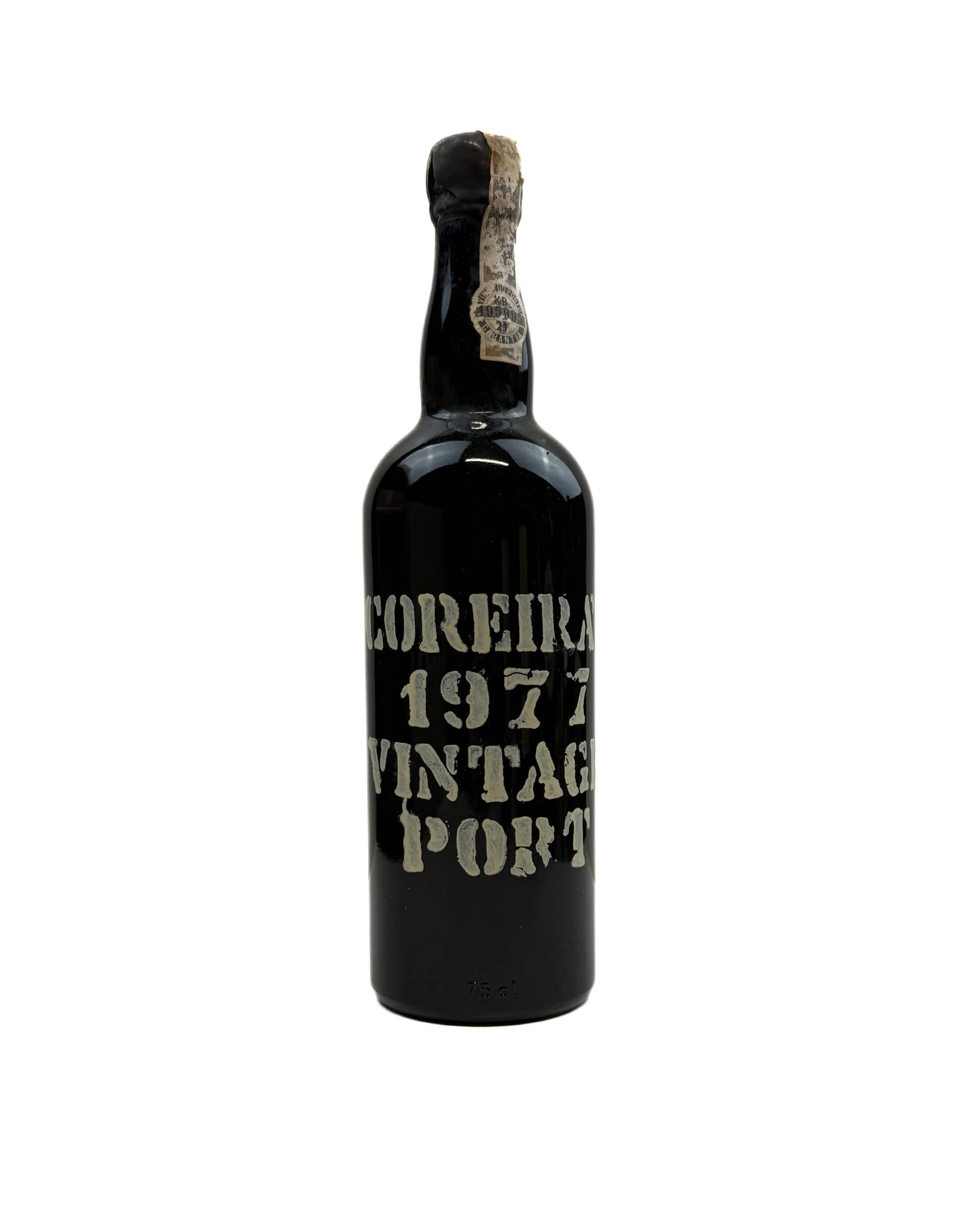
1977
Coreira's
Wines, producers, regions...
Touriga Franca is the most widely planted red variety in the Douro Valley, and the softer, more perfumed counterpart to the more famous Touriga Nacional. It is the grape that lends accessible perfume and rounded flesh to many of Portugal’s finest dry reds and to vintage Port, sitting at the heart of the grape varieties hub within our wider wine catalogue.
Tour de Wine’s Touriga Franca selection covers dry red wines only — five carefully chosen bottles, priced from around €100 to €400. These are wines for buyers who value perfume and earlier approachability alongside the structure and concentration that define great Douro wine. If you have met this variety on a label or in a tasting note and want to understand it before you buy, this is where varietal literacy meets a curated cellar.
Touriga Franca (sometimes written informally as Touriga Francesa) is a thick-skinned, medium-vigour red variety native to the Douro Valley of northern Portugal. It is the most widely planted red grape in the Douro — more planted than the internationally celebrated Touriga Nacional — because it marries reliable, moderately high yields with consistent quality, making it economically central to both Port and dry table-wine production. Where many great varieties are prized but difficult, this one is prized and dependable, which is precisely why it underpins so much of the region’s output.
Its signature lies in a broad floral perfume — rose, violet, and dried herbs, softer and more welcoming than Touriga Nacional’s sharper floral intensity — layered over ripe red and dark fruit such as red cherry, blackberry, and plum. On the palate it is medium-to-full bodied, with a rounder, less assertive tannin structure than Nacional and good natural acidity that keeps the wine fresh without aggression. These qualities make the variety the one that bridges the demanding intensity of Touriga Nacional and the rounder, spicier character of Tinta Roriz in a classic Douro blend: it adds flesh, perfume, and accessibility. As a standalone, a single-varietal Touriga Franca wine can be complete and age-worthy in its own right — but its fleshy, fruit-forward style means it reaches an enjoyable drinking window earlier than a Nacional-dominant equivalent. Among Portuguese red wine grapes, it is the one that most reliably delivers immediate pleasure alongside genuine ageing potential.
For most buyers, the real question behind a bottle of Touriga Franca is simple: why choose it over Touriga Nacional? Both are native Portuguese varieties, both are pillars of the Douro Valley and of vintage Port, and both are genetically distinct grapes rather than clones of one another. The differences, though, are meaningful and worth understanding in buying terms.
Aromatics: Touriga Nacional leads with an intense, high-pitched violet and rose-petal perfume — unmistakable and singular. Franca’s nose is softer and broader, leaning toward rose and dried herb rather than cut violet. Tannin and structure: Nacional carries higher, firmer tannin and produces wines that demand patience, typically eight to fifteen years from top estates; Franca’s tannins are rounder and more approachable, producing wines that drink well from roughly three to seven years. Yield: Nacional is famously low-yielding — one reason its wines command premium prices — while the variety yields more freely, which is part of why single-varietal bottlings of it are increasingly viable.
Role in blends and the choice for buyers: In the finest Douro blends, Nacional supplies the structural and aromatic backbone while the variety supplies flesh, mid-palate weight, and floral breadth — the element that makes a great blend feel complete rather than austere. A buyer who prefers immediate fruit and perfume and is not planning to cellar for a decade will often favour a Franca-dominant wine over a Nacional-dominant equivalent at a comparable price; a buyer building a cellar and prepared to wait will find Nacional-led wines more rewarding over time. Neither is definitively better. The greatest Douro wines blend both precisely because neither is complete without the other.
The Douro Valley is Touriga Franca’s natural home and the region where it reaches its greatest expression. The valley’s extreme continental climate — fierce summer heat, cold winters, and thin schist soils that force low water retention and deep root penetration — produces a wine of real concentration and character. Within the Douro, the Cima Corgo sub-zone, the prestige central valley home to most of the finest quintas, yields the most structured and complex Franca expressions, while the cooler, more westerly Baixo Corgo produces lighter, more immediately accessible styles. The variety is planted from the valley floor to above 600 metres, with altitude modulating freshness and concentration, and it forms the backbone of many single-quinta blends that command €100 to €400 per bottle.
In the Dão region of north-central Portugal — granitic soils, mountain altitude, and an Atlantic-moderated climate — the variety is a small minority planting, well behind Touriga Nacional, Jaen, and Alfrocheiro. Where it does appear, it tends to be lighter and more overtly perfumed than in the Douro, with less concentration and tannin and a restrained floral elegance. Our current selection is Douro-only; we will add Dão examples as we source them.
The most useful thing to understand about a Touriga Franca-dominant red wine is how it develops in the glass and in the cellar. Young, it opens fast and broad, expansive on the mid-palate where many Douro reds are still tight. Within two to three years of release the fruit-forward character — cherry, raspberry, black plum — is already accessible without austerity. From three to ten years and beyond, depending on vintage and winemaking, the primary fruit recedes and the wine moves toward dried flowers, cedar, tobacco, and dried fruit, the tannins softening from firm to silken. The finish stays long, fresh, and floral, lifted by the variety’s natural acidity. A 45–60-minute decant in youth accelerates this opening; mature bottles need only a short time to unfold.
Our Touriga Franca selection starts from around €100. At this tier, expect Franca-led Douro blends in the style of benchmark estates such as Quinta do Crasto, Quinta Vale D. Maria, and Niepoort — typically aged in French oak, with the variety’s accessible breadth in full evidence. These are premium bottles in every sense — not entry-level in a supermarket sense — and they represent the most approachable rung in a tightly curated range. They are approachable from two to three years with decanting; best from four to six years without.
The median price across the selection is around €185. Here you find the kind of Reserva-tier and single-quinta expressions made by leading Douro names such as Poeira, Quinta do Vale Meão, and Quinta do Crasto — often a higher proportion of the variety, sometimes a measured share of Touriga Nacional for structural depth, and ageing that typically runs to a year or more in French oak. These wines have the structure and perfume to develop for ten to fifteen years and suit gifting, occasion dining, or cellaring alongside prestige Portuguese and European reds.
The upper end of the catalogue reaches €400 for the most limited and concentrated bottlings — generally the kind of old-vine, low-intervention, extended-ageing wines associated with collector-level producers. At this level the wine rewards patience: cellar for eight to twelve years at minimum to let the ripe fruit integrate with the oak and tannin, or decant for ninety minutes if you open one young. For buyers exploring this style as part of a wider Portuguese cellar, it sits comfortably when you buy fine wine online across regions and varieties.
Serving guidance: serve all Touriga Franca reds at 16–18°C. Young examples, under five years, benefit from 45–60 minutes of decanting to open the variety’s aromatic width; mature examples, ten years and older, can be poured directly and allowed to open over 20–30 minutes in the glass.
The variety’s fruit-forward weight, rounded tannins, and fresh acidity make it one of the most food-versatile Portuguese reds — accessible enough for mid-week dining, complex enough for a special occasion. A few classic pairings show its range:
It is pronounced toh-REE-gah FRAN-kah, with the stress on the second syllable of each word. The name is Portuguese; it is sometimes written informally as Touriga Francesa.
In one sentence: a medium-to-full-bodied red with a soft floral perfume of rose and dried herbs over ripe cherry, blackberry, and plum, rounded tannins, and fresh acidity — fruit-forward and approachable without losing the ability to age.
Both are native Portuguese varieties and the two dominant red grapes of the Douro Valley, but they are genetically distinct and produce quite different wines. Touriga Nacional is more intensely perfumed — sharp violet and rose — more tannic, lower-yielding, and built for long cellaring, typically ten to twenty years from top estates. Franca is broader and softer on the nose, rounder in tannin, higher-yielding, and reaches an enjoyable drinking window earlier, often three to seven years, though prestige examples develop longer. In the finest Douro blends, Nacional provides structure and perfume while Franca provides broad-shouldered fruit and mid-palate weight. Neither is definitively better; the right choice depends on when you plan to drink and which style you prefer.
Yes. Touriga Franca is one of the principal grape varieties authorised for vintage Port, alongside Touriga Nacional, Tinta Roriz, Tinta Barroca, and Tinta Cão. It is the most widely planted of these in the Douro Valley and contributes aromatic complexity and body to vintage Port blends. That said, Tour de Wine’s Touriga Franca category covers only dry, unfortified table wines — if you are looking for Port specifically, it is listed separately.
Yes, and increasingly so. While the grape has traditionally served as a blending component — its higher yields and approachable character making it a complement to the more intense Touriga Nacional — a growing number of Douro producers now vinify it on its own to showcase its distinct floral and textural qualities. Tour de Wine’s current range is Franca-led Douro wine; it spans both single-varietal expressions and blends in which the variety is the dominant component, so buyers wanting a pure varietal example can ask our team which of the five bottles fits best.
Entry-level Franca-led blends from good Douro estates are approachable from two to three years with decanting and best from four to six years without, with the fruit showing well early on. Reserva and single-quinta selections around the €185 median are built for eight to twelve years of development. The finest, most concentrated bottlings at the upper end of the catalogue — up to €400 — reward a decade or more in the cellar as fruit and structure integrate into a complex, long-lived wine. Across the range, a 45–60-minute decant noticeably improves a young Touriga Franca. To explore neighbouring styles, browse our wider grape varieties collection.
Written by the Tour de Wine buying team. Last reviewed: June 2026.
This site is restricted to adults. By entering, you confirm that you are of legal drinking age in your country of residence.