
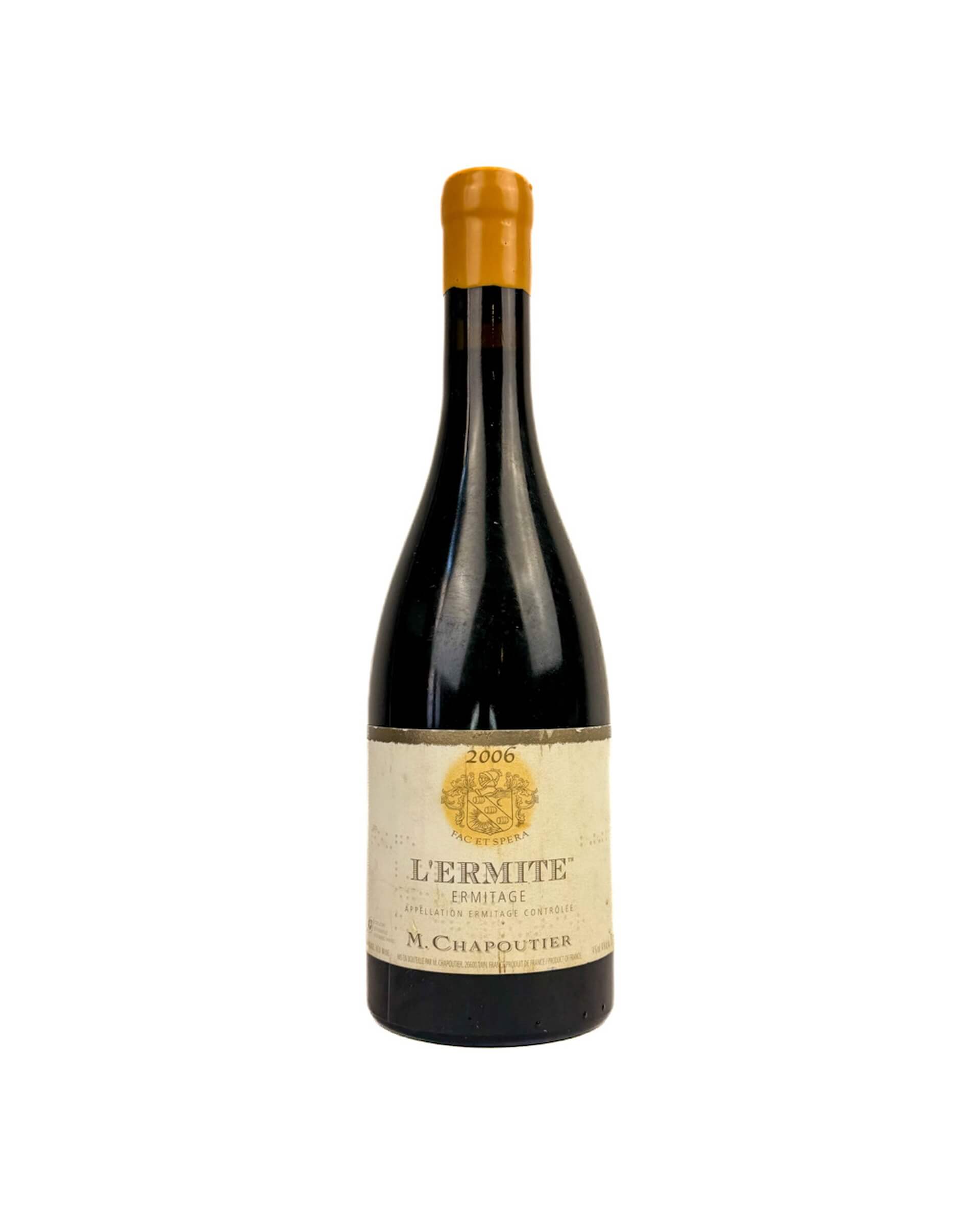
100
0,75
2006
Chapoutier
Wines, producers, regions...
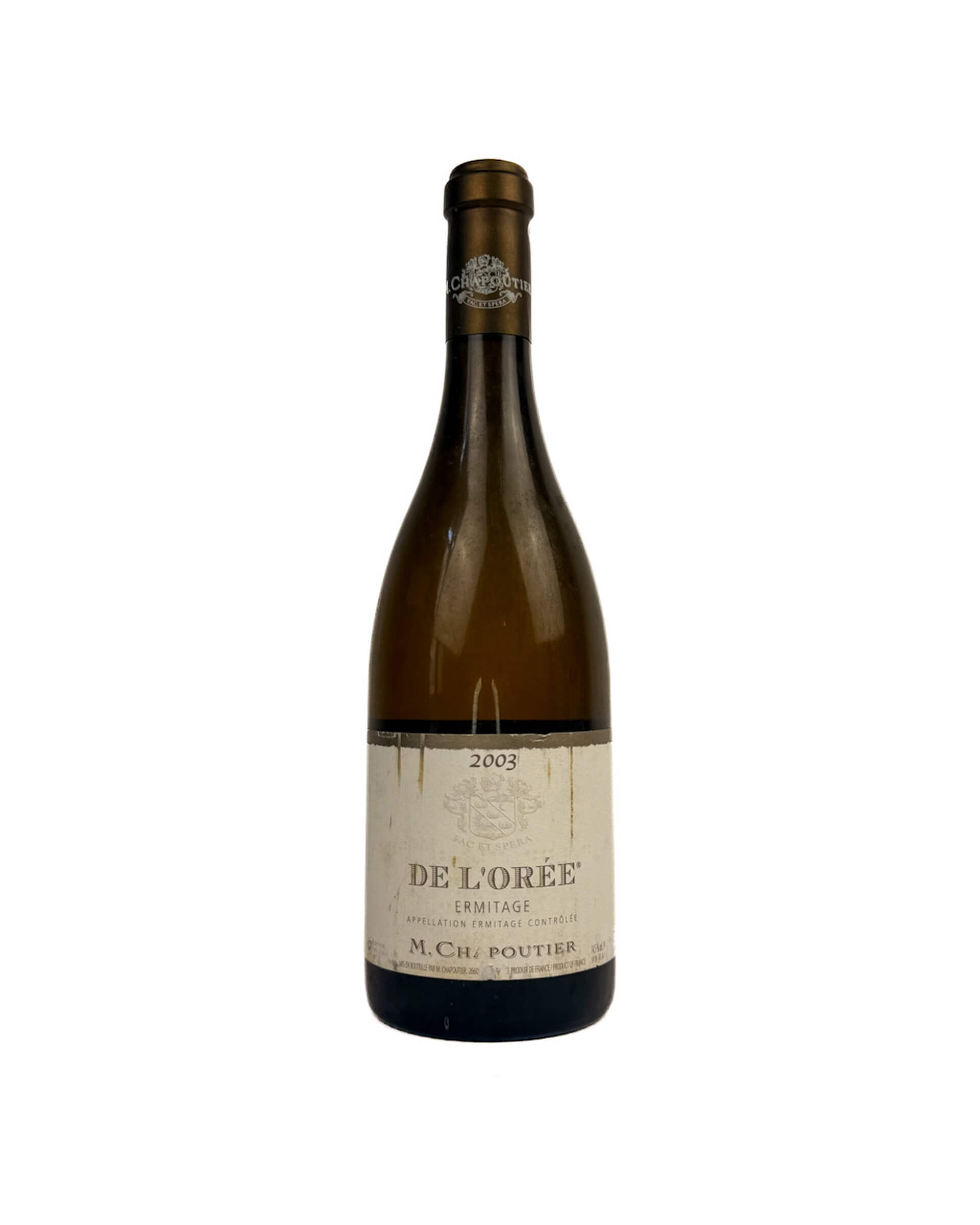
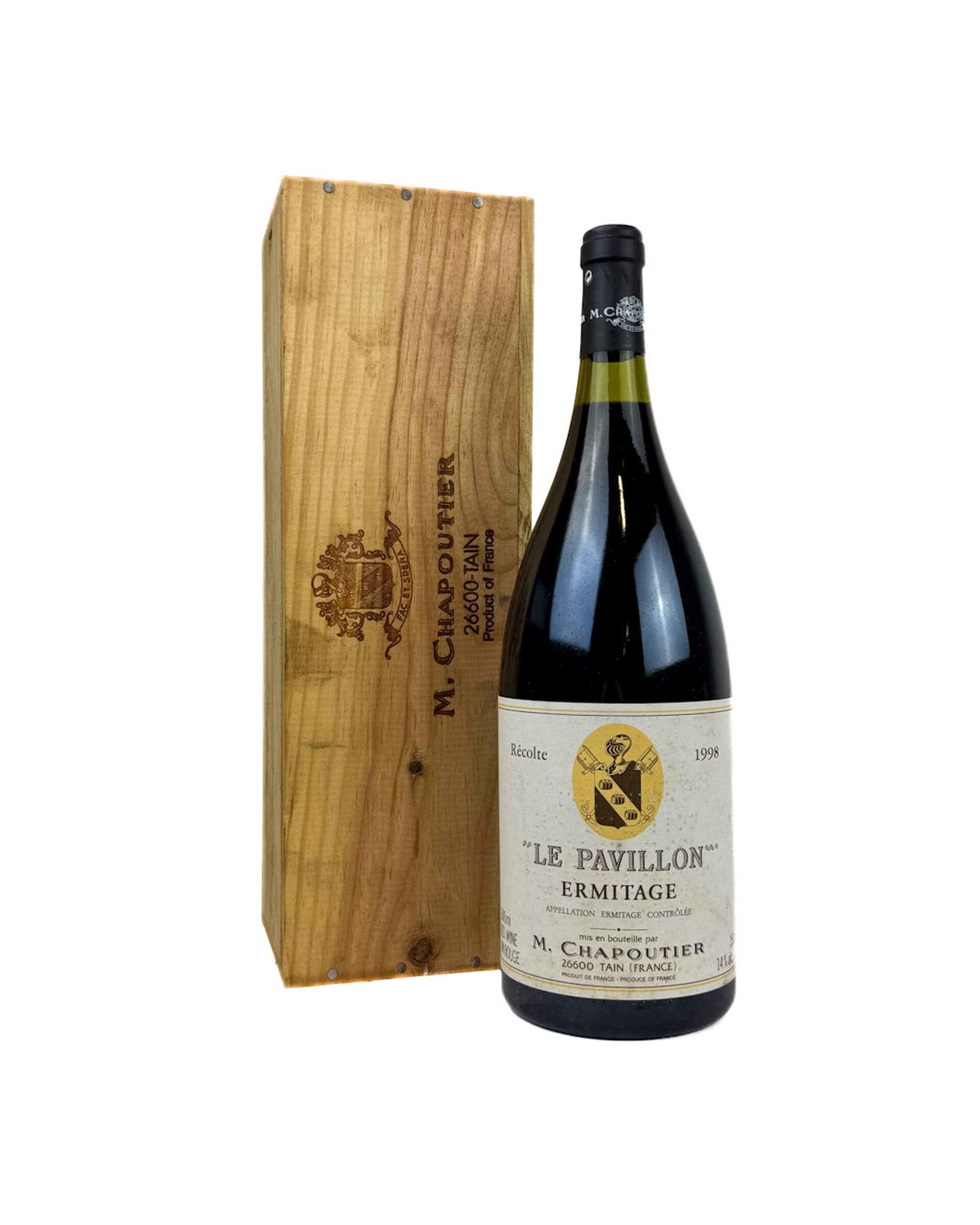
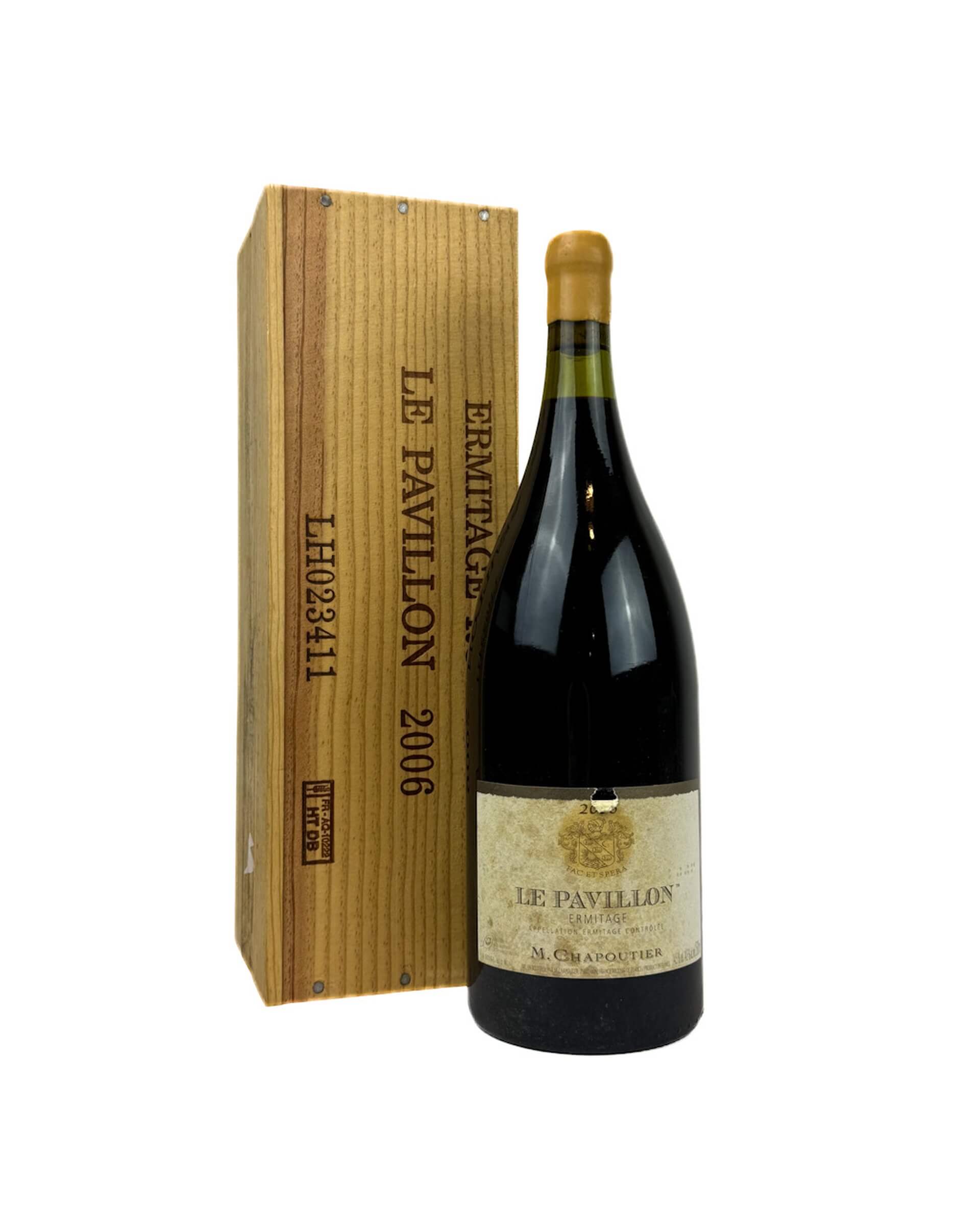
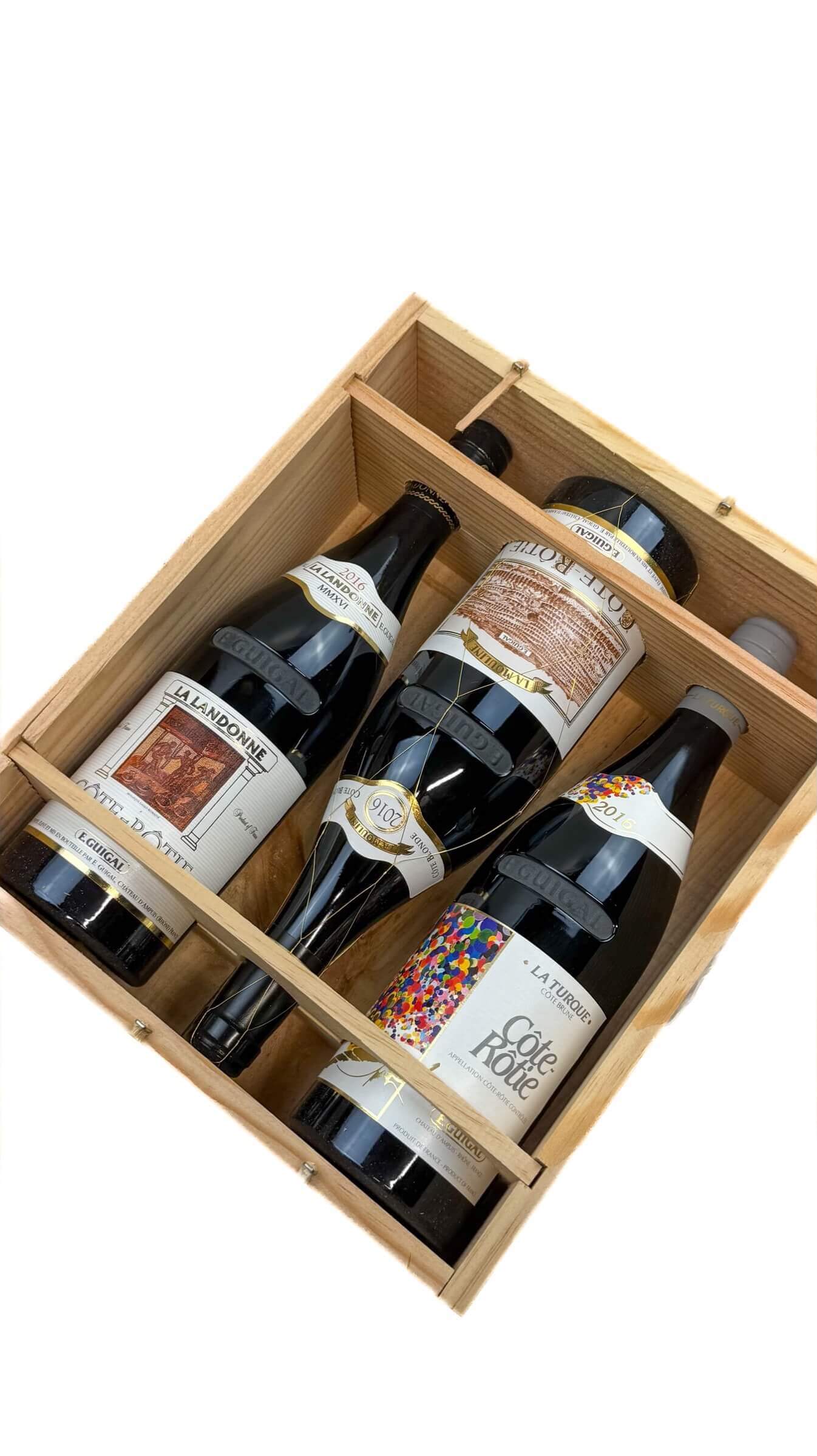
The Northern Rhone is the granite heart of France’s Rhone Valley, where a single red grape — Syrah — reaches its most profound, age-worthy expression. Spread along a narrow ribbon of steep slopes on both banks of the river, its great appellations — Cote Rotie, Hermitage, Saint-Joseph, Crozes-Hermitage, and Cornas — sit alongside rare, mineral whites from Viognier, Marsanne, and Roussanne. Hermitage and Cote Rotie routinely appear in Liv-ex fine-wine indices alongside classed-growth Bordeaux, which is why the floor price for a serious bottle here begins at €210. Explore our curated selection below, and read on to understand exactly what makes these wines distinct.
Every great Northern Rhone wine red is built on Syrah, and almost always Syrah alone. Grown on steep terraces of granite and schist, the grape here trades the plush, sun-baked generosity of the south for something more vertical and savoury: graphite and crushed stone, white pepper, violet, black olive, and smoked meat, framed by firm tannins and the structure to age for one, two, even three decades.
In the broader French fine-wine hierarchy, the region occupies a curious position: less instantly recognised than Bordeaux or Burgundy, yet fully their equal in prestige and price at the top end. Hermitage and Cote Rotie have been collector wines for centuries. For the full regional picture — including the warmer, Grenache-led south — see our complete Rhone wine selection. The summary below offers an immediate orientation between the two halves of the valley.
The region is defined by five red appellations, each with its own soil, slope, and signature, plus the great white cru of Condrieu profiled below. Understanding them is the key to buying with confidence — from the everyday charm of Crozes-Hermitage to the cellar-defining gravity of Hermitage and Cornas. As a vintage steer across the flagships: 2015, 2017, and 2022 are widely regarded as outstanding for both reds and whites, while 2021 offers earlier-drinking freshness.
Hermitage rises as a single, sun-drenched granite hill of just 136 hectares above Tain-l’Hermitage in the Drome, on the left bank of the river — one of France’s smallest and most coveted vineyards. The reds are monumental: graphite, smoked meat, black liquorice, and white pepper wrapped in powerful tannins that demand 15 to 30 years to fully unfurl. The whites, from Marsanne and Roussanne, are equally serious — beeswax, acacia blossom, and dried apricot — with the finest cuvees capable of 20 to 25 years in bottle. Reference houses include Chapoutier (whose monopole-scale parcels set the modern benchmark), Jean-Louis Chave, and Paul Jaboulet Aine, whose La Chapelle is among the most collected reds in France. A sound hermitage wine appears in Liv-ex indices alongside first-growth Bordeaux for good reason.
Cote Rotie — the “roasted slope” — is a steep terraced amphitheatre at Ampuis on the right bank, divided into two sectors: the iron-rich schist of the Cote Brune, yielding dark, structured wines, and the mica-granite of the Cote Blonde, giving more floral, approachable ones. Here lies the area’s most fascinating rule: producers may co-ferment up to 20% white Viognier with the red Syrah. This lifts the aromatics toward violet and peony, naturally stabilises the colour, and rounds the texture — a practice unique to this appellation. Reference producers include Guigal, whose single-vineyard La Mouline, La Landonne, and La Turque are global benchmarks, alongside Rostaing and Jamet. Expect violet, black olive, ripe raspberry, and gentle spice; more approachable young than Hermitage, with 10 to 20 years of aging. A benchmark cote rotie wine shows Syrah at its most perfumed.
Stretching roughly 60 km along the right bank between Chavanay and Guilherand-Granges, Saint-Joseph is the largest appellation here by surface — and the smartest place to begin. The reds offer fresh dark fruit (blueberry, black cherry), pepper, and floral lift, more open and fruit-forward than Hermitage or Cote Rotie, drinking well from 4 to 12 years. The whites, from Marsanne and Roussanne, show pear, white flower, and a light freshness that delivers genuine value. Our buyers source primarily from these right-bank appellations, where the combination of elegance and accessibility makes the strongest case for the region. For quality-to-price, a good saint joseph wine is consistently the best way in.
Crozes-Hermitage encircles the famous Hermitage hill without sharing its steep granite slopes, drawing instead on more varied soils — clay, sand, and river pebbles — which explain its rounder, lighter style. The reds are fruity, supple, and lightly peppered, best within 3 to 8 years; the Marsanne-based whites are floral and fresh, for drinking young. As the one local appellation that genuinely delivers accessible pricing, crozes hermitage is the ideal entry to the region’s Syrah for everyday enjoyment.
Cornas covers approximately 120 hectares of registered AOC vineyard on a south-facing granite amphitheatre in the Ardeche, and it makes a statement of character found nowhere else: it is the only appellation here that is exclusively red and exclusively mono-varietal Syrah — no whites, no other grape permitted. The wines are the most tannic and opaque of the area: blackcurrant, violet, raw meat, and flint, austere in youth and needing 8 to 20 years to open. Reference producers include Auguste Clape, the standard-bearer for traditional Cornas, alongside Colombo and Thierry Allemand. For collectors who reward patience, a great cornas wine is the most concentrated Syrah in France.
The summary below maps each style to an aging window and a buyer profile, so you can match a bottle to your cellar and your occasion:
The region is not only about red Syrah. Condrieu, made from 100% Viognier on steep granite terraces, is one of the world’s benchmark whites — heady with apricot, honeysuckle, and white peach, opulent yet bone-dry; Guigal and Georges Vernay are its long-standing references. Alongside it, Hermitage blanc and Saint-Joseph blanc (Marsanne and Roussanne) share the same prestigious terroir as the reds. These whites are scarce and ageworthy in their own right, and they complete the picture of an area whose excellence runs in both colours.
What ties the whole Northern Rhone together is its terroir, and specifically the way each soil translates directly into the glass. Granite and gneiss give the graphite and flinty minerality that define Hermitage; the iron-rich schist of the Cote Brune builds the dark fruit and brooding structure of those Cote Rotie wines; the mica-granite of the Cote Blonde and of Cornas pushes the aromatics toward violet and white pepper. This is not poetic licence — it is a repeatable, recognisable soil-to-aroma link that experienced tasters use to read the region.
The mechanism behind both the concentration and the longevity is the same poverty of soil: thin, stony, exceptionally fast-draining terraces force the vine to root deep, holding yields low and packing the grapes with flavour. It is no accident that the top Hermitage and Cote Rotie cuvees sit comfortably among France’s Grand Cru-level wines in reputation and cellaring potential, even where the formal classification differs.
Serving these wines well begins with the decanter. Young, tannic reds need air; mature bottles over 15 years need only a brief pour (see the decanting FAQ below for exact timings). Reds are best at 16–18 °C and the whites notably cooler, around 12–14 °C. The pairings below favour regional, cuisine-rooted matches rather than a generic “red meat”:
If you want to buy Northern Rhone wine, it helps to understand the price reality up front. Our selection opens at €210 — and that figure already places you inside the region’s prestige appellations. This is not entry-level in the conventional sense; it is simply the floor price for genuine quality here. Tiny total surface area and tightly constrained yields mean top names from Cote Rotie, a serious hermitage wine, Saint-Joseph, and Crozes-Hermitage reach these levels quickly. For broader context, browse our full range of wines from France.
The heart of our selection sits at a median of €500 — the level that gives access to recognised producers in Cote Rotie and Hermitage — while our rarest cuvees reach up to €750 for reference houses and standout vintages. At this level, each bottle is a considered choice, whether you are building a cellar for a 10-to-20-year horizon or marking a significant occasion. Buyers who already know the prestige of Burgundy will recognise a familiar logic of scarcity here, and those drawn to the warmer south can complement their cellar from our wider Rhone wine range. Browse the references in our catalogue above to find the bottle that matches your cellar and your moment.
Both are Syrah-dominant wines from granite soils, but their characters diverge clearly. Hermitage (left bank, Tain) is the more powerful, graphite-driven, and age-worthy of the two — outstanding examples need 15 to 30 years. Cote Rotie (right bank, Ampuis) is more floral and elegant — partly thanks to its co-fermented Viognier — and opens earlier, typically between 8 and 15 years from the vintage. In our current selection both sit around the €500 median, with the rarest Guigal and Jaboulet cuvees reaching our €750 ceiling.
Young, tannic reds benefit significantly. A Cornas under 10 years or a young Hermitage under 12 years rewards 60 to 120 minutes in a wide decanter to express fully; Saint-Joseph and Crozes-Hermitage from 4 to 8 years need 20 to 30 minutes. Mature bottles — over 15 years from vintage — need only a brief pour, since prolonged aeration can diminish fragile aged aromas. Most bottles our buyers stock are young enough to reward the decanter.
Scarcity is the primary driver. The Hermitage hill covers just 136 hectares; Cornas about 120; Cote Rotie slightly over 300. These tiny surfaces — a fraction of the tens of thousands of hectares in the south — constrain production while global demand keeps growing, which is why our selection starts at €210 rather than the single-figure-euro entry common further south. Add the very low yields on poor granite soils and the collector appeal of Syrah with 20-plus-year aging potential, and prices rise accordingly.
Both are excellent introductions with different profiles. Crozes-Hermitage is generally rounder, fruitier, and more approachable young — the ideal first bottle for everyday drinking. Saint-Joseph delivers more aromatic complexity and a longer aging ceiling, up to 12 years, often at a comparable price; it is the bottle our buyers reach for most often when recommending a serious gift around the lower end of our €210–€500 range. If you are new to the region, start with Crozes-Hermitage; if you want a step up in depth, Saint-Joseph is the natural next choice.
Written by the Tour de Wine buying team. Last reviewed: June 2026.
This site is restricted to adults. By entering, you confirm that you are of legal drinking age in your country of residence.