
N/A
0,75
2021
Pierre Girardin
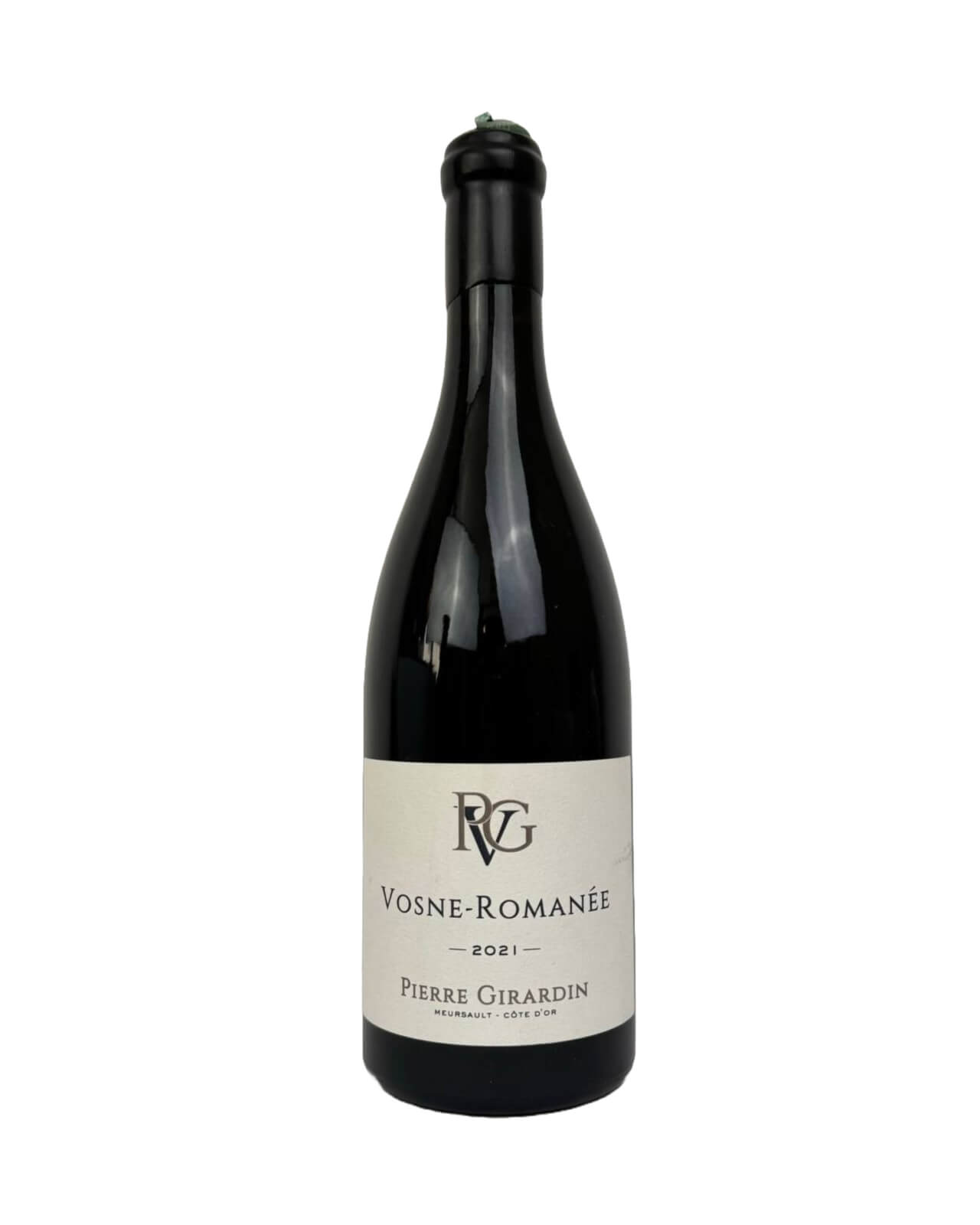
Pierre Girardin Vosne-Romanée 2021 0,75L
€ 96,00 in.VAT
Wines, producers, regions...
Côte de Nuits
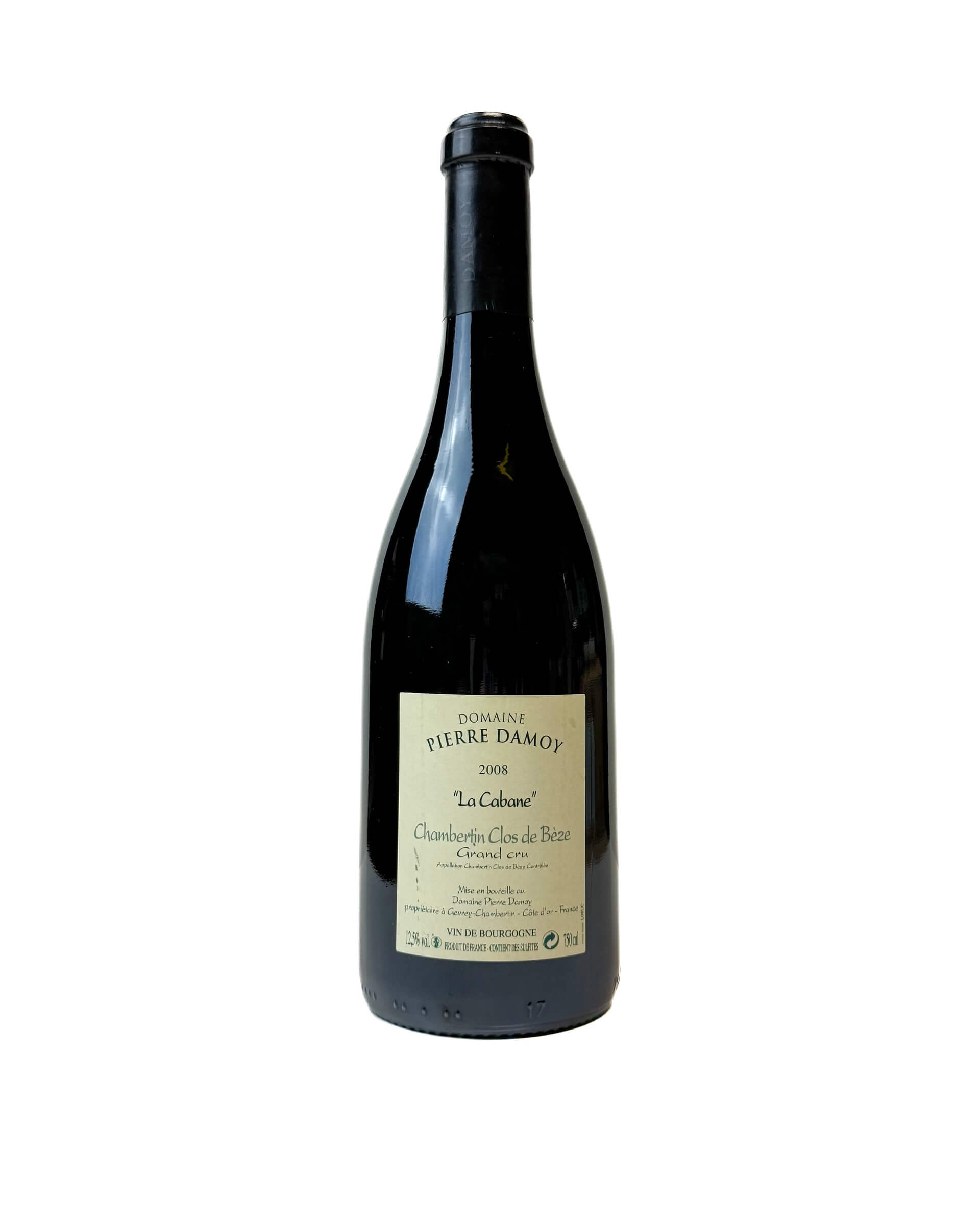
Domaine Pierre Damoy
1 in stock
ROBERT PARKER " The 2008 Chambertin-Clos de Beze is subtle and understated in this vintage. Endless layers of perfumed fruit emerge from this gracious, refined Burgundy. This opens up beautifully in the glass; I can hardly wait to see how it does with another few years in bottle. In 2008 I have a slight preference for the straight Beze over the Reserve, although admittedly that is splitting hairs at this rarified level. Anticipated maturity: 2019-2029. "
Category: Côte de Nuits, Burgundy, France, Grand Cru, Pinot Noir, Red, Wine
Domaine Pierre Damoy commands a unique position in Gevrey-Chambertin, possessing the largest single holdings in two of Burgundy’s most prestigious Grand Crus: 5.4 hectares of Chambertin Clos-de-Bèze (over one-third of the entire 15.4-hectare vineyard) and 1.4 hectares of Chapelle-Chambertin. This concentration of premier terroir places Damoy among Burgundy’s aristocracy, with vineyard assets rivaling those of legendary estates like Domaine de la Romanée-Conti and Domaine Leroy.
The domaine’s history stretches back to 1850 when Pierre Damoy began assembling parcels in Gevrey’s greatest sites. Through strategic acquisitions and inheritance, the family accumulated an extraordinary portfolio of old-vine holdings, many planted in the early 20th century. Despite this privileged position, Domaine Damoy’s reputation languished for decades during the mid-to-late 1900s, with critics noting inconsistency and wines that failed to reflect their exceptional terroir.
The modern renaissance began in the 1990s when Pierre Damoy (fifth generation) assumed control and initiated significant quality improvements: reducing yields, implementing stricter selection, modernizing cellar equipment, and introducing more Burgundian winemaking techniques. His son Alain continued these reforms after 2008, further refining viticulture and adopting more sustainable practices. Today, Domaine Damoy produces wines that increasingly reflect the world-class terroir they possess, earning renewed critical acclaim and collector interest.
The ‘La Cabane’ cuvée comes from a specific parcel within Clos-de-Bèze, located in the mid-to-upper slope where exposure, drainage, and soil composition converge ideally. The vineyard name likely derives from a stone hut (cabane) that once served as shelter for vineyard workers—a common feature in Burgundy’s historic vineyards. Damoy’s ‘La Cabane’ bottling represents a micro-cuvée that showcases this exceptional lieu-dit’s distinct character within the broader Clos-de-Bèze appellation.
Chambertin Clos-de-Bèze occupies the northern extension of the legendary Chambertin slope, with 15.4 hectares of east-facing vines positioned between 270-300 meters elevation. The vineyard’s monastic origins date to 630 AD when the Abbey of Bèze received the land and planted vines, establishing a viticultural tradition spanning over 1,300 years. This unbroken heritage gives Clos-de-Bèze a historical pedigree matched by few sites globally.
The geological foundation consists of Middle Jurassic limestone (Bajocian age, approximately 170 million years old) overlaid with brown calcareous soils rich in clay, marl, and iron-rich pebbles. The limestone bedrock provides exceptional drainage—critical during wet vintages—and imparts the distinctive mineral backbone that defines great Gevrey-Chambertin. The clay content contributes structure, tannic grip, and the capacity for long aging, while iron-rich elements add a distinctive ferrous, blood-like quality to the wine’s aromatic profile.
The ‘La Cabane’ parcel benefits from optimal mid-slope positioning within Clos-de-Bèze, where drainage is excellent, sun exposure ideal, and topsoil depth perfectly balanced—deep enough to provide nutrients and water retention, yet shallow enough to stress vines and concentrate flavors. The vineyard’s gentle 5-8% gradient ensures water runoff without erosion, while the east-facing exposure captures gentle morning sun and avoids excessive afternoon heat that could compromise acidity.
Clos-de-Bèze produces wines that combine the power and structure of neighboring Chambertin with additional aromatic complexity and refinement. The wines are often described as more ‘complete’ than other Gevrey Grand Crus, displaying seamless integration of fruit, earth, mineral, power, and finesse. Uniquely among Burgundy’s Grand Crus, Clos-de-Bèze wines may be labeled simply as ‘Chambertin’ (the only vineyard with this privilege), though most producers honor the distinct identity by maintaining the full Clos-de-Bèze designation.
Domaine Damoy’s winemaking approach balances tradition with modern precision: hand-harvesting at optimal maturity, rigorous sorting to eliminate imperfect fruit, partial whole-cluster fermentation (typically 30-50%), extended maceration in temperature-controlled tanks, and aging in French oak barrels (20-30% new wood) for 16-18 months. The style emphasizes fruit purity, structural elegance, and aging potential over immediate opulence—wines built for the cellar that reward patience.
The 2008 vintage in Burgundy presented significant challenges but ultimately rewarded quality-focused producers with wines of classical structure and exceptional aging potential. The growing season began with a cool, wet spring that delayed budbreak and caused uneven flowering, naturally reducing yields. Summer brought variable conditions—alternating between rain and sunshine—that tested vignerons’ canopy management skills and disease prevention protocols.
However, a magnificent September saved the vintage. Clear, sunny days and cool nights provided ideal ripening conditions, allowing grapes to achieve full phenolic maturity while retaining vibrant acidity—the holy grail of great Burgundy. Harvest occurred in late September and early October under optimal conditions, with producers able to pick at leisure, selecting precise harvest dates for each parcel based on ripeness and weather forecasts.
The resulting wines display classic Burgundian character: moderate alcohol (typically 12.5-13.5%), bright acidity, refined tannins, and elegant aromatic profiles. These are not blockbuster wines built for immediate impact; rather, they are wines of tension, energy, and classical proportions—wines designed for the cellar. Critics initially approached 2008 cautiously, particularly in comparison to the more opulent and immediately appealing 2009s that followed. However, as the wines have matured, critical opinion has shifted dramatically.
Allen Meadows (Burghound) described 2008 as ‘a classic vintage in the best sense of the term,’ praising the wines’ balance, purity, and aging potential. The vintage’s high acidity and firm structure have proven ideal for long-term cellaring, with wines developing complexity and tertiary character while maintaining freshness—exactly what great Burgundy should do. At 16 years of age, the 2008s from top producers have entered a beautiful drinking window, offering both immediate pleasure and decades of future evolution.
For Domaine Damoy specifically, 2008 represents a transitional vintage during Pierre Damoy’s quality revolution. The wines show improved consistency and terroir expression compared to earlier decades, with better fruit selection and more refined winemaking evident. The ‘La Cabane’ bottling captures the essence of this classic vintage: structure, minerality, and aging potential that will continue to reward patient collectors for 15-20+ additional years.
Mature Grand Cru Burgundy demands careful handling to maximize enjoyment. Store the bottle upright for 24-48 hours before opening to allow sediment to settle at the base. Open 2-3 hours before serving to allow initial reduction and volatile compounds to dissipate—mature wines sometimes display funky or barnyard notes that blow off with air exposure. Decant carefully, pouring slowly and monitoring for sediment (use a candle or light beneath the bottle neck to observe sediment approaching). Stop decanting when sediment reaches the neck; accept losing the final pour to preserve clarity. Serve at 15-16°C in large Burgundy glasses (Zalto Burgundy, Riedel Sommeliers Burgundy Grand Cru, or similar) that maximize surface area and aromatic expression. The wine will continue evolving in the glass over 60-90 minutes, revealing different facets as it opens—patience is rewarded. Avoid over-chilling, which mutes aromatic nuance and emphasizes tannins; if the wine seems too warm, brief refrigeration (10-15 minutes) can refresh without compromising expression. Share this wine with knowledgeable Burgundy enthusiasts in a contemplative setting where its subtlety and maturity can be appreciated. Once opened, consume within 4-6 hours; mature wines do not benefit from extended air exposure and will eventually fade.
Exceptional pairings:
At 16 years of age, Domaine Pierre Damoy Chambertin Clos-de-Bèze ‘La Cabane’ 2008 has entered a beautiful drinking window—mature complexity emerging while structure and vitality remain intact. The wine is drinking superbly now for those seeking immediate gratification, offering the tertiary characteristics (earth, leather, truffle, mushroom) that define mature Grand Cru Burgundy. However, the vintage’s high acidity and firm structure suggest 15-20 years of additional aging potential (2039-2044), particularly if storage conditions have been optimal throughout the bottle’s life. Store horizontally in a temperature-controlled cellar at 12-14°C with 70% humidity, away from light and vibration. Temperature consistency is critical for wines of this age—fluctuations accelerate aging and can compromise quality. For collectors with multiple bottles, consider opening one now to assess current evolution, then spacing subsequent bottles every 3-5 years to track development across the wine’s maturity plateau. Provenance is critical for wines of this age—verify storage history when possible, and inspect fill level (high shoulder or above is ideal; below mid-shoulder suggests potential spoilage risk from oxidation or leakage). As a Grand Cru from Burgundy’s most prestigious appellation, from a historically significant estate with substantial holdings, this wine offers both drinking pleasure and collectibility. Damoy’s improving reputation and the scarcity of mature Grand Cru at accessible price points (€300 is remarkable value for 16-year-old Clos-de-Bèze) suggest continued appreciation potential. Whether enjoyed now at peak maturity or cellared for further evolution, this bottle represents an exceptional opportunity to experience one of Burgundy’s legendary terroirs in a classic, age-worthy vintage.
You May Also Like

€ 360,00 in.VAT
This site is restricted to adults. By entering, you confirm that you are of legal drinking age in your country of residence.