
96
0,75
2012
Chateau Mouton Rothschild
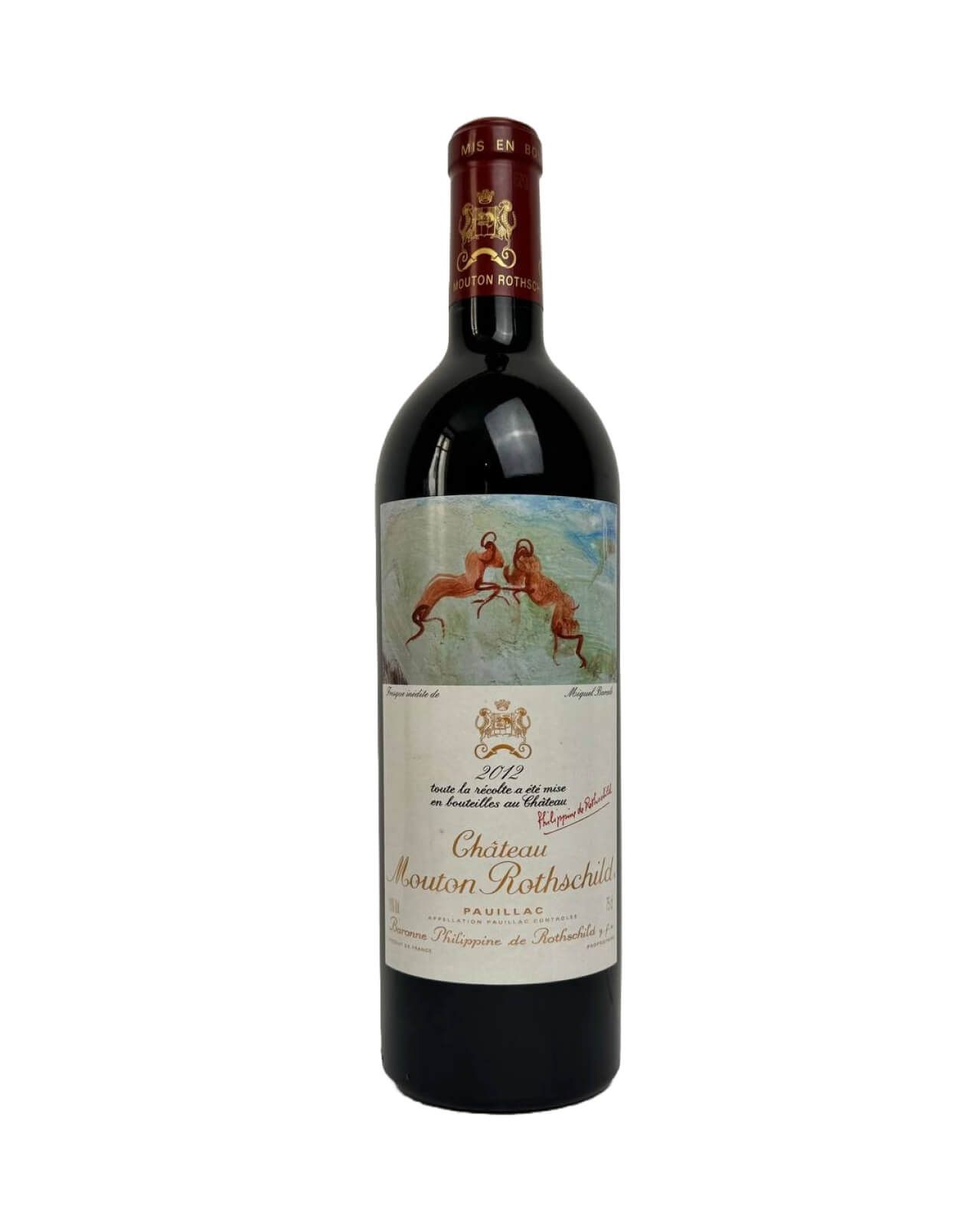
Chateau Mouton Rothschild 2012 0, 75L
€ 540,00 in.VAT
Wines, producers, regions...
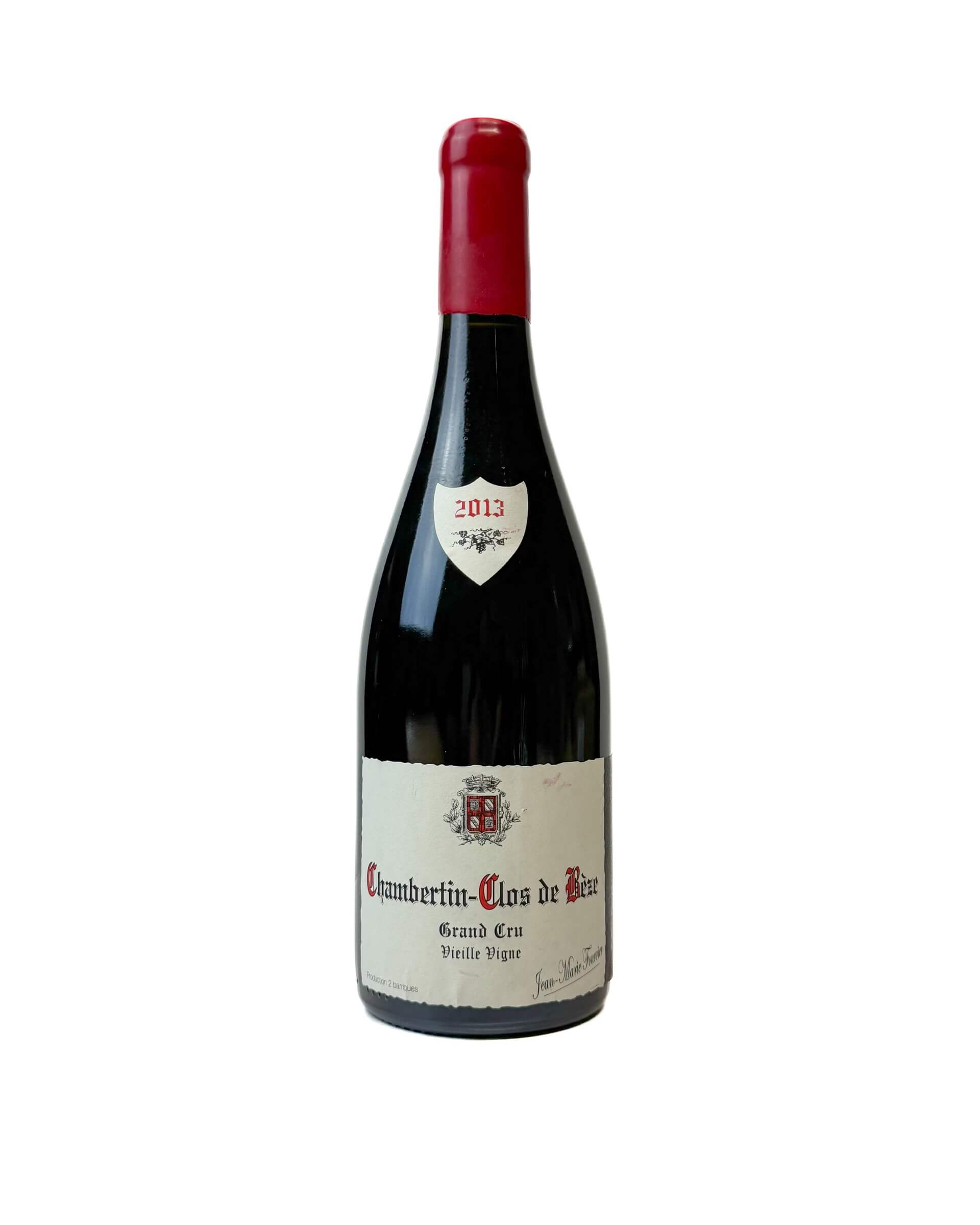
Côte de Nuits
Domaine Fourrier
1 in stock
ROBERT PARKER " The 2013 Chambertin Clos-de-Bèze has an open and generous bouquet with beautiful floral scents: violets and rose petals, all with great delineation. The palate is medium-bodied with filigree tannins, superb acidity and tension with a very precise saline finish. This is a very fine Clos-de-Bèze from Jean-Marie.
My visit to Domaine Jean-Marie Fourrier was the last during my first week dedicated to the 2013 vintage. We were joined by his "better half," Vicky, a dress rehearsal before the onslaught of visits during November. Those visitors will be in for a treat. Whether they are afforded the chance to taste through the entire portfolio is another matter, because Jean-Marie has vastly expanded the négoçiant range of wines because, as he put it: “I cannot afford to buy any land.” Him and the rest of Burgundy! This range is not quite as consistent as the domaine bottlings, partly because of the challenges of the vintages and partly because I guess he is getting accustomed to these new sites that include Les Amoureuses, Clos-de-Bèze and Chambertin however, there are some absolute beauties to seek out. I asked Jean-Marie the tenets of these wines, which will be marketed under his name. “I only buy grapes,” he answered, “and only from non-domaine appellations from growers that are also making wine themselves, and it must never exceed 30% of the production of the domaine.” With respect to the domaine bottlings, there was an uncommon consistency across the board. “The acidity was really high, which protected it from rot attack,” he explained. “As soon as the acidity went down then the rot attacked the grapes. In an ideal world it would have been best to complete the harvest in 24 hours! In the end we harvested over five days from 2 to 7 October. During this period I saw the progression of the rot. Pickers make a selection in the vineyard, but we used a sorting table with at least six people permanently manning it. Since I age the wines on the lees, the quality of fruit has to be perfect. Like everyone, the malolactics were later, our finishing at the end of August.” With such well-located vines, the cluster of premier crus around Chambolle and Gevrey are very consistent: clean and pure, unstinting in their offering of fruit, even if that is tempered by the growing season. If I had to kick them off a sinking dinghy, then the exquisite Chambolle-Gruenchers would be the last overboard. Predictably, the Griotte-Chambertin provides the highlight, though nowadays that is not an inexpensive wine, and frankly I would be content with any of the others in my cellar. "
Category: Côte de Nuits, Wine, Burgundy, France, Grand Cru, Pinot Noir, Red
Domaine Fourrier has emerged as one of Burgundy’s most respected estates, though its rise to prominence is relatively recent. The domaine was founded in 1930 by Fernand Pernot in Gevrey-Chambertin, passing through family hands until Jean-Marie Fourrier assumed control in 1994 following studies with Henri Jayer (Burgundy’s legendary winemaker) and stints in Oregon and Napa. Fourrier’s vision was revolutionary yet conservative: strip away modern interventions and return to pre-industrial winemaking methods that honored terroir above all else.
Fourrier implemented radical changes upon taking over: eliminating herbicides and chemical fertilizers; reducing yields dramatically through green harvesting; abandoning new oak (using only 3-5 year-old barrels); eliminating filtration and fining; and employing minimal sulfur additions. Perhaps most controversially, he embraced 100% whole-cluster fermentation and extended pre-fermentation cold maceration—techniques that intensify aromatic complexity and tannin refinement but require impeccable fruit quality and precise timing.
The results speak for themselves: Fourrier’s wines display extraordinary purity, with crystalline fruit expression, mineral tension, and the kind of ‘buried power’ that reveals itself slowly over decades. Critics and collectors have recognized this quality, with Fourrier now mentioned alongside legendary names like Rousseau, Roumier, and Dujac. The domaine’s holdings include precious parcels in Gevrey-Chambertin’s greatest sites: Griotte-Chambertin, Chambertin Clos-de-Bèze, and old-vine Gevrey village plots that rival many Premier Crus.
Fourrier’s Chambertin Clos-de-Bèze comes from a 0.71-hectare parcel planted predominantly in the 1930s-1950s, making them true vieilles vignes (old vines) by any standard. These ancient plants, with their deep root systems and naturally low yields, produce fruit of extraordinary concentration and complexity. Fourrier’s minimal-intervention approach allows this exceptional raw material to express itself with maximum fidelity, resulting in wines that are simultaneously powerful and elegant, structured yet refined—the essence of great Burgundy.
Chambertin Clos-de-Bèze occupies the northern end of the legendary Chambertin slope in Gevrey-Chambertin, with 15.4 hectares of east-facing vines that capture morning sun while avoiding excessive afternoon heat. The vineyard’s name derives from the Abbey of Bèze, which received the land as a gift in 630 AD and cultivated vines here for over 1,100 years until the French Revolution. This unbroken viticultural heritage—spanning from the Merovingian dynasty through medieval monasticism to modern vignerons—gives Clos-de-Bèze a historical pedigree matched by few sites on earth.
The geological foundation is Middle Jurassic limestone (Bajocian) overlaid with thin soils rich in clay, marl, and iron-rich pebbles. The limestone bedrock provides exceptional drainage and imparts the mineral backbone that defines great Gevrey wines, while the clay contributes structure, tannic grip, and aging potential. The vineyard’s elevation (270-280 meters) and gentle 5-10% gradient create ideal conditions for ripeness while preserving acidity—the tension between power and finesse that characterizes Clos-de-Bèze.
Clos-de-Bèze produces wines of extraordinary depth and complexity, combining the power and structure of Chambertin proper with additional elegance and aromatic refinement. The wines are often described as more ‘complete’ than other Gevrey Grand Crus—displaying red and black fruit, earth and mineral, power and finesse in seamless integration. Uniquely, Clos-de-Bèze wines may be labeled simply as ‘Chambertin’ (the only Grand Cru with this privilege), though most producers honor the distinct identity by using the full Clos-de-Bèze designation.
Fourrier’s vieilles vignes parcel benefits from optimal mid-slope positioning, where drainage is excellent and sun exposure ideal. The 60+ year-old vines naturally produce tiny yields—often 25-30 hectoliters per hectare—concentrating flavors while maintaining balance. Fourrier’s viticultural approach emphasizes vine health and soil vitality: no chemical inputs, manual plowing to encourage deep rooting, and meticulous canopy management to ensure optimal ripeness and phenolic maturity. Harvest occurs relatively late, when tannins have achieved full ripeness and seeds have turned brown—the signal that extraction will be silky rather than harsh.
In the cellar, Fourrier’s philosophy is radical non-intervention. Whole clusters ferment in open wooden vats with indigenous yeasts, undergoing extended cold maceration (5-7 days) before spontaneous fermentation begins. Extraction is gentle—only gravity-fed pigeage (punch-downs) by foot, never pump-overs. After 15-18 days of maceration, the wine is pressed and transferred to neutral oak barrels (no new wood) for 16-18 months of aging. No fining, no filtration, minimal sulfur—the goal is to bottle the vineyard, not the winemaker’s ego.
The 2013 vintage in Burgundy was a pleasant surprise following the challenging 2012. The growing season began with a cold, wet spring that delayed budbreak and created uneven flowering, naturally reducing yields—a blessing in disguise for quality-focused producers. A cool, damp summer tested vignerons’ skills, requiring vigilant canopy management to prevent disease pressure. However, a magnificent September and early October brought warm, dry conditions that saved the vintage, allowing grapes to achieve full phenolic maturity while retaining bright acidity.
For producers like Fourrier who practice meticulous viticulture and strict selection, 2013 delivered exceptional results. The vintage produced wines of classic Burgundian style: moderate alcohol (typically 12.5-13.5%), vibrant acidity, refined tannins, and elegant aromatic profiles. These are not blockbuster wines built for immediate impact; rather, they are wines of tension, energy, and classical proportions—wines built for the cellar and the patient collector.
Critics initially approached 2013 cautiously, scarred by memories of difficult vintages like 2011 and 2008. However, as the wines have evolved, critical opinion has shifted dramatically. The 2013s from top estates display remarkable aging potential, developing complexity and tertiary character while retaining freshness. Allen Meadows (Burghound) and other Burgundy specialists have praised 2013 as an ‘insider’s vintage’—one that rewards those who look beyond vintage charts to focus on producer quality and terroir expression.
For Domaine Fourrier specifically, 2013 played to the estate’s strengths. Fourrier’s old vines, low yields, and late harvesting ensured optimal ripeness despite vintage challenges. The wines display the house style in pure form: transparent fruit expression, mineral tension, silky tannins, and that distinctive ‘iron fist in a velvet glove’ character that defines great Gevrey. At 11 years of age, the 2013 Clos-de-Bèze has entered a beautiful drinking phase while possessing decades of evolution ahead—a true collector’s wine that will reward both near-term enjoyment and long-term cellaring.
Chambertin Clos-de-Bèze of this caliber demands thoughtful service to reveal its full complexity. Store the bottle upright for 24 hours before opening to allow any sediment to settle. Open 2-3 hours before serving to allow initial reduction and volatile compounds to dissipate—Fourrier’s whole-cluster fermentation sometimes creates initial funky or stemmy notes that blow off with air. Decant carefully into a wide-based decanter, monitoring for sediment (though 2013 should have minimal deposits at this age). Serve at 15-16°C in large Burgundy glasses (Zalto Burgundy, Riedel Vinum Burgundy, or similar) to maximize aromatic expression and allow the wine to breathe in the glass. The wine will evolve dramatically over 90-120 minutes, revealing different facets as it opens—early pours emphasize mineral and structure, while later pours showcase fruit and tertiary complexity. Avoid over-chilling; cold temperatures mute the wine’s aromatic nuance and emphasize tannins. This is a wine for focused tasting and contemplation—share it with knowledgeable Burgundy enthusiasts who will appreciate its subtlety and provenance. Given the €700 price point and the wine’s rarity, reserve it for milestone occasions or vertical tastings that contextualize its quality against other vintages or producers.
Exceptional pairings:
At 11 years of age, Domaine Fourrier Chambertin Clos-de-Bèze 2013 has entered an enchanting early maturity phase—tertiary complexity emerging while primary fruit and structure remain vibrant. The wine is drinking beautifully now for those seeking immediate gratification, but its true peak lies 5-10 years ahead (2029-2034) when secondary and tertiary characteristics will achieve full integration while maintaining energy and freshness. Ultimate aging potential extends 30-40 years (2043-2053), particularly given Fourrier’s low-intervention style, high acidity, and old-vine concentration. Store horizontally in a temperature-controlled cellar at 12-14°C with 70% humidity, away from light and vibration. Fourrier’s wines are among Burgundy’s most age-worthy, as the absence of new oak and minimal intervention allow terroir and vintage to dominate—wines built for the cellar, not immediate pleasure. For collectors with multiple bottles, consider opening one now to assess current evolution, then spacing subsequent bottles every 3-5 years to track development. The wine’s provenance and storage history are critical—verify the bottle’s journey when possible, as temperature abuse or poor storage will compromise aging potential. This is a wine that will outlive most who purchase it, making it an ideal candidate for special occasions across decades: birth years, anniversaries, milestones. As a Grand Cru from a legendary terroir, crafted by one of Burgundy’s most uncompromising producers, from old vines in a underrated vintage, this bottle represents both exceptional drinking pleasure and investment value. Fourrier’s reputation continues to grow globally, and his limited production (typically 2-3 barrels of Clos-de-Bèze, or about 600-800 bottles) ensures continued scarcity and appreciation potential. This is Burgundy at its purest and most profound—a wine that connects drinker to soil, history, and the human pursuit of perfection through patience and humility.
You May Also Like

€ 840,00 in.VAT
This site is restricted to adults. By entering, you confirm that you are of legal drinking age in your country of residence.
Reviews
There are no reviews yet.